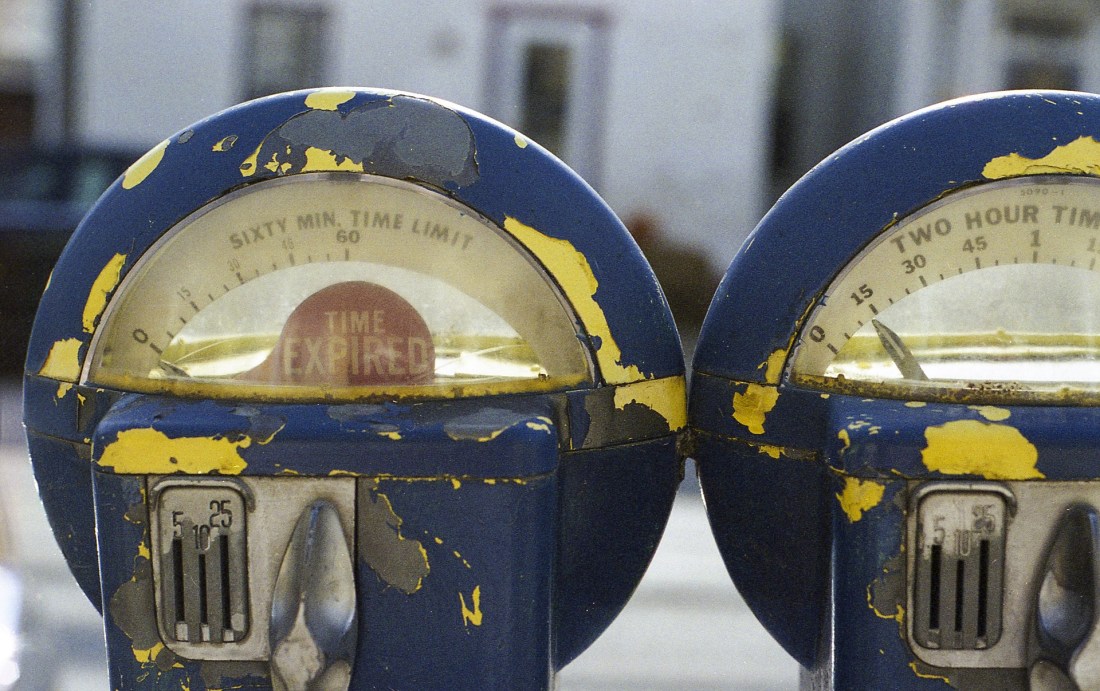
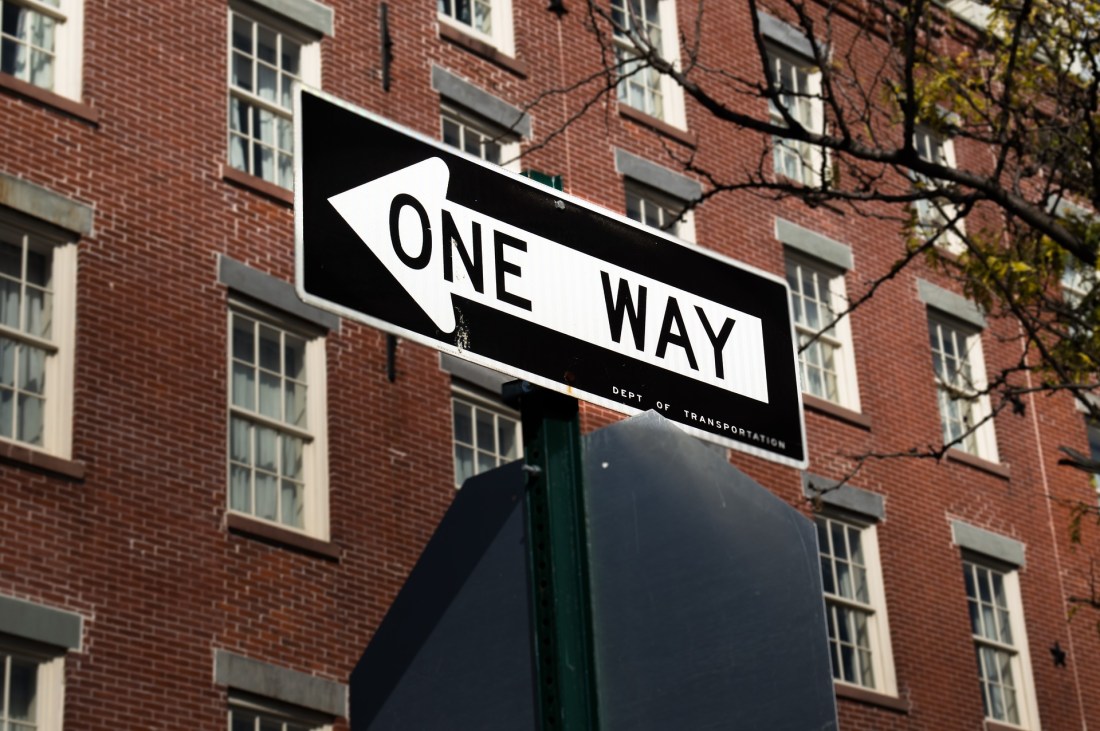
Well, it is only the rule so…

I sometimes think that the expression “Rules are meant to be broken” comes from China. Even though there are many ways in which people listen or accept things at face value, there is certainly a lot of room for opposition as well.

Of course, this manifests in somewhat negative ways as well. Going off the beaten path in the mountains (although mother nature put this sign here urging you not to), shaking the trees for flowers or red leaves (ignoring another sign that says trees have feelings too) or simply squatting on the toilet seat (how do you do that anyway)?

But it also means that there is in a certain way more room for exploration. For example, if you are looking for a place and you are not sure if it is in this building, you can almost always enter it. It does not matter if the guard is awake (although oftentimes they are sleeping) they almost never ask questions. Once you are inside and realize within 5 minutes that you are not at the right place, nobody will even blink twice at you coming out again almost immediately.

Once you have mastered that stage, you can move on to the next: making your own rules. Everyone constantly is in a certain way just doing their own thing. Wearing whatever they want, setting up their street stall wherever they can, getting on the bus in the middle of an intersection or singing along very loudly on their bikes. It is almost mindful.

After that stage, there is only a final one left: blatantly ignoring the rules. It helps if you do not understand or can act as if you do not understand people talking to you. I once stopped sort of half-way on an intersection with a friend and pretended to not understand the traffic guy yelling at me to stand back. He gave up, muttering something about me being Thai. Or an alternative is directly talking to them in your own language and catching them off-guard that way. I have only done it once, but it is definitely one of my greatest achievements this year.

Oh, and it also works great to avoid agressive advertisers or people asking you the way. In general, it is a great way to not make any friends.

Hush, hush, hush

Peace and quiet. Two things people definitely do not come to China for. The whole environment here is just plain noisy. From people to pets, from cars to cicadas there is always something happening and you can hear it.

I live in a ‘traditional’ 6-story building in Shanghai and there is always some pipes making a noise, or the airco outside, or my neighbors getting up at 7 to dance to very loud music.

In Shanghai, it is prohibited to honk for the greater part of the city center, but in Beijing that is definitely not the case. The symphony of all the noises sadly do not come together and it can make for quite an overwhelming experience when a bus, a truck, a car and a scooted are all honking at each other at the same time.

Furthermore, the Chinese are sort of famous for letting others ‘enjoy’ the sounds they make. Whether it is playing mobile games (without earphones), watching a drama (without earphones) or plainly calling (without earphones on the toilet), everyone can very clearly hear what they are doing.

It is the same with human comunication. People rather loudly call each other from the other side of the street, than cross it to talk normally. Kids running off are being accompanied by the increasingly louder screams of their parents that they need to come back. It does not work.

So in this environment, I always find it quite funny when people find me being too loud. I think I have been told a bit more above average to be quiet, or that I am loud. To which I can only say: I am a product of my environment. Apparently I sound more Chinese sometimes than the locals around me.

Nothing to be done pt. 2

“Well,” I said to him “I am only renting this place so I will talk to the housing agency and let them get back to you.”

The guy stared at me blankly and replied gruffly: “Who are you renting this from?” I told him my agency’s name and he gave no sign of recognition at all. “Give me your landlord’s number, I will contact him directly.”

At this point I started to get a bit fed up with him. Mind you, it was not even 7.30 and I still had no leaking problem in my house. I think we went through multiple forms of the conversation above in the next 10 minutes, until I finally convinced him to leave his phone number so I could reach him.

I mentioned that things can move quick in China, and surely I had a repair guy ordered through the housing agency’s app by the next evening. However, when he came I of course had no problem at my side. After checking if the downstairs neighbors were at home, of course not, I called the management guy a few times. Finally he picked up and my repair guy talked to him in the same Shanghainese-tinted Mandarin about the matter.

“Your pipe from the washing machine is too small, it needs to be changed.” He asked if it would fit in my bathroom, which I assured him would be impossible unless I wanted not to take any showers or not go to the toilet anymore. He took a look at my kitchen to see if it would fit there and decided the plumbing was too weak and again there was not enough room. Finally, he looked outside my window in a pensive matter, took a couple of photos which he would send to the agency and left.

This situation as described in the above paragraph then happened at least 3 more times. I had multiple guys visiting me, not nearly as excited as it sounds of course, and all of them made pictures, told me the pipe needed to be changed, asked if it would fit in my bathroom or kitchen and then left without actually doing anything. I almost started to wish I would have become a repairwoman if I could do my work in this way.

And then the weekend came  around. I needed to do my laundry.

Nothing to be done pt. 1

*BOOM BOOM BOOM*

I took a look at my phone. It was 6:50. Also, my alarm did not sound like a cannon. I tried to picture myself sleeping and dreaming that sound, but it was a little bit too real.

*BOOM BOOM BOOM*

“Hello anybwody hwome? Wopen de doowr!”

Note: this is not too make the person sound drunk, rather it was quite a heavy Shanghainese accent and I was not being very diligent in my listening.

Why was this person so confident that people are happy to open their doors at 6:50 for strangers? Now it happens to be that the walls in my building are very thin. Not that I actually know my neighbors (they were lighting up a fire in the hallway a few days ago. It did not make me want to befriend them more), but I was still a bit concerned that this might go on for too long to be comfortable.

So i put on some clothes, slowly got out of bed and opened the door. A 50/60-year old man, of about my height (1.60 cm) looked me suspiciously in the eyes. “Something is leaking.” he said bluntly. Or, to be fair he might have said a bit more, but that was lost on me. I looked back quite dumbfounded, as there was not anything leaking in my house for the past month.

He barged through the door, walked to the balcony where my washing machine was and looked out of the window. “Here” he said, “You need to move this washing machine.” Now I am quite a strong and healthy person, but I am not too confident in my washing machine-moving skills. Nor was I quite sure why this guy, who certainly did not look very professional, would be the right person to tell me so. “I am the management of this building, your washing machine is causing a leak further downstairs.”

The good thing about China is that times are very flexible. You can eat at any hour of the day, go to the bank in the weekend (or more like spend the weekend there) and arrange a housing tour on the same day. Truly, I think this was the first time I found that this timing was working against me.

So naturally I did something quite logical. Of course I should not have.

You have a funny sense of humor

Truly, how many times do we say that we like or do not like someone because of her or his humor? Certainly, there are those among my friends and other people I know with whom I share my jokes or do not. And then there are of course those who just laugh about anything anyway (you know who you are!).

But to be honest, humor is something that is really culturally specific. I have often said things in an ironic or sarcastic manner, such as “Why would it be that way, huh?” or “We know what they are doing with that…” Having an honest answer or receiving honest questions to these rhetoric sayings always puts me off a little.

At the same time, I have watched some Chinese television where I either find most jokes not funny or plainly do not understand. The last situation expecially occur when it is traditional Chinese cabaret (相声) or something related to traditional opera etc. I have literally watched twenty minutes of this programme where whole comedy troupes compete, are allegedly very funny, but it does not really come across.

A thing that is quite funny, are Chinese puns. I was going on a trip with some friends recently and saw a Chinese shop called 非常稻, the English translation being Very Rice. Where the English version is literally a wordplay, the Chinese spoke a bit deeper to me. It reminded me of the first sentences of the Daodejing, the sacred text of Daoism. This sentence in Chinese is道可道非常道, which in a way can be translated as “The Way that can be expressed is not the everlasting way.” Although this does not have a direct link to rice bowls (which is really what the restaurant sold), it is still quite clever.

This different use of the first sentence of the Daodejing also reminds me of a short play I did while in university. But that is something to be told another time.

Opvoeden doe je samen

Okee in Nederland hebben we een zorgmaatschappij. Dat betekent dat we voor elkaar zorgen en dat de overheid ook een duit in het zakje doet. Nederlanders in het buitenland met visumproblemen helpen, zorgen dat iedereen naar school kan of een toegankelijk gezondheidssysteem.

In China doet de overheid ook duiten in het zakje. Sterker nog, het zakje, de duiten en de hand die ze erin doet zijn ongetwijfeld allen eraan gelieerd. Economie, kunst of religie heeft allemaal een politieke component hier. Maar ook in het dagelijks leven kom je de overheid geregeld tegen. Spandoeken met motiverende teksten, borden met waarschuwingen of de minilegers aan bewakers, politie en soldaten die overal rondlopen.

En iedereen doet mee, beroemd of niet. Ik heb op dit moment geen televisie, maar toen ik nog wel eens tv keek, kwamen regelmatig opvoedkundige reclames voorbij. Een dame die kanker overleeft en er weer bovenop komt dankzij de blije, invoelende vrijwilligers. Kinderen die alleen maar grijze tekeningen maken van hun omgeving door alle vervuiling om hen heen. Maar alles wordt op magische wijze opgelost. Door gehoorzame burgers, vreedzaam beleid met dank aan de overheid.

Recentelijk zijn ze ook begonnen met het afspelen van korte clips in de bioscoop voor de film. Er worden sowieso zeilen bijgezet om iedereen in het gareel te krijgen als er belangrijke zaken aankomen. Partijcongressen, machtswisselingen of interne spanningen bijvoorbeeld. Kosten noch moeite worden gespaard om iedereen mee te krijgen. Internationale Chinese beroemdheden mogen de partijboodschap verkondigen, meneer Xi is ineens in de kleinste dorpjes te vinden en je VPN is ineens supertraag.

Op een licht anarchistische buitenlander zoals mezelf, werkt dit behoorlijk op de lachspieren. In Nederland werken de partijspotjes al voor geen ene moer. Politici die ineens bereikbaar lijken, samen naar een betere wereld toewerken. Natuurlijk moeten we dat doen en een beetje samenwerking met de overheid kan geen kwaad. Maar opvoeden, daar hebben mijn ouders al genoeg tijd aan besteed. Daar heb ik de overheid nou net niet voor nodig.

Would you like some service with that?

Service in China is a double-edged sword. On the one hand, things are possible here that are totally unacceptable in the Netherlands. On the other hand, things are impossible here that are generally accepted in the Netherlands.

Pro’s:

  1. Calling a waiter or waitress – Admittedly, this is not as common anymore as before. The rise of Western-style restaurants also brings with it the usual struggles to attract someone’s attention. But there are still plenty of establishments where you will hear a “FUWUYUANR” regularly in between all the other conversations. I highly prefer it to side-eyeing, cheerleader-waving or raising-your-hand-up-as-if-you-know the answer motions.
  2. Making a mess – Whether it is yourself or the table, it is almost always accepted without any comments. Bones, fish grates, shells are all nasty and troublesome, but at least you can easily get them out of your sight by just dispensing them on the floor. Provided your hand-eye coordination is reasonable and you do not accidentally hit yourself.
  3. Free refills – I remember that there was still a discussion in the Netherlands if you could get free tap water. Also, if you order a cup of tea in most restaurants or coffee tents, you will have to pay the full price again for a second cup of steaming water in which you will use your first teabag. Not so in China. In most places you can refill water and tea endlessly until you feel uncomfortable about having had more free than paid drinks throughout your stay.
  4. Your living room from home – Unless it is really crowded, you can generally lounge the entire afternoon in one spot. Order one drink and refer to the point above to make sure you are hydrated throughout your stay. Most waiters will only approach you to refill your glass, or ignore you. They are also very skilled in doing that.

Cons:

  1. Service without a smile – Some jobs can be very boring or mind-numbing. And you can see it right of their faces. People will serve you with as less interest in you or their job as possible. Not looking at you, doing only the bare minimum and certainly without a smile. In that way, many Chinese do look alike.
  2. Working is optional – I remember that for most of my jobs in the Netherlands, there are quite strict rules about when to use your phone. Not so much in China. Whether there are any clients or not, whether chatting or watching a drama, everyone is certainly not focusing on you.
  3. Inefficiency – I already mentioned that there are often a lot of people working anywhere and a large part of them are doing nothing. It is a bit similar to my instructions for working at a Chinese Japanese restaurant. Also, when a question is asked, they will be sure to not do anything directly but for example inquire if you are sure that you want what you asked for.
  4. Passivity – The customer is king is still sometimes the case in China. But that also means that any (illegal) smokers, irritating children, drunken men or screeching women will be accepted and not reprimanded. Jumping in front of you in the line? Pushing you in or out the subway? Being polite or not? It is all accepted as part of life.

Hot as hell

The sun has been here longer than we have. It is also burning hot. The sun itself is, but also here on earth. Yes, of course we created this ourselves. With all the conveniences, low costs and high risks we want and take, this was bound to happen.

Everyone here already got around mostly covered when the sun shone. Large visors, long sleeves and pants, gloves, masks and hats. There are also images of other countries, basking in sunlight. Men and women in long, wide gowns. Most of us here wear pants. Seemingly the only difference would be that the sweat touches your thighs instead of the fabric in between.

Moving outside in broad daylight is becoming increasingly dangerous. The sun is literally scorching these days. The pavement is so hot that water literally instantly turns into steam and you could actually bake anything on it. That is, if it would be kept clean.

And even in these circumstances, there are more than enough people still working outside. Shuffling leaves together in the shade so that they do not start a fire. Watering the plants in the shadow or keeping an eye on the traffic from under a parasol. That is just as effective as it sounds.

It is said that several cities with extremely hot summers exist which were called ‘ovens’ before. Currently, all cities are real ovens. The concrete sucks up the heat and it permeates every structure. Steel pots and pans do not even need to be put on the gas anymore. We can just cook in them on the balcony if we wear fireproof gloves.

The well-of, rich people leave the city en mass during this time of the year. Pictures of luscious green fields, wide blue seas and bare skin flood the social media. But even outside the cities, temperatures are still at an all-time high. It makes censoring for nudity very easy, showing that much bare skin can simply lead to burns and is thus very rare.

Windows have since long been covered. It is still strange to wake up in the morning, seemingly at dusk. Before, you still had commercials where people opened their windows in the morning and let the sunlight in. Half of my stuff would directly catch on fire if you would do that in my room now.

There also used to be a buzz of insects outside when it was really hot. Old series on television would have that playing on the background to symbolize how hot it is. Apparently, if you go even hotter it turns quiet. Eerily quiet. Everyone seems to move in slow motion. The weight of the heat is instant whenever you go outside. Life is slowly turning into a real child’s play. Only move from shadow to shadow, step into the light and it is game over…

This is sick!

Actually, in Dutch we can also use the word ‘sick’ as a positive adverb. Once you are sick, it feels quite illogical to use it in that sense.

For me, being sick abroad is almost my second nature. I must have seen almost as many doctors and hospitals in my country as I have abroad. I must emphasize that in the Netherlands, going to the doctor or hospital is taken up as a more drastic measure. if you have a cold, the flu, or are just not feeling well, we might go to the GP but normally we just suck it up and huddle up in a blanket. As a consequence, most of our conversations about feeling sick are relatively low-profile. ‘I am not feeling very well.’ ‘Something’s been in the air lately so I think I caught that too.’ ‘My whole body feels listless, I need a good rest.’

In China, that is quite different. On the one hand, the chances of having food poisoning and/or diarrhea are much larger here. Therefore, you might just hear somebody say very casually: ‘That hotpot did not go well, I had diarrhea for 3 days.’ The dutch, not the most prudish but still, would feel a bit uncomfortable directly stating that in a casual conversation. The same goes for constipation.

Another difference, is the amount of medicine. I now happen to have a cough and a cold which has already kept me in the cough-sneeze-breathe state for almost a week. Almost all Chinese will ask me if I have taken any medicine, and if so Chinese or Western medicine. In the Netherlands, we almost tend to pride ourselves on our ‘toughness’ and ability to bear sicknesses without any medicines.

I do have a feeling in China apothecaries and/or doctors still receive commission over medicines. I recently was in the hospital for someone else who had a hole in his head and he received four different medicines for the next 4 or 5 days. It seemed like a bit of overkill. I had the same when I had ‘a simple’ pharyngitis and also received about 5 different medicines.

However, sticking to my Dutch roots and trying to survive on as less medicines as possible is also quite a challenge. But who does not like a challenge?

Dagboek van Moek: 19/20/21 mei

19 mei: WAAR BEN IK??? Ik ruik hier allemaal rare beesten en onbekende geluiden. Vanuit het raam wat in deze kamer is kan ik mens wel zien. Er staan allemaal vreemde dingen in deze kamer. En van die geuren gaat mijn haar gelijk overeind staan brrr…

Een klik en de deur gaat open. Het is mens maar, maar wie neemt ze mee? Een onbekende zwarte kat die totaal geen herkenning bij mij oproept. Bovendien ruikt ze helemaal niet als kat, maar als hond. En het eet van mijn voer! En poept in mijn bak! Een beetje geblaas houdt het tenminste op afstand. Hier zit een luchtje aan…

20 mei: Mens ruikt iedere keer weer raar en anders als ik haar zie. Hoe moet ik haar dan herkennen? Langzaam kom ik een beetje mijn kamer uit, maar het is nog steeds sluipen over de grond en terug sprinten voordat een grote boze hond mij kan opslokken. Gelukkig zijn er in deze kamers geen spullen waar ik niet op mag of niet mee mag spelen van mens.

Als ik naar beneden kijk zie ik daar ook vreemde vormen bewegen. Zolang het vrij rustig en stil is, kan ik ongehoord naar beneden sluipen. Maar die engerds beneden zijn haast net zo groot als ik in het geheel ben. Ze kennen vast hun eigen krachten niet. En ik kwam ook nog een andere katachtige tegen op de gang laatst. Die rook ook niet normaal, dus heb ik ook even direct duidelijk gemaakt. Hij loopt echter zonder problemen zo naar beneden, dus dat heeft hij wel voor op mij.

21 mei: Toen mens net thuiskwam dook ze weer een andere kamer in. Een witte en gladde kamer waaruit ineens een keihard geluid kwam. Het bleek water te zijn, dat in een grote kom ging waar mens toen hij vol zat gewoon in ging liggen. Geheel vrijwillig. En haar ogen sloot. Waarom? Ik zou het niet weten.

Dus toen ze er toch wel een tijdje langer in bleef liggen ging ik eens polshoogte nemen. Met mijn achterpoten tegen de rand en mijn voorpoten op de rand kon ik precies met mijn oogjes haar zien. En ik zette grote ogen op. Mens moest lachen, dus ik liet haar dan maar met rust. Als ze zelfs naakt en geheel ondergedompeld in water blij kan zijn, heeft ze duidelijk andere dingen die haar blij maken dan ik.