The Scoreboard: The Twelve Kingdoms

As everybody else on this planet, I have an opinion. As many people do too, I like to write about it. Share it generously. And I am excellent at keeping score (mentally), so I will try tallying up my fondness of things according to balance.

The Twelve Kingdoms

As much as I like epic stories, I tend to not always have the patience for them. I prefer to know there’s an end, that I’m not left wanting more when I don’t know it’s available or going to come at all. This is why I tend not to watch longer anime series. However, I may make an exception if they’re already finished and highly rated.

Additionally, a period of sickness may allow me to breeze through the episodes as the binge watching that I generally abhor. But I must confess after finishing The Twelve Kingdoms that I do think parts of it are best consumed at once.

Stories about normal, possibly unhappy, people getting transported to a fantasy world where they have to grapple with new purpose and responsibilities have become really popular in anime over the past 15 years. Called isekai in Japanese, literally meaning different world, it’s a genre that I’m slightly hesitant about. Of course, nothing is more attractive than a premise that any of us may one day be swept away and turn out to be destined for something bigger than we could have ever imagined, but I can tend to struggle with these stories if I cannot sufficiently sympathize with the main character on its new journey.

And I did have some trepidation after the first few episodes if Nakajima Youko would be bearable as a heroine. She’s a serious, smart but also very obedient high school student who is suddenly attacked and then transported to another world with Twelve Kingdoms, based on ancient China. She accidentally involves two classmates as well in her adventure, one who’s always had a dream she would be a ‘chosen one’ and another who’d much rather return to his comfortable life alone. Youko meanwhile learns to stand up for herself, face fears and difficult choices, and quickly enough becomes a heroine you can actually root for.

The series seems to have adapted most of the main storylines contained in the original light novels. This means there’s basically 4 different parts with partly overlapping characters, but mainly independent storylines. The parts about Youko take up the bulk of the series. The beginning which shows all of her trials and the revelation that she’s a queen of one of the kingdoms, and a middle section which shows her quelling an uprising shortly after ascending the throne. The other parts are much shorter and deal with other rulers.

The world of The Twelve Kingdoms is rich and dense. It’s clearly based on ancient Chinese civilization, although the writing is not all existing Chinese characters, with a highly stratified hierarchy and a Heaven that decides it all. Rulers of the kingdoms are chosen by auspicious, mythical creatures called kirin. If a ruler starts to enact policies that are not beneficial to its kingdom, the kirin will get sick and eventually die, leading to the death of the ruler as well. Then a new kirin will be born who will choose a new ruler.

It’s a bit of a pity that the kirin look more like a dog-unicorn hybrid than the legendary hooved chimerical creature it actually is with a dragon’s head. But the show has a nice, albeit dated, look to it and clearly depicts the different kingdoms. Instead of being all about grandiose battles and adventures, the series is mostly interested in political scheming and human interactions. This sets it apart from many other entries in the genre and makes for an interesting perspective on the world, although it does move at an uneven pace sometimes.

It also feels like the story could have benefitted from some more room to breathe, especially the two shorter parts of which one just ends without any resolution. It seems that the continuation of that story happened long after the series was finished and the cop-out was unintended, but it’s still quite frustrating.

All the same, The Twelve Kingdoms sweeps you off of your feet to a different world and time, offering a rich and immersive experience. I rate it, not as deadly as becoming a courtesane to the royal court and much more enjoyable to watch.

Not too young to romanticize youth

In February I saw a newer Chinese movie at the International Film Festival Rotterdam: “Now I met her”. Although the Chinese title is a pun, which I like better. To clarify, normally I vehemently dislike puns and prefer to display my disgust vocally and physically, but I am a bit partial to Chinese puns since the language has so many homophones, it can get very creative. For example, the Chinese title is 我的妈耶 which can be translated as “Now that’s my mother!” Or “Oh my god”. Both interpretations could be suitable titles to the movie in question.

Now the movie itself was a lighthearted, humorous and touching family story. But what stood out to me, was the time it took place in. It tells the story of the mother, who was born in the seventies and spent her youth and formative years during the eighties, nineties and early two thousands. Seldomly, I feel, do a piece of media and a societal trend I’ve read about collide as beautifully as this moment.

Back to the better times

Just a few months earlier, I read an article in Li Yuan’s excellent New York Times column “The New New World” which talked about ‘The beauty of the boom years‘. Li talks about the longing  for more optimistic and positive times, mixing with nostalgia of Chinese people who can remember their youth jn a very different environment than they’re currently living in. The outlook gets pretty bleak rather quickly, with interviewees musing about the hopeless job, housing and dating markets.

Li dates the ‘boom years’ unofficially back to 2001, but the movie starts earnestly in the seventies. However, it very much conveys the exuberance, positivism and styles of the previous eras. The comedic timing reminded me of earlier movies as well, with very stylized poses and exaggerated expressions. Even though there are some hardships depicted, these are all overcome and almost depicted as springboards for the next opportunity.

Another aspect that stood out to me, was the mix of Western and Chinese elements. Some clothing in the seventies clearly reference a more Western style with colorful suits, slick hair and fashionable sunglasses. The seventies were the decade when China started opening up and accepting more foreign influences to modernize. Economy was booming and especially southeastern China, where the movie took place, was at the forefront of these developments.

These trends further solidified in the eighties, with Hong Kong having solidified its position as a touristic and commercial hub in Asia. Additionally, its cinema and music scene were highly popular in this decade and had outsize influence on China as well as internationally.

I think from the eighties until the early two thousands is also the perfect timeframe to look back on through rose-colored glasses, since it can sincerely seem far away. All the appliances are big, clunky and have many physical aspects such as buttons and cords. Connectivity is still limited, which may be unthinkable to many nowadays, but therefore desirable.

Sitting in the movie theater, surrounded by a mainly Chinese audience that also swamped the director afterwards for questions, I couldn’t help but feel that this audience was longing to see the perfect China that the current government still insists they’re trying to create. Looking quickly at some movie reviews, the most praise is given for the depiction of the family relationships. The love between mother and father, the tenderness between mother and son. In my opinion, this also fits in the nostalgic theme, reflecting on a time where the rat race wasn’t as extreme and interpersonal connections were a priority.

All in all, I liked the movie and it made me laugh and cry plenty. But most of all, it made me think and that’s even better.

The Scoreboard: Hyouka

As everybody else on this planet, I have an opinion. As many people do too, I like to write about it. Share it generously. And I am excellent at keeping score (mentally), so I will try tallying up my fondness of things according to balance.

Hyouka

As a woman in her thirties, middle school feels very far away. It’s like a mystical time when life was easy and problems small. This is something the main character of Hyouka, Houtarou Oreki certainly strives for. Do the least possible, don’t get involved, don’t exert yourself. This plan is thwarted when he’s forced by his (mostly) absent sister to register for the Classics Club where he mentions his polar opposite, classmate Chitanda Eru who has an innate curiosity towards many things.

Houtarou is only an average student, but his mind is nimble and connects dots that are invisible to others. Chitanda on the other hand is a top student, booksmart and curious but finds it difficult to think outside the box. This duo is expanded by two of Hourtarou’s other friends Satoshi Fukube and Mayaka Ibara who have their own quirks and personalities.

The character writing is very strong for Hyouka. Although they adhere to certain archetypes, the unbothered boy who doesn’t want to put effort into anything, the smart and pretty girl who needs help figuring out something, the reliable friend who is always cheering on others, another childhood friend with a crush and a headstrong personality to push others around a bit, they contain multitudes.

Over the course of the series, the Classics Club has different mysteries to ponder, from a family matter to a movie script, from personal spats and insecurities to historical research. Im the stories, different classmates are introduced that also have distinct personalities, making the school and town feel alive.

Although it can be a bit irritating that only Houtarou is able to figure out all the mysteries, the other characters don’t just serve to show his ingenuity. They add their own perspectives and help Houtarou out in multiple ways. Although it seems Chitanda sometimes pokes her nose too much in other people’s businesses, it doesn’t cause active harm and seems to stem more from the fact that she was raised in a very restricted, elitary environment, which makes her very curious about the outside world.

All in all, Hyouka offers good writing, inttriguing mysteries and above all good character writing. I rate it no mystery that’s good and a mystery that there’s not more.

The Scoreboard: Tsurune

As everybody else on this planet, I have an opinion. As many people do too, I like to write about it. Share it generously. And I am excellent at keeping score (mentally), so I will try tallying up my fondness of things according to balance.

Tsurune

Archery is something that is one hundred percent something I’d much rather watch than do. The whole precision and patience that is seemingly needed to do well in the sport doesn’t suit me at all. But watching cute boys doing all of that, suits me just fine.

Tsurune is a 2-season series about the Kazemai archery club, which has 5 male members, 3 female members and 2 coaches. The story follows familiar beats, but covers them in new ways.

Protagonist Minato Narumiya is feeling down ever since his target panic caused his former middle school archery team to lose a pivotal competition. His best friend Seiya Takehaya tries to get him back into archery again, following him to Kazemai instead of prestigious Kirisaki High School that’s well-known for its archery club.

A chance encounter with an extraordinary archer leads him back to the range and the Kazemai club is completed by Ryouhei Yamanouchi, another childhood friend of Minato and Seiya, and the duo Kaito Onogi and Nanao Kisaragi.

The boys have a nice dynamic going on, that builds off of archetypes but builds the boys into full characters of their own. Minato learns to reign in his earnestness and harness its power, Seiya learns to become more of his own person and not just a chaperone, Ryouhei gains more confidence in the power of hard work, Nanao learns that he can work hard for some things and Kaito learns to let his caring side shine behind his intimidating attitude.

Besides our underdogs, there’s also the team of favorites at Kirisaki, and a third team of misfits from Tsujimine appears in the second season. The interactions between all these boys are often subtle and indirect, but it generally doesn’t frustrate since you get a look inside their heads as well. Moreover, the chemistry between different members, rivals and antagonists generally works very well, although it can veer into the too dramatic from time to time.

The series also looks gorgeous. Tsurune refers to the sound of an arrow leaving the bow, heading towards the target. It’s clear the soundscape got a lot of love and research, with different ‘tsurune’ for each character. Although archery is a relatively static sport, seemingly equal parts ceremony and action, the series succeeds in making it interesting and gripping. By visualizing team dynamics during the competition, and focusing on details while shooting, you get a sense of importance about the whole thing.

Thus, if you like cute boys being serious about sports, this is a series to watch. I rate it would only watch, never do, but still very enjoyable.

Li learns programming: November/December

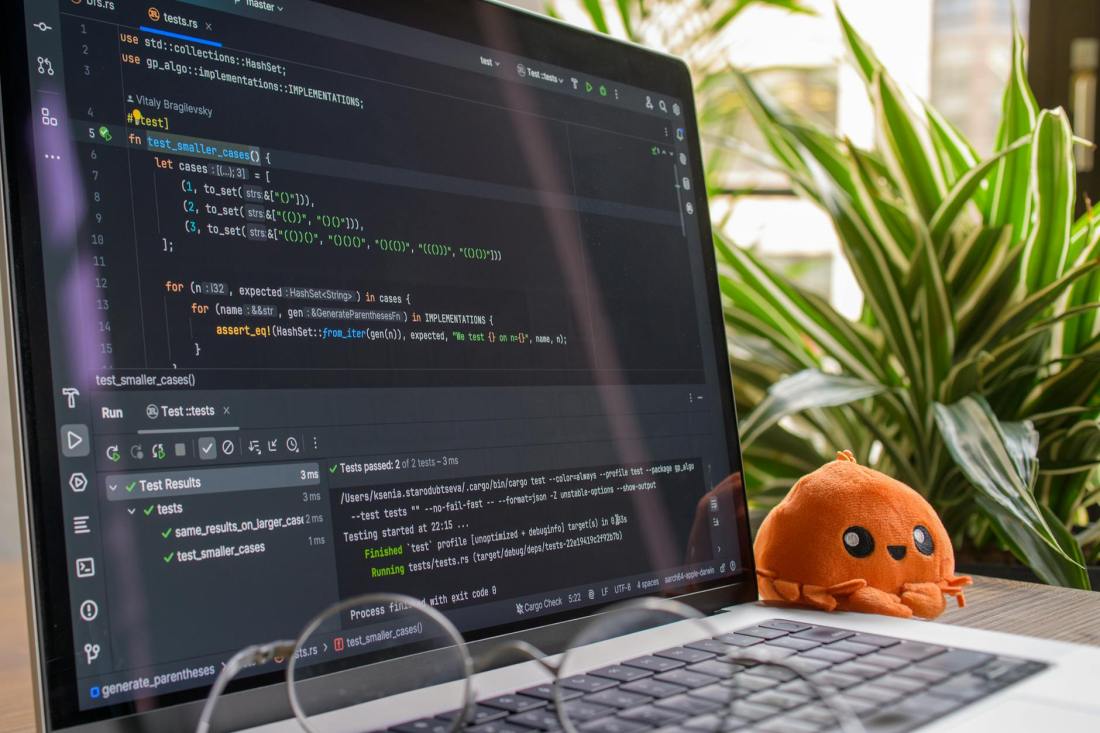
They say it takes a few months to get a good habit down. I am at the point where if I freeze my streak for too long, i.e. don’t program but pause my streak for a few days, it stresses me out. I feel rusty or not in the zone. And I sometimes feel I’m in the zone when I find the time to work through a couple of lessons one after the other.

I’m feeling slightly less mystified by the whole programming thing. I still have moments of intense frustration and can get exasperated when I feel certain concepts have not been explained but just need to be known.

But, even though I hate the technology behind it and it sometimes flat-out tells me the solution, I like conversing with the AI helper Boots. It gives the whole thing a bit more of a face and of course he’s relentlessly encouraging. Something I don’t mind for a change since this thing is not my forte.

What I realize the longer I continue my learning, is that I find the process of programming, though difficult to grasp, very cool. The idea that something is automated is just very attractive. And having sorted through photos, putting them in different folders and doublechecking their dates, I’m pretty sure that’s something I could maybe automate in the future.

But I’m also getting impatient. The jump from this stage to actually getting to do what I want or think I’ll find most interesting still looms large. There’s a part of me that is used to having a clear idea of what I need to learn to go from beginner to advanced. I’m not that clear about the roadmap this time, and in addition to feeling like I don’t understand the computer enough, it also makes me worry I don’t have enough control about it and thus cannot make it do what I’d eventually like it to.

But even though the utilitarian purpose of this new language still remains somewhat hidden, I know it’s there. I do like a challenge in the end, and beyond that there’s nothing more I like than facing it head-on.

Li learns programming: October

I can feel my stomach churning. It even burns a little. And an intense frustration flares up, to the extent that I almost audibly shout out “WHY?!”. In capital letters.

Two courses. I’ve finished two courses by now and am almost overwhelmed with a feeling of not knowing most of the things. Whenever I look for a new challenge to practice with, I almost invariably choose to practice the ‘easy’ things. So that I can feel a bit surer of what to do or how to get to the end goal. And at the same time, I should feel happy that there are already things that feel ‘easy’.

Following a masterclass on AI & data a few weeks ago, what struck me most was its emphasis on explicitness. You need to be very precise in talking to computers, nothing can be implied. And if I put my frustration in that context, it’s actually quite similar to how language acquisition works. And I felt the same when learning Russian, where the approach was immersion. Diving head-first into the language and getting the grammar explained along the way. I didn’t study it for very long so I didn’t get very far, but I got used to the method eventually.

I think what I miss the most in this way of learning is a payoff. Because you don’t notice immediately when you’re immersed if you’ve improved or not, you just continue. I have the same with programming. I continue, and feel relief if an answer is correct, but I forget to look back. Only when I notice the really easy ones are not a challenge anymore, do I realize where I’m at. But it also doesn’t feel that fulfilling, since those are clearly the easiest ones that anyone without coding experience could also reason through.

Going through this process makes me think again about my roadblocks when learning. I cannot enjoy learning just for the sake of experiencing something new or different. I need some utilitarian aspect, or the prospect that this new knowledge or skill is going to be put to good use. And maybe that’s why programming is a good challenge as well. Its actual use still seems so far away from where I am right now, that I feel like I don’t have any choice but to enjoy the ride for now. And if nothing else, I’ll try my best to do that at least.

Li Learns Programming: September

Doing something I’m not good at is the worst.

This is the second time I’m diving into programming more seriously. As a recovering perfectionist, I generally avoid doing things that I don’t feel an immediate affinity for. Of course I enjoy a challenge, but I’d rather have it with the prospect of becoming somewhat decent at it relatively quickly.

Enter coding, it’s a particular curiosity of mine that relates to matters that interest me as someone with a humanities background. Design, behaviors, analysis, interaction, language, it has it all. But it doesn’t have it in a way that’s very accessible to me.

On my first foray into coding, focusing on web design, I was surprised at how foreign its language seemed to me. There were new terms like booleans and existing terms being used differently like arguments and. Sentences that seemed like plain English suddenly seemed unintelligible. I don’t think I’ve really tried something else where I felt that out of water before. Even more so because I didn’t improve quickly or seemingly, at all.

My interest in coding coincided with my first job at a company where I directly worked with software developers and engineers. Before, my interaction with IT hadn’t gone further than the resident IT guy, who mainly sent out emails warning about phishing and walked around advising to restart devices when they malfunctioned. IT seemed like a grey world of zeroes and ones, quite necessary but utterly devoid of any creativity.

However, joining a small company with a sizable amount of developers on its staff, brought me much closer to the source. It provided an actual look into what could be accomplished with programming and how mystical it appeared to me. Meetings were filled with wondrous names that had equally wondrous promises. And although I didn’t really understood it, others did and even got very enthusiastic about it. It got me very interested, but also very furstrated when I realized how different programming and developing works as a process of creations.

I like to think of myself as a creative person. But there’s a certain straightforwardness that I like to have in its process. I’m not an idea machine, my imagination works best when prompted (come at me ChatGPT) and if directed at something conrete. I want things to be concrete, almost tactile if possible. Being able to see the process, but also have an idea how that will lead to the desired result. Words on a page, threads on a loom, moves in a choreography. But I remember when I was introduced to the world of html markup, it seemed like such a big jump to go from <h1></h1> to an actual header. It still boggles my mind that programming just works like that. You write a few things, and then it suddenly works automatically.

I still have the feeling this time that there’s so much happening behind the curtains that I don’t grasp. It feels eerily like learning a language without knowing its grammar and just delving into vocabulary. It can work, but it’s definitely not how I learn best or without the least frustration. It’s an itchy lump that I feel somewhere around my diaphragm when I stare at a black screen that need to be filled with words that will get me to a result that I have difficulty imagining. But when it works, it is very fulfilling. It’s sometimes more fulfilling than my regular learning process, because I struggle so much. And that’s why I want to continue with it. For now.

The Scoreboard: Sasaki and Miyano

As everybody else on this planet, I have an opinion. As many people do too, I like to write about it. Share it generously. And I am excellent at keeping score (mentally), so I will try tallying up my fondness of things according to balance.

Sasaki and Miyano

High school, first love and boys. Boys that fall in love and to fall in love with. This is one of the sweetest boy’s love series I have watched in a while. It is filled with angst (a right amount!), pining and lots of blushing.

The titular characters both go to the same high school. Sasaki is a tall, delinquent-looking, orange-dyed guy who breaks up a fight that Miyano, a short, wide-eyed, tousled-hair boy saw and wanted to interfere in. For Sasaki it is basically love at first sight, Miyano is too flustered by the heroicism that Sasaki displays to feel nothing but awe for him.

Over the course of the series we meet friends on both sides, always refreshing to see main characters interact with others besides their love interest, and follow both of them developing feelings for each other, admitting and accepting them.

This love story serves as kind of a parallel to Miyano’s interest in boy’s love manga. This is the first connection Sasaki makes with him and it is an important one since they immediately share some common ground and then develop a solid friendship on top of that. The genre also plays a role in Miyano’s own development, influencing his perception of masculinity and love. The designs of both guys reinforce this as well, with Sasaki being the traditional gorgeous guy, and Miyano having big sparkly eyes and softer features. Sometimes it seems a bit too extreme, but generally it serves the purpose well.

The other characters are also fleshed out quite well, especially blond-haired and slightly hypocritical but caring Hirano. Kusekawa, Miyano’s friend is slightly too obsessed with his girlfriend but in a seemingly healthy enough way. Ogesawara has some prejudices and difficult temperament but means well and just seems taken aback by his girlfriend’s interest in boy’s love.

The series fleshes out both Sasaki and Miyano’s perspectives but it moves at a slow pace. This is a romance slowly unfolding, carefully and taking its time to build up to the final moment. And it was great, making me rub my feet together as I saw it.

If you like your romances slow-burning, with plenty of sugar and hot guys, then this is a high recommendation. I rate it ideal for beginning and more mature fujoshi and fudanshi who want their romance without any coercion.

The Scoreboard: Wotakoi

As everybody else on this planet, I have an opinion. As many people do too, I like to write about it. Share it generously. And I am excellent at keeping score (mentally), so I will try tallying up my fondness of things according to balance.

Wotakoi

Fandom, an attitude that the Japanese perfected in the otaku, a probably too obsessed fan of manga and/or anime as well as any related media and materials. I have only ever described myself as a very mild otaku but I can relate very well to the premise of the main character’s insistence of trying to hide her obsession for her co-workers to fit in better.

I also appreciate the series for letting the cat out of the bag rather quickly and going beyond its initial premise. Her co-worker is an old school friend from her otaku days, and her senior female colleague and his manager date, with her being a well-known cross-dresser. The main quartet makes for a fun mix, eventually throwing a younger brother with an extremely shy gamer girl into the mix.

The main issue preventing this series from ever turning into love from like, was its lack of chemistry between the main characters. Narumi and Hirotaka work well as friends and even their prsgmatic start to their relationship is believable. However, the time spent afterwards is mainly on antics and not on further building out its romance. In that respect, the other couples both fare better, although Hanako and Kabakura could have used a bit more sweetness to balance all of the (joke) fighting. Naoya’s romance doesn’t getfully fleshed out either, so though it has potential it does not show it fully during the series.

The humor is fun and the pace breezy, but it did not become full-out laughter at any moment for me. I had some good chuckles, but it hinges a bit too much on the characters being quite one-note.

All in all, it was still a petfectly fine watch if you are looking for something easy-going that does not make you think too much. I rate it a watch with your otaku friend to gush about your own experiences while watching.

The Scoreboard: My New Boss is Goofy

As everybody else on this planet, I have an opinion. As many people do too, I like to write about it. Share it generously. And I am excellent at keeping score (mentally), so I will try tallying up my fondness of things according to balance.

My New Boss is Goofy

The workplace, this seemingly mythical location as a child and a place of great pain and dread for many adults. The premise of this series is probably not uncommon in Japan, an abusive boss with unreasonable demands that the main character escapes out of absolute necessity. Fate directs Momose to another agency that made an absolutely awe-inspiring advertisement where he meets his new manager Shirosaki. Trying to hide his insecurities, physical discomfort and plain fear, Momose assumes the worst but is immediately endeared and reassured when his new boss turns out to be absent-minded, clumsy but most of all caring and capable.

The work relationship quickly morphs into a friendship, and the department head Aoyama and new colleague Kinjo are quickly added to the crew. Although the latter two serve more as comedic characters, the four together have great chemistry and balance. Ultimately, the show focuses on Momose’s journey to getting back his trust, confidence and believing in himself. Although Shirosaki’s absent-mindedness seems almost at odds with his competence at work, this contrast works great to emphasize why his behavior as a manager is almost entirely devoid of any of the toxicity and power play Momose’s previous boss treated him to.

Most of the episode’s are one-offs, although there are a few longer storylines weaved throughout the series. We learn a bit more about Momose and especially Shirosaki’s background, who has an equally handsome and absent-minded brother. Basically all of the characters are male, with Shirosaki’s granny influencer and some female co-workers who think up romantic storylines between Shirosaki and Momose being the only exceptions, and girlfriends are eerily absent for all four men.

There are many puns and cute visual gags, for example the fact that Shirosaki rarely shows emotion and communicates his feelings through little drawings. But Aoyama’s neediness is on the verge of nagging and wear a bit thin after the first few times. I also cannot help but imagine that I would go crazy if I lived together with someone, worked with them and then hung out as well during the weekend. Even though it is good to see four male adults having friends and communicating directly, the absence of any disagreements or disputes is incredulous at certain points.

Although the show can veer a bit too much on its ‘healing’ content, a few longer overarching storylines could have provided more insight into the characters and fleshed out Aoyama and Kinjo a bit more, it does what it sets out to do very well. If you had a long day and want some relaxation, a few laughs and imagine four handsome guys hanging out together on a daily basis, this is a great show. I rate it a great workplace to be and also look at.