The Scoreboard: Look Back

As everybody else on this planet, I have an opinion. As many people do too, I like to write about it. Share it generously. And I am excellent at keeping score (mentally), so I will try tallying up my fondness of things according to balance.

Look Back

I’ve always admired a passion that people can have in certain activities. Generally, I’m quite cerebreal when moving through life and it is an amazing feat to me when someone seems to be able to lose themselves in the moment and think singlemindedly about one thing. Such a passion and drive are at the heart of this films.

This is a surprisingly short film, but it packs quite the punch. Starting from a compelling premise, Fujino is being praised for rather mediocre art until Kyomoto’s more impressive creations come along which bruises her ego and almost wants to make her give up. It is only after accidentally being saddled with the task of bringing Kyomoto her diploma that she realizes how much work goes into her craft. And also how much of a need to draw Kyomoto has. Of course it also helps that Kyomoto confesses to be her biggest fan after daring to come out.

This transition from indignation to cynicism, being flattered and then driven to improve is portrayed very compellingly. We see Fujino and Kyomoto hunched over a lot, but the process somehow still feels dynamic. We see them working and growing together, and then separating again by choosing different paths and then one getting cut off.

The ending makes the whole film even more bittersweet, showing an alternative storyline, but with the same need for both of them to create and draw. It is a testament to the innateness of certain things. Regardless of circumstances, there are things that will always matter to you and thus always be done, albeit in a different matter.

And although that may almost seem slightly fatalistic, it also provides some comfort. That you can trust on your needs and have faith in your ways to get them realized. It is a way of celebrating the joy you can have when allowing yourself to be in the moment of satisfaction. Even if it is something that you can only see in hindsight, that does not diminish its value.

I rate it a highly emotional movie that will leave you raring to create something as soon as you finished it.

Travel tidbits: security

Having traveled in China and Taiwan for the first time since 2020, I have some thoughts. The past 4,5 weeks showed me many things that remain the same, have changed hugely or did not notice as much before. I will put some of these into words in my next few posts.

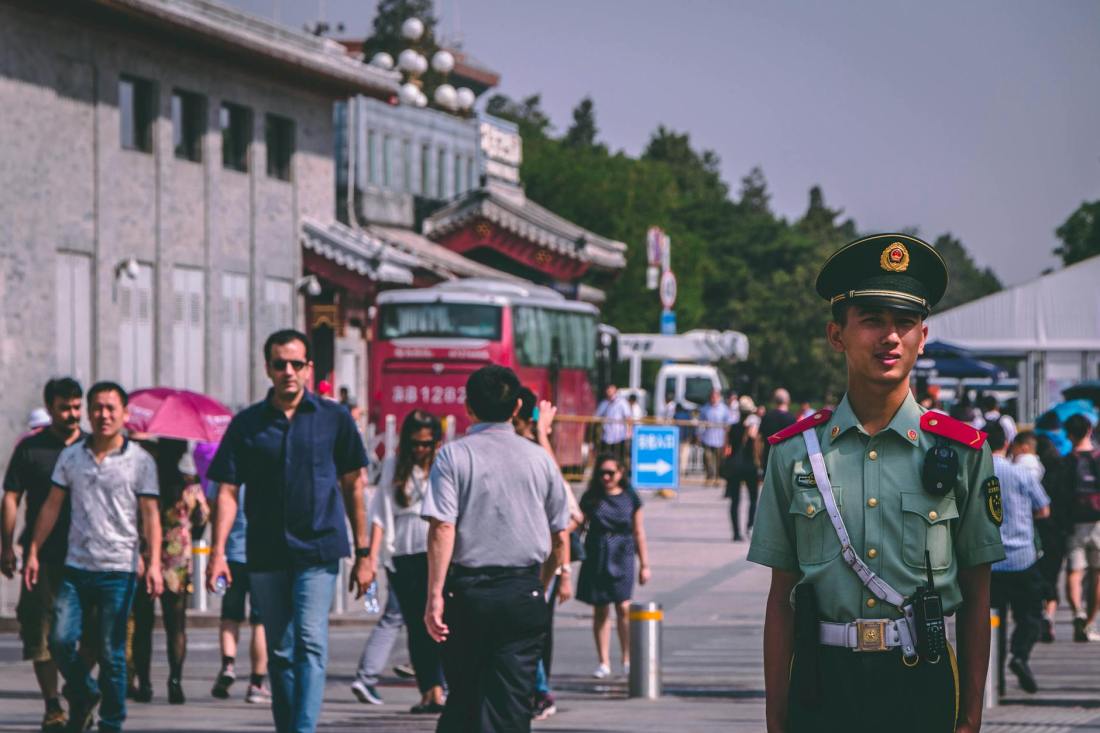
This time around, it definitely felt like security was increased. Especially at the metro stations and in the metro as well. Guards were more actively checking up on substances, items and eating in the metro. Traffic lights with cameras were more common, snapping shots of jaywalkers. And identification was necessary way more often than before.

Security was also the aspect that set Beijing apart the most clearly. Of course it did not help that we were there at the tail end of the national holiday, which naturally meant increased security and guards around the Forbidden City and Tian’anmen Square. But I did not expect my boyfriend to be held back because they found some of his (work) papers suspicious(?). I guess it was a good thing the Chinese for ‘patent’ did not come up in my head immediately, since that probably would not have helped the case.

Anyway, I did not think the already quite performative security could be pushed even further. I guess it did not really surprise me that much, and only in Beijing did they have guards walking around in metro carts. I was surprised that one of them told me I was not allowed to eat, but it comforted me that nobody batted an eye when I finished my corn after he got off.

Security at metro stations did increase though, and was a bit more strict. Liquid checks were quite common in all cities, almost always being asked to take a sip or occasionally having my bottle being put on a machine that probably identified it as safe. We were also asked more specifically about ‘dangerous objects’ such as pocket knives, which my boyfriend ended up packing in the top of his backpack for easy access. At the same time, anytime we needed to show or prove something, the guards seemed kind of at a loss at what was supposed to happen next. Even my excuses were often not listened to and they seemed to just let us go with the knowledge that checking us was the most important.

I was surprised however, how much we had to identify ourselves this time around. Granted, Chinese IDs have become more ubiquitous as convenient, personalized ways to gain access to all sorts of attractions. At the same time, the system was a lot less seamless for foreign passport holders, so we spent some time with guards looking over our shoulder as we filled out perfunctory forms that did not generate QR codes for us, and holding up our passports to get entry if we could not scan.

Lastly, I received some additional scrutiny at the customs border almost every time we passed. Granted, I have about 5 expired Chinese visa and about 25 stamps in random order in my passport so that confusion is fully understandable. However, it also seems that some of my information was not always available (like the Chinese name I used when living in China) or that my passport could for some reason not be scanned. I was happy however to not get questioned about the quirky combination of a Chinese face and Dutch passport.

In the end, China definitely interprets and carries out security quite differently than we tend to view it in the West. Where we may specifically add guards under certain circumstances, in China they are present in many places, but often asleep. Something my boyfriend also notices about many of the police officers he spotted. There may be 6 security guards at the metro entrance, but 2 of them are looking at their phone and the other 4 are almost fighting to get to tell the passengers what to do or to scan them. The fact that perfunctory security measures still seem to be the focus, at least in the big cities and for the general population, is a postive. Relatively.

Travel tidbits: Chengdu

Having traveled in China and Taiwan for the first time since 2020, I have some thoughts. The past 4,5 weeks showed me many things that remain the same, have changed hugely or did not notice as much before. I will put some of these into words in my next few posts.

I do not know where it was published, but I remember seeing Chengdu top some list of most liveable cities in China according to expats. The last time I visited was more than 10 years ago, so there were no recognitions, but there were plenty of pleasant surprises.

Chengdu is one of those cities where there is a nice blend of touristic and commercial spots with residential areas. It feels like there is a sort of balance between these two, allowing you to move around quite naturally. The first day in Chengdu it was only a half day actually, and we ended up going to a shopping center to exchange something. This was further out of the city and looked like it was not entirely operating anymore, something confirmed with pictures on the map that showed a lot more liveliness, but the city proper pretty much lacks this luckily.

It feels like it is a fairly relaxed city, lacking a certain pride Beijing has as the capital while having more of a character than Shanghai as a trade center and being a bit more convenient than Chongqing as a collection of hills. There is the Chinese liveliness, but also some areas populated by the foreigners. There are the touristic old streets, but also huge modern art museums with more experimental architecture.

I think one of the things that annoyed me most, was the city leaning so heavily into its panda image. I have seen pandas but have never really been a fan. I find it mystifying that China chose such an incapable animal as its source of national pride. I guess they wanted a project to really challenge themselves with. But besides my disdain for the animal, it is no surprise that the whole industry among it turns out to have some serious issues.

But, besides that there was a lot of nice food, various temples with surprisingly active and earnest worshippers, a nice mix of green and blue, plenty of shared bikes to use, and a peek at alternative culture.

Travel tidbits: Chongqing

Having traveled in China and Taiwan for the first time since 2020, I have some thoughts. The past 4,5 weeks showed me many things that remain the same, have changed hugely or did not notice as much before. I will put some of these into words in my next few posts.

32 million people. Almost twice the size of the Netherlands, that is Chongqing. I think the first time I heard someone talk about Chongqing what I remember adding to my knowledge besides hotpot being a specialty from the city, that it is confusingly mountainous. There were some animated stories about people entering shopping centers at ground level and suddenly coming out at the 5th floor, but it turning out to be ground level on the other side.

I also watched Chongqing Hotpot during a trip to another Chinese city, a gritty movie about some incurred debts instigating violence, and eating a lot of hotpot in between, somewhere underground.

Arriving in the city proper, its terrain certainly did not disappoint. The hostel we were staying at was at the 9th floor, but you could also exit there, walking on the roofs while having the eery feeling that you were on ground level since the highrises were still towering over you. As for the underground hotpot, we ended up seeing a surprising amount of history on the Sino-Japanese war (1937-1945) since the Chinese government moved to Chongqing in 1941, and that resulted in many bombings and thus underground shelters being built. Next time there can definitely be more time devoted to exploring the different ones which are apparently increasingly being redeveloped in to restaurants, shops, cinemas and hotels.

As to two other claims to fame for Chongqing, the rivers are properly impressive and Hongya Cave bears some resemblance to the atmosphere of Spirited Away, but less so than expected. The architecture actually feels somewhat nostalgic, since it is all immense buildings like the ones that used to be built in China everywhere about 15 years ago. Also, I do not think it reflects reality, but the skyscrapers feel about 10-20 stories higher than usual.

Walking around was quite exciting with the height differences and a good workout since you also go up and down a good number of stairs on any distance. Personally I am not a fan of cities with rivers that you want to cross often, since that is just extra distance you always have to cover. And that is especially the case in Chongqing, crossing a bridge on the way back one night took us a good 25 minutes, and chances of being on a bike are low with the hilly terrain.

I also wonder if the size of the city allowed it to rebuild so many ‘traditional’ areas. We went to at least 1 every day, and they really have many similar offerings as to snacks, shops and general atmosphere. Also, I really wonder if there will ever be some rules about the lights at night, because while pretty they were really extreme both in colors and amounts. I basically feel that even though you may live on the 30th floor, you will still close your curtains to block the lights outside. And we do not even have any curtains in our current appartment!

Still, the city’s identity, although kind of a big, bigger, biggest, is quite distinct and different. The height differences give you the feeling of constantly uncovering something new, and with such a big area there is plenty more to be seen a next time.

Travel tidbits: Taipei

Having traveled in China and Taiwan for the first time since 2020, I have some thoughts. The past 4,5 weeks showed me many things that remain the same, have changed hugely or did not notice as much before. I will put some of these into words in my next few posts.

I am not made for a tropical climate. When we arrived in Taipei, my glasses fogged up as soon as we switched from an artificially cooled climate to the hot outside air, directly followed by sweat production.

The last time I had been in Taipei was quite some time ago, so the city was not that familiar to me. However, its atmosphere still was recognizable, especially its blend of Chinese and Japanese influences with local culture. I was surprised that everything felt a bit more rundown and old timey, especially when compared to the glitz and glamour of the big Chinese cities we just came from. Almost all of the vehicles also have gasoline motors, so that made for a lot of noise that is just not that present anymore in most Chinese cities.

One contrast that is still very clear, is the presence of religion. Although there seems to be a bit more interest in China for certain religious practices, it is of course heavily restricted and practice tends to feel very performative. Not so in Taipei. We stumbled upon some prayer times, holidays where statues were taken out, and many offerings (especially for the God of Wealth). Like Japan, the temples in Taipei vary from opulent to small and makeshift. It is clear that they really form part of the city’s and culture’s fabric, in a very natural way which I think is not that common in a lot of Western countries anymore.

Looking back to Taipei, I think it was the place where I felt most comfortable in my memories and experience. I remembered how good the bubble tea and local desserts are, how varied the nature is with sea and mountains so nearby, how bustling the city is but people do queue for the escalators, how weird it is to suddenly stumble upon some Dutch colonial history so far away (although I wrote about that earlier this year in Dutch here), how uninterested I still am in going up Taipei 101, how the night markets are nice to snack at but a bit hectic and making me nervous thinking about huge cockroaches. Although I always like to have a sense of discovery when going places, in this case a bit of recognition was more than welcome.

Asia is a country after all

Two questions popped up when I read about budget cuts for universities and how Leiden University is planning to cut costs: How is it possible to even consider merging all these specialized language studies in bigger regional programs? Would they even consider this for any STEM programs? But first, some context about my experience studying Chinastudies in Leiden.

Although I get asked from time to time if I am a student, that time is long gone. And looking at the recent developments and policy proposals in the education sector, I am happy to be done (for now). At the same time, it is a pretty wild idea that there seem to be people working to not improve our education system. Why is that?

Being adopted and going to China at quite a young age, I already knew for a while before going to university that I wanted to study Chinese. Starting in the year after China hosted the Olympic Games, Chinastudies offered a new window onto China and many others on the region as well. Coming from a small city in Limburg, it was the start of seeing more people like me and getting talked to in English. It was the start of uncovering a history, culture and language that felt foreign but eventually became familiar. It was the start of imagining a life beyond the Netherlands and actually blending into a different environment.

During my studies, I would often get the question of what work I wanted to do afterwards. The suggestions mostly were translator or teacher. I understand that there are some studies which train you for a specific job, but the beauty of humanities is that it offers skills that can be useful in a wide range of job fields and positions. That does not mean I did not struggle with finding work, or that I think this aspect could be better incorporated in the curriculum, but it seems these are not the more practical matters that universities want to focus on.

Recently, I listened to a podcast that described Just-In-Time production, which in modern marketing terms would be called ‘lean’. It basically means that factories only produce as much as they need and keep inventory as low as possible. This means the entire output is customer- or demand-driven, which seems to be a system that Leiden University wants to follow as well. Why offer academic programs that nobody wants to study? Why not shrink the number of staff to just the bare minimum? Why focus on the quality of a program instead of the money it generates?

The ignorance that Leiden University’s management shows by even considering to merge so many different humanities programs, is outright insulting. It is a clear case of undervaluing the worth that academic language and culture programs provide and purely looking at cost-effectiveness. Why try to pretend otherwise?

When I was living in China, or travelling in the country nowadays, I realized many Chinese do not know the Netherlands exist. Admittedly, it does not help that the Chinese name for the Netherlands sounds a lot like a province (Helan vs Henan) and I do not like Dutch either. But adding Europe would often elicit some nodding and affirmative noises. “Ah I see, it is in Europe”, was the general feeling I got. “Ah I see, it is in Asia”, is the general feeling I now get from Leiden University’s management.

Travel tidbits: Shanghai

Having traveled in China and Taiwan for the first time since 2020, I have some thoughts. The past 4,5 weeks showed me many things that remain the same, have changed hugely or did not notice as much before. I will put some of these into words in my next few posts.

When I moved to Shanghai, I ended up quite liking the city but not loving it as I did Beijing. Returning to it this year, I appreciated its qualities a lot more, although I have reservations about its future as well.

As a focal point for international business, Shanghai feels more relaxed and in a sense ‘less Chinese’ than many other cities. Compared to the increased focus on security in Beijing, the difference was even clearer this time. There were foreigners on the streets quite regularly, and we even saw a group of them on a city tour of some kind.

Although I knew it, I was still surprised at how little I recognized of the city. The street names rang familiar, but the buildings and actual restaurants and shops were all replaced. It is weird to self-doubt your memory as you walk around, when some key buildings still exist but everything around it changed. Or did it never even exist?

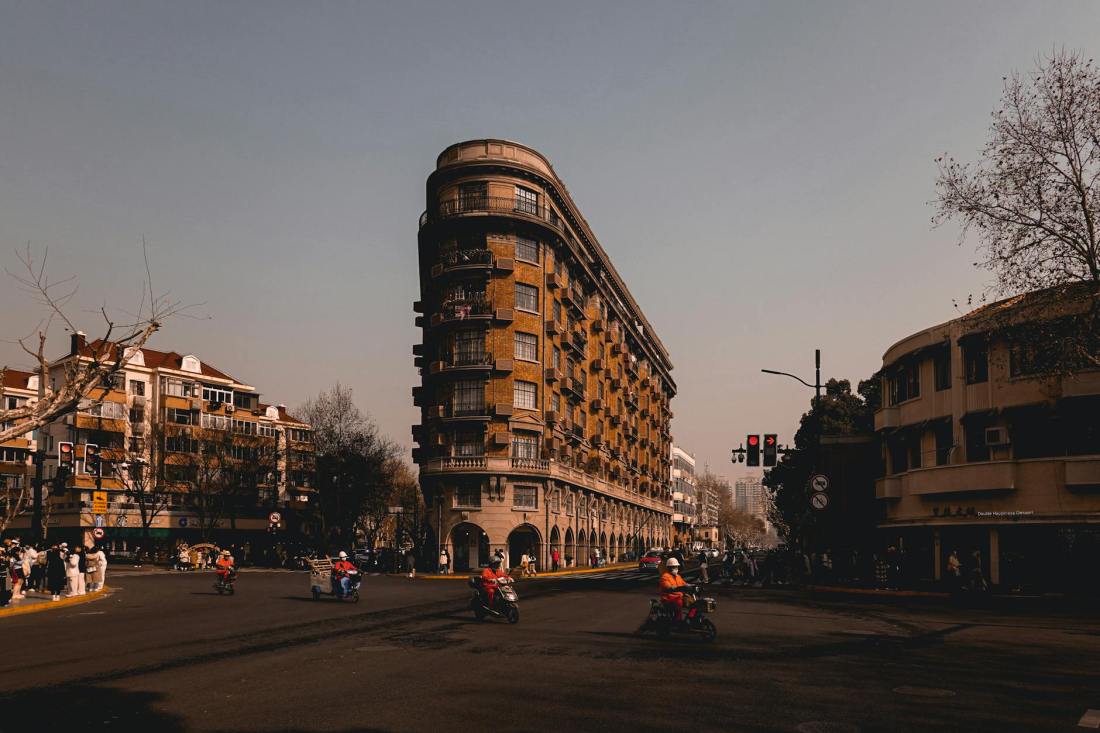
Going around the city, I did feel the city’s fabric actually being partly redesigned. I took a look around the neighborhood where I used to guide food tours, and it was totally closed off. Surprisingly, the prison there (Hongkou District), seemed to have expanded, although I did not check if it is on the map now (it was not on a Chinese map before) and maybe it has gotten a different purpose, although the thick walls and razor wire ensured a not-so-friendly impression. The actual houses though, caleld Shikumen in Chinese, were all closed and any entrance gates fully sealed off. It made me kind of sad to remember the hustle and bustle that used to be around here, the good food and snacks that will be impossible to get here anymore.

And this was not the only neighborhood in this state. Another Shikumen around Yu Garden was in the same state. I understand wanting to renovate the areas or possibly redeveloping them to make room for highrise to create more housing. However, seeing the state of China’s real estate market I am doubtful that this large-scale development will end up profiting the general public. It seems more of it is destined for commercial use, judged by information on the tarps at Yu Garden, which I do not think is a good trade-off for the city, nor its residents.

Besides these old parts being closed for redevelopment, there was another shopping mall I used to go to that was completely derelict. It looked like it got flooded or otherwise damaged, but still accessible and on the maps as well. Seeing old photos of it gave me an especially melancholic feeling. So there were some nice surprises about Shanghai, but also some worrying developments pointing to its future. It seems to have retained a bit more of its character, but is still going through plenty of change.

Travel tidbits: Beijing

Having traveled in China and Taiwan for the first time since 2020, I have some thoughts. The past 4,5 weeks showed me many things that remain the same, have changed hugely or did not notice as much before. I will put some of these into words in my next few posts.

First, I will make a comparisons between the cities that I went to and the cities I remember. And of course, the most prominent one among these is Beijing.

Having lived there for almost 3 years, I have a certain soft spot for it. The convenient grid-like structure, while still being able to wander around in the hutong alleys. Its megalomaniac official buildings that exist next to ramshackle or improvised architecture. The mix of old and new, a certain liveliness and rough personality that the city exemplifies.

Thus, it was quite shocking to realize how much of it changed. Gone are the food stands on the streets, everything is in a little shop. Worker’s Stadium is completely cleaned up without any clubs or drunk people hanging out near it. At one entrance there is a Michelin-star restaurant, quite the opposite of how it used to be. Gone are many dirty and messy corners in the city centre that would contrast with the glitz and glamour of the malls. Now everything is commercialized, shiny and new. How could you want it any other way.

Part of the hutong alleys remains the same, luckily. The redevelopment seems to be more focused on actually improving living quarters, than bulldozing anything that seems old. The quiet of the hutongs, compared to the noise at the big boulevards is still immediate and remains a huge contrast. The splendor of highlights such as the Forbidden City, Summer Palace and Great Wall is not diminished, but the city itself seems to have been reeled in. The metro has guards actively patrolling and commenting on behavior. Every ticket needs to be booked on your passport or ID. There are noticeably less foreign faces on the streets.

If I seem overtly disappointed, it is probably nostalgia speaking. I am not saying Beijing is not interesting or special anymore. It is just a whole lot different from how I remember it being. There is a reason I used to come back to Beijing that often when I already lived in Shanghai. I am not sure there are as many reasons now for me to keep coming back.

The Scoreboard: A Sign of Affection

As everybody else on this planet, I have an opinion. As many people do too, I like to write about it. Share it generously. And I am excellent at keeping score (mentally), so I will try tallying up my fondness of things according to balance.

A Sign of Affection

Love is one of the most universal topics and I am a sucker for a sweet romance. This anime has heaps of sugar, many pastel-colored backgrounds, twinkling eyes, but it somehow manages to not go totally overboard with its elements.

The main character is Yuki, a sweet, timid deaf girl who’s just entered college. By the way, I am also a sucker for college romance. My very first anime series and one of my all time favorites is Honey and Clover, set in an art college. This college is more nondescript, but it is always nice to have more mature characters at the heart of a story.

Yuki takes the train one day and is asked something out of the blue by an enthusiastic stranger. She signs that she cannot hear, but he does not seem to notice. Before things get too awkward though, a young man gently intervenes and helps the stranger out.

It is a typical meet cute, heroine gets rescued by her hero. And for a series so romance-focused, things happen surprisingly drama-free. For the main romance, that is a good thing since it shows Yuki building trust with Itsuomi, him being fortright about putting effort into learning sign language for her sake, and both clearing up misunderstandings swiftly and enjoying to spend time together.

There is a bit more drama involved with the secondary characters, especially Yuki’s overbearing and overprotective childhood friend Oushi and Itsuomi’s high school friends/love triangle Shin and Emma. Although this provides some meat to the plot, and in Oushi’s case some actual growth, Shin and Emma’s case ties up a bit too quickly for all the setup that was done.

The other romance between Yuki’s friend Rin and Itsuomi’s cousin Kyoya also does not really get enough time to fully flesh out the development from friendship to romance. Both are nice characters, feeling are involved, but there is no episode reserved for their plotline.it honestly feels like a missed opportunity because Rin as a popular girl and Kyoya as a weary date-avoidant guy seem to have some interesting backstories.

Although I really enjoyed the series as is, I do think it would have benefitted from some extra episodes. Not only because the main couple is hella cute and it would surely be enjoyable to spend more time with them, possibly allowing for Yuki to be less tense with Itsuomi as well (yes I love me some smut), not only to flesh out the secondary characters more, but to also highlight Yuki’s experience as a deaf person in Japanese society more. We do not see her taking any classes, she does not reminisce a lot about the past, we do not know a lot about her fanily or why they did not learn sign language and although she gets a part-time job, we never see how it goes for her. These would all have been very relevant topics that could also naturally develop the bond between Yuki and Itsuomi.

Although it may seem the series came up short, I would say that is only the case since it was so enjoyable. I wanted to explore, learn and see more. Alas, maybe I will pick up the manga or a second season could be made.

I rate it very sweet and nice, good to watch if you want to reminisce about your first, current or future lover.

The Scoreboard: Suzume

As everybody else on this planet, I have an opinion. As many people do too, I like to write about it. Share it generously. And I am excellent at keeping score (mentally), so I will try tallying up my fondness of things according to balance.

Suzume no Tojimari

There are not a lot of directors that I have seen all works from. Obviously, this is a bit easier the shorter the list gets, and Makoto Shinkai is one that does not constantly churn out new films. Still, I have not seen all of his films but definitely the majority of it. And like most other people, I was really touched by Your Name. But I also remember really liking 5 Centimeters per Second and Voices from a Distant Star.

His stories often focus on couples, in the prime of their teenage years, juggling change and difficult decisions. His visuals also have a very particular, crisp and bright look about them. They have the digital enhancement and cleanliness to them, without losing character.

For the most part, Suzume looks gorgeous as well. The landscapes are vibrant and dynamic, and places recognizable, especially as she moves throughout the country. However, I tend to not really like too much spunk in my heroines, and especially at the beginning Suzume exhibits quite a bit of it. It is a bit at odd as well with her stoicness and distant friendliness to her aunt. Also, although the boy is gorgeous, the love story feels a bit shoehorned in. It is the traditional love at first sight from her end, and even though they end up travelling together and getting to know each other quite a bit, it feels weird when a college student seems to get a crush on a high school girl.

Another thing this film suffers from, is the density of its lore. The world is fleshed out quite quickly, there are doors to other dimensions that need to be closed in order to let the worms under Japan not consume the country, but not much is told otherwise. Not about the family line of Souta that has closed doors since ancient times. Not about the escape and wish of the cat who served as the keystone to keep the door closed. Not really about Suzume’s family history beyond her mother tragically dying during an earthquake and her aunt not getting through to her. Not about the magic that turns Souta into a chair and almost prevents him from returning back to his human self. There is so much more to explore which could have helped take the story to another level.

As it stands, there is still a lot to enjoy but I felt myself wanting more when watching it. Because the premise is so intriguing and the basic worldbuilding done quite well, I wanted to delve more into the characters, their motivations and backgrounds. Also, the gimmick of seeing Suzume walk around with a broken chair is quite funny, but gets a bit stale by the end. And Souta is very handsome of course, so I would not have minded seeing more of his face as well.

I rate it nice and heartfelt, lacking a bit to give it that extra punch.