Ik verkies jou!

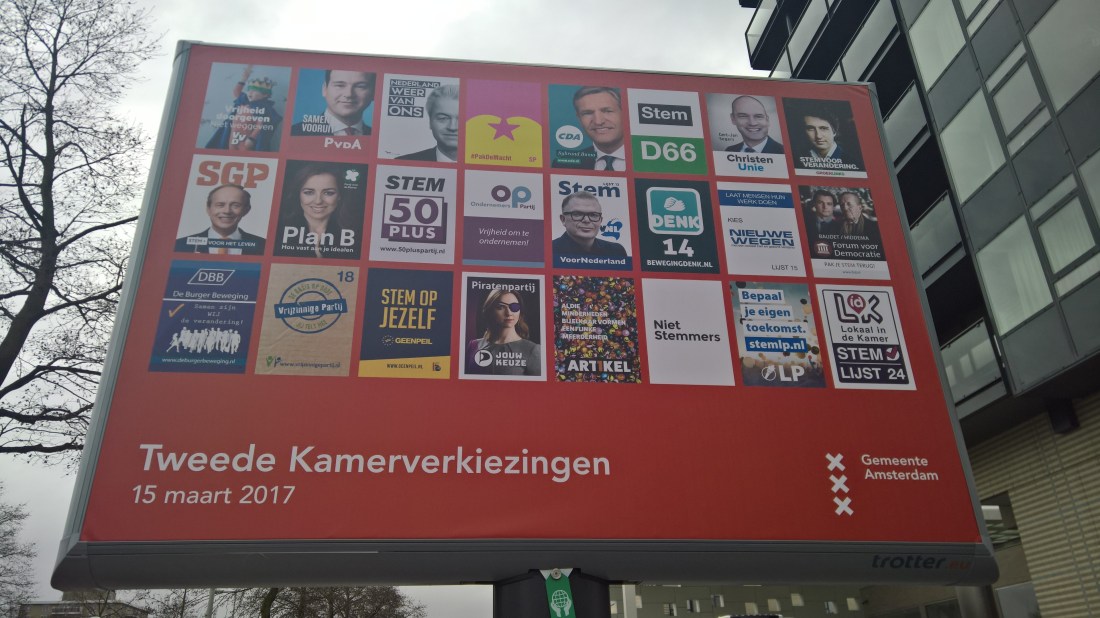
Ja, het is zover. De Tweede Kamer Verkiezingen vinden vandaag plaats in Nederland. Dit is het moment voor de burgers, om je plicht en recht te vervullen en te gaan stemmen. Okee, behalve als je braaf volgens de procedure je hebt geregistreerd maar niet je stembewijs en biljet hebt gekregen. Dan mág je niet eens je ding doen.

Tot een jaar of 2,3 geleden, was ik maar minimaal geïnteresseerd in de politiek. Ik heb wel in de verkiezingen van 2012 gestemd, relatief strategisch want ik had geen flauw benul waar de PVDA toen voor streed, maar niet de programma’s bestudeerd. Overigens ging het hele politieke speelveld grotendeels aan mij voorbij, nationaal en internationaal.

Nu is dat eigenlijk in deze politiek turbulente tijden vrijwel onmogelijk. Ik keek een tijdje geleden nog een filmpje van Zondag met Lubach terug waarin de draak wordt gestoken hoeveel Nederland met de Amerikaanse verkiezingen bezig was. Eraan terugdenkend, deelde ik ook wel ongeloof en een zekere verontrusting toen de winnaar bekend was. Maarja, Amerika is toch wel een stukje verder weg dan Nederland.

En zo beland je anno 2017 in een situatie waarin je actief politiek gaat volgen. Want ja, erg geruststellend is het allemaal niet natuurlijk. En nee, zelf doe je er niet echt specifiek iets aan onder het mom buitenlands uit te zien, in het buitenland te zijn en niet te kunnen stemmen. Laten we de balans opmaken:

Voordeel:

  1. Je kunt meepraten. “Ja, Geert Wilders is een eikel. Maar hij is wel een van de weinige met een Limburgs accent regelmatig op de televisie, dus er is ook nog voor mij hoop!”
  2. Je hebt het gevoel iets toe te voegen. “Nee ik kan niet helpen. Ik ben politiek bewust onderzoek aan het doen om als zelfredzame burger een geïnformeerde stem uit te brengen.”
  3. Je hebt altijd iets om over te praten. “Ja. Laten we het anders over de verkiezingen hebben.”

Nadeel:

  1. Je hebt het idee dat er veel mensen zijn met radicaal andere ideeën. “Nederland uit de EU? Hoe dan?”
  2. Je ziet overal politici die ergens iets van vinden. “Meer blauw op straat. Blauw is het nieuwe zwart.”
  3. Je wordt ongelukkig van alle extreme discussies en meningsverschillen. “Het is erin of eruit.”

Toch maar goed dat die verkiezingen er dus maar eens in de zoveel jaar zijn. Nederland zou nog eens te spannend worden.
I will have hot water, thank you

Walking to work today (with blue skies and in bright sunlight mind you!) thinking about something quintesstentially Chinese: hot water. Okay, hot water is of course not only limited to China, luckily, but the way they use it here is quite Chinese I would say. They drink it. Without any added flavor. Except perhaps for some other chemicals that are in the water here naturally (or not so naturally).

Anyway, I remember that when I started to drink hot beverages, I would drink tea, but with sugar. Not with milk, I did not like English tea like that. And also no green tea, because it was too bitter. Then, when I was 11 we went to China for the first time. None of us, except for the local guides, could speak Chinese (and I dare say my English was quite spotty then too) so most of the times there was no sugar. Furthermore I discovered that there was often not even tea or any flavor in the pot. Plus the water was boiling hot, so that even a full table of foreigners mostly only finished half a pot of tea.

All this mystery continued for a while, but did not leave me unmoved. Sugar disappeared from my tea routine. Milk entered it in the form of milk (bubble) tea (that is milk powder though, not liquid milk) and scorching temperatures no longer became a match for my tongue and mouth.

So after having ample of experience drinking tea and hot water, I am officially trained. I can mostly drink any water directly after it has been boiled, can drink it with or without a flavor and drink loads of it. This is especially helpful in China since you can get a refill of your tea ad infinitum. I heard my friend complain that the Starbucks in the Netherlands charges 30 cents (eurocents!) for it. Ridiculuous!

The advantage of hot water is that you have a hot drink, which does not have too strong a taste and can neutralize other tastes. Very handy in China where strong flavors reign and the tongue can sometimes get a bit too much coming at it.

Also, Chinese teas have so many varieties and flavors. No bitterness in green tea. It is amazing, the best. Although I am too lazy to cook it at less than boiling temperature. I do remain a foreigner of course.

Li’s lievelingswoorden: Dinges

Nederlands is niet de mooiste taal. Het is mijn moedertaal, de taal waar ik het meeste in thuis ben, maar mooi is het zeker niet. Over talen zoals Frans, Spaans en Italiaans hoef je natuurlijk niet te discussiëren. Pure poëzie rolt daar over de tong, ongeacht wat de inhoud of betekenis van datgene wat gehoord wordt mag zijn.

Toegegeven, ik heb wat meer waardering voor Nederlands hier in het buitenland gekregen. Niets zo leuk dan in een in China vrij onbekende taal te praten, roddelen en becommentariëren. Jammer dat het vaak met Engels wordt verward, omdat veel Chinezen dat ook niet verstaan, maar de gezichtsuitdrukking wanneer taal en daarmee ook mijn nationaliteit worden onthuld is onbetaalbaar (vind meer over deze situaties in het Engels in deze post).

En ja, zodra je meer talen leert besef je des te beter welke woorden ontbreken in het Nederlands. Maar je realiseert je ook dat het Nederlands toch wel woorden heeft die je niet zou willen missen. Daarom hierbij een ode aan een van mijn lievelingswoorden: dinges.

din·ges (de; m,v; meervoud: dingesen)
1 (informeel) naam waarmee je personen of zaken aanduidt waarvan je de naam niet wilt of kunt noemen

Bron: vandale.nl

Misschien heeft het met de klank te maken. Het Engelse equivalent ‘thingy’ klinkt een beetje kinderachtig. Dat dingetje, nee dat is bij lange na niet stevig genoeg om een brede categorie aan te duiden. Misschien heeft het ermee te maken dat een deel van de Nederlandse aanwijswoorden met een d begint: die, deze, dit, dat. Dat allitereert wel mooi. Misschien omdat de vorm vloeibaar is. Je hebt een dinges, gaat dingesen, iets is dinges, de dinges in de dinges dingesen, moderne taalkunst.

Ik gebruik dit woord te pas en onpas, in moeder- en vreemde taal. Zo hebben mijn Chinese, Japanse, Koreaanse, Australische, Franse en Duitse vrienden die ik in China leerde kennen tijdens mijn studie allemaal in meerdere of mindere mate ervaring met dit woord. Het is voor een Nederlands woord ook nog eens best goed uit te spreken door buitenlanders.

In zekere zin zijn dit soort tussenwoorden op een bepaalde manier onbelangrijk en tegelijkertijd heel belangrijk voor een taal. Aan de ene kant heeft het geen invloed op grammatica, uitspraak of schrijfwijze. Maar het laat wel zien dat een taal leeft. Genoeg leeft om dit soort woorden nodig te hebben of dat de gebruikers in ieder geval deze behoefte hebben. En ja, als levende gebruiker van een levende taal dinges ik dus met heel mijn hart.

Film rewriting: La La Land

Shamelessly plugging into the publicity that La La Land already has because of the Oscars and its popularity. Yes, I saw the movie, I even saw it twice. I liked it a lot, love the music, understand (part of) its popularity.

So I am not going to tell you the synopsis of this film, since it is everywhere on the internet and otherwise you know how to go to www.imdb.com (or you just learned now how to). But basically it is a slightly more realistic lovestory with some very good music inserted.

Actually, that is one of my main complaints, there is not enough music in it. Okay, granted I looked for the full music soundtrack on my Chinese (slightly illegal?) music app and it had more than 40 numbers. However, half of them are instrumental tunes which only last for 30 seconds to 2 minutes.

I absolutely loved the first 40 minutes of the film and the first two songs. The opening is one of the happiest traffic jams you will ever see, and I whispered to my friend when we would ever be standing in such a traffic jam with 40 handsome young people who can dance and sing. Shortly afterwards the second song follows which is a nice twist on the getting ready sequence that usually happens before the party.

I reckon it is because the film is between an actress and a musician, so the instrumentals get a lot of time to shine. I did miss some unison singing and flashmob dancing though. I remember watching the remake of the Hairspray film as a musical film a few years ago with some French friends. They were clearly not into musicals, since I heard them whispering at a certain point: “They are singing a bit too much.” Which of course is the whole purpose of a musical film, but never mind.

So to get to the purpose of this writing exercise, herewith some recommendations for La La Land:

  1. I understand it is an idealized version of having it difficult, but being able to regularly go to parties, afford a nice apartment (even shared) and take off from work when you want to (and not even serving customers adequately), does really defy expectations quite a bit. Would it not be nice if she had some harsher conditions to go against?
  2. So can we have a bit more motivation for the change of heart for these starstruck lovers to start looking at each other differently? I mean, he swipes sand in her shoe and then they start dancing. Why yes, is that not a great dating move?
  3. For the final reel of how ideally their relationship/lives should have gone, can we shorten it a bit? By this point we have already been watching for about 1,5 hours, and we can basically imagine ourselves how it should have went. The first part of re-enacting the original movie was fun, but could the family/kid part not have been shortened? Yes it could have been.

But perhaps if it was even slightly more realistic, there would not have been as many Oscar nominations and wins. Oh well, who cares about that anyway right?

About learning Japanese in China

So pretty much my next favorite country besides China, Belgium and France is Japan (probably should keep a spot for a Scandinavian country too since the chance of me finding a partner there is very high). Because I have been slacking with my Japanese studies since about 2013, mainly keeping it up through watching anime and reading manga at about one page per 15 minutes, I found a buddy to start doing Japanese again with. In China.

If I could say anything about the Chinese education system without really participating in it, I would sum it up as being: rigid, not very interactive and faithful to the textbook. This would actually turn out to be true more or less once I started. I could start a separate career as diviner!

For a Dutch person, this is of course quite the opposite of what we like to have. We tend to focus more on interaction (even if it is students saying a lot ‘I do not know the answer’), flexibility (ooh the ‘Leids Kwartiertje‘) and being creative with content (‘Yes teacher, I feel watching a movie would be very helpful in the learning process.’). So how does it feel to experience a wholly different system?

Rigid: Well this is mainly manifested in the way that each class is pretty much the same structure. 20 minutes discussing the new words, 10 minutes of reading the standard text, 1 hour of grammar and 30 minutes exercise. The fact that I know this structure already after only 2 lessons is in itself kind of amazing.

Not very interactive: Yup, this matches. I just described that we had only 10 minutes of reading and 30 minutes of practice. This is still divided by about 5-7 people. Furthermore, it is very easy to just not participate. The fact that we have teenagers (yes, 15-year olds. Nostalgic.) means that they are readily using this. One of two has clearly been sent here by his parents as extracurricular activity and is consequently one of the least motivated persons I have ever experienced studying a language. The girl obviously has watched (quite) some anime since she insterts a ‘Nani?’ (Japanese for what) between everything and is just in general sassy in a way that is not really constructive (‘Congrats teacher on writing the wrong character.’).

Faithful to the textbook: We have a bingo! Incidentally, even the short test (which is really not worthy of being called a test) uses the exact same sentences as the textbook examples. Like, word for word. And then the teacher advises us that we should really not look in our books. It is quite cute, if it was not about something as relatively serious as teaching a language.

So I might sound quite negative here. The fact that we are cramped in a small rectangular room which is about 15 square meters (does remind you of Japan in a certain sense I guess) and an atmosphere that is lethargic does not help either. However, there are also bright spots:

  1. I follow the class with a Dutch-Turkish friend, so we are the foreign stars of the class.
  2. My level is easily the highest in the class (which does not say a lot, this is the second-to-lowest level we are following) so I can act smug and be a know-it-all legitimately.
  3. It is effective to at least be actively engaged with this language for 4 hours a week. Those are 4 more hours than before!

So that also consitutes a bingo. Guess it is a tie for now.

Samenwerking tussen hoofd en gevoel

Eigenlijk zouden ze het ondertussen wel onder de knie moeten hebben. Zo’n hoofd dat zegt: Dit gaan we doen!’ En een geruststellend gevoel dat dan gelijk meegaat en ‘Ja!’ zegt. Of als ja aanvoelt dan. Maar zo gemakkelijk is dat toch niet, samenwerken met jezelf. En dan kun je 30 keer per minuut ademhalen (want dat ontspant), dingen opschrijven in hanepoten (en vervolgens gefrustreerd raken over je eigen handschrift) of jezelf stevig toespreken (klinkt toch niet zo heel erg overtuigend).

In China wonen helpt eigenlijk niet erg bij dit proces. Veel Aziaten en ook de Chinezen excelleren juist in de scheiding tussen hoofd en gevoel. Daarom kunnen mensen zich in het weekend naar kantoor slepen als een vakantie gecompenseerd moet worden; staan ze toe dat ouders in het park naar de huwelijksmarkt gaan om hen aan een partner te helpen; kopen ze een hele winkel (of een heel vliegtuig) leeg om hun omgeving tevreden te stellen.

Nu rijst natuurlijk de vraag, in hoeverre is dit een probleem? Hoeveel kun je hier als buitenlander, de mindfullness tientallen jaren opzuigend, mee omgaan? Of wie weet, zelfs van leren?

Wat dat betreft is het een vrij paradoxale omgeving, waar wij hoofd en gevoel liefst zoveel mogelijk scheiden professioneel, maar combineren privé, draaien de Chinezen het precies om. Zo kan het zomaar zijn dat een Chinees van baan verwisselt vanwege baas of collega’s, maar braaf iedere keer met Chinees Nieuwjaar naar huis blijft gaan, ook al weet zij/hij wat voor spervuur aan vragen, eisen en ruzies dat meestal oplevert.

Waarom verschillen dit soort zaken altijd per cultuur en per persoon? Kijk ik naar mijn kat, dan is het leven gemakkelijk. Hoofd en gevoel werken niet alleen samen, maar lijken gewoon één. In dezelfde woorden te vangen. ‘Mens ik heb honger.’ ‘Waarom geef je mij geen eten?’ ‘Ben je nu pas thuis?’ ‘Ik ga op je springen alsof je een springkussen bent.’ ‘Het is tijd om te doen alsof mijn staart niet aan mij vast zit.’

Zeker ook iets voor te zeggen, dus ik hanteer voortaan in China kattengedrag. Op likken en brokjes moet ik nog wat oefenen. Op dat hoofd en gevoel ook wel trouwens.

What words mean

The brain is a strange thing. Once you do not know something, you cannot imagine how it is when you understand or know it. Once you do know it, you automatically forget how it is when you did not understand or know it.

Last weekend, I had a niece visiting who was in China for the first time. It made me remember how everything was when I visited China for the first time, or even when I did not know the language as well as my face would assume. With all the characters and different pronunciation(s), you adapt to a wholly new way of conveying things and processing information.

Of course, a cultural component also plays an important role with the establishment of these differences. In many Asian cultures, it is less common to be very upfront about feelings, ideas or opinions. China also has this up until a certain degree. The Netherlands and other northern European countries are on the other side of the spectrum, voicing thoughts openly.

Since I grew up in the Netherlands with Dutch parents, I am quite direct, but not the most extreme. Even within the Netherlands, differences exist, mostly between the northern and southern parts. Then again, China is even larger so I cannot even pretend to be speaking for China in general. However, the Chinese expression, 口是心非, the mouth says yes but the heart says no, can be applied widely. But in more surprising ways than you might imagine.

Being positive but meaning negative

  1. ‘I will see.’ / ‘If I have the time I will come!’ There are the standard instances when you ask someone to do something, go somewhere with you, participate in something and the other’s response can vary. Furthermore, these kind of propositions and answers can be held in forehand, or a few hours before the event itself. See my Dutch post on time for more background.
  2. ‘Let us meet (soon)!’ Is this ever meant though? The digital equivalent in China is adding someone on WeChat and instantly forgetting about her/him. Like, only receiving the standard ‘I added you, we can now start chatting!’ and not even moving beyond that.
  3. ‘Please do everything in your own tempo.’ Whether it is study or sport or anything you are trying to master, your tempo had better match the class’s or teacher’s. For sports, feel free to reach as far as you think is anatomically possible. We will push, pull and lie on you to get you further. Read my Dutch article on sports in China for more enlightenment.

Being negative but meaning positive

  1. ‘You do not need to bring anything.’ Actually, I have never been in the situation where I really did not bring anything. The advantage is that you do not need to bring a highly personalized gift. Food or drinks are usually appreciated. Often accompanied by a ‘You should really not have done that.’ while handily storing it in the cupboard.
  2. ‘Your English seems to have become worse.’ A friend of mine was told this by a Chinese friend of hers. Mind you, jokingly. The Chinese are often full of these contradictions, seemingly to inform you: ‘I know you well and have high expectations of you / know you can do better, which I express in this way.’
  3. ‘It will not be long.’ If it is anything related to food and drinking, this is a blatant lie. If it has anything to do with a bank, hospital or police station, this is also a blatant lie. If it has to do with meeting again, this can be a blatant lie. Or they start stalking you.

What to do?

Since this is an era of typing instead of writing, I sit behind my computer desk with not an exactly blank screen, but getting close. What to write about today? Actually, I have no idea. Or I actually have a bit too many ideas. That is okay, it is how I spend most of my life. Not actually knowing what to do.

Is that a bad thing? Well, in this day and age where we can plan everything, most people seem to want to have more surprise and wonder in their life. For the Chinese, this feeling seems to be less prominent, probably because people think more short-term (see my previous Dutch post on this topic). Furthermore, moving to a different country is quite a good measure to experience more wonder and amazement. What makes it even more fun, is that in my case it is mutual.

Whenever I exchange more than 3 sentences with a Chinese person, it goes something like this:

/Hi, you are Chinese?

\I count as a foreigner I guess…

/Are you from Hong Kong or Taiwan?

\No, I am not. Do another guess.

/Japan? Korea? Vietnam?

\No I am from Europe, from the Netherlands.

/Really? You do not look Dutch at all!

\Well… Actually I was born in China.

/So your parents are Chinese?

\No, my parents are Dutch.

/But do you speak Chinese at home?

\No, my parents are Dutch.

/Are your parents in China?

\No, my parents are in the Netherlands.

/Is your family in China?

\No, my family is Dutch and in China.

/But you are Chinese.

\No, I am Dutch.

/But you speak Chinese.

\Well, I studied it for more than 5 years so yes.

/Do you speak Chinese with your parents?

\No, they are Dutch.

/But it is great that you returned to China and speak Chinese now! You are Chinese from the inside after all.

\Uhm… No not really though…

So what does this tell us?

  1. Chinese automatically assume everyone who looks like them to probably be like them. Sort of like the opposite of what we have in the Netherlands, where everyone who looks different is assumed to probably be a foreigner.
  2. It is difficult for both parties to grasp each other’s world views and background. How is a Chinese-looking person not identifying as Chinese and not knowing all the Chinese poems and songs? How do the Chinese not see and realize I am not a Chinese person and am quite different from them, more so inside than outside though?
  3. In China, I am seen as a Chinese which I am not. In the Netherlands, I am seen as a foreigner which I am not.

Enough everyday wonder and amazement for me while living in China. You should try it too, honestly I can only recommend it.

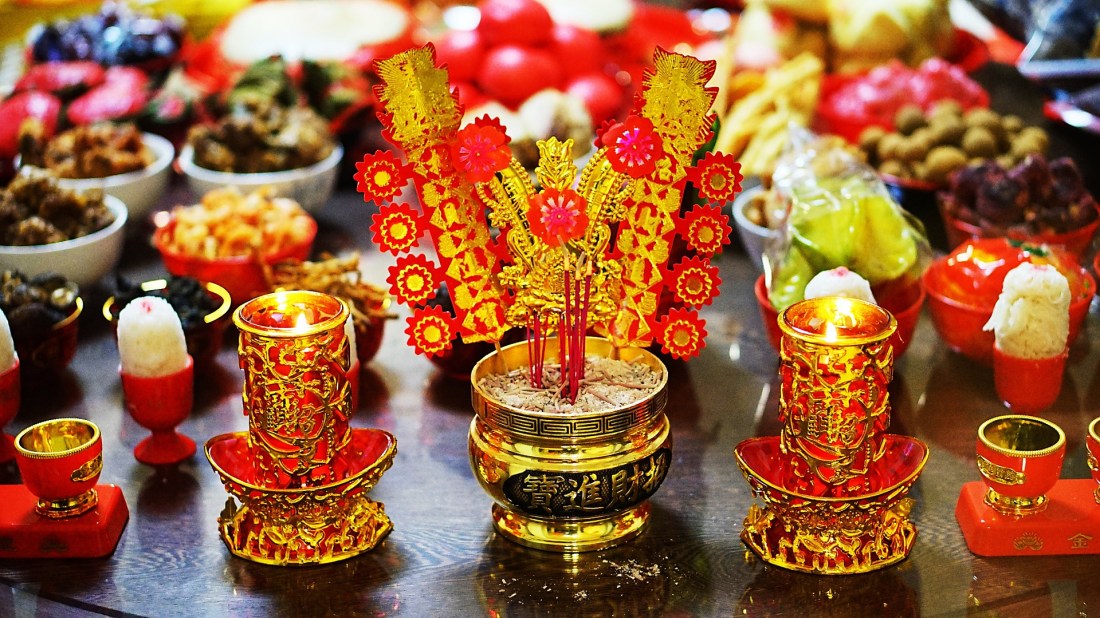
It is the second new year of the year!

Living in China has its advantages. You can eat 24 hours a day, you can cycle pretty much wherever you want, you can spit on the streets or pretty much everywhere (not that I do so of course, I am a proper educated lady) and you get to celebrate new year twice!

Granted, the first new year celebrations are quite anticlimactic. People do wish each other happy new year, there are parties, drinks and get-togethers but it is not the same. There are no fireworks, many people simply go to bed before 12 and the atmosphere is not there. No holidays, tomorrow is just another day, except with a few number changes.

For the real festivities, you need to look at the Lunar New Year (based on the Lunar calendar, of which I do not understand anything either). It generally takes place somewhere end of January-end of February-ish (wish it was one month!) and lasts about 7-10 days officially.

So what happens? The usual, millions of people are on the move, villages are (or should be) flooded with people, an amount of food and alcohol is consumed that reaches to the heaven, praying to the heavens by going to the temple, general happiness, joy and good quality family time (possibly with the added bonus of being pressured by family members to settle and get married).

You probably get the general idea, but how does it actually feel? I have no clue. I have no Chinese family I know and the previous times with Chinese New Year I was on an airport in Shenzhen (watching the KFC employees having hotpot at around 3AM and contemplating who had the saddest New Year) and afterwards in Taiwan (where there were temple festivities, but also mainly very quiet); and last year I was in Japan where I did go to Yokohama (the Chinatown of Tokyo so to say) but it is of course not the same. Oh yeah, and Chinese New Year celebrations in the Netherlands, which enlightened me that this existed at all.

But this year is different! I will be in Beijing! what to expect? Well, eating and making dumplings, most things in general to be closed, very empty streets, hopefully some fresh air, half the days off that the usual Chinese get (although we do not have to compensate) and a lot of noise (so perhaps a stressed kitten will get added to the mix). I actually thought of making new year’s resolutions again this morning. But then I did not really make any for the Western new year either. Except subconsciously to really stop with biting my nails (improving!), to write more (improving!) and to stay positive (improving!).

So I guess the only thing left to write is ‘Happy New Year!’ and keep on going in the year of the rooster!