Hoe een dag door te brengen zonder iets te doen?

Horen we het niet allemaal? Zeggen vrienden niet regelmatig: ‘Vandaag ga ik eens lekker helemaal niets doen!’ Of die traditionele zin: ‘Ja, even bijkomen, niets doen, genieten…’ Maar in het huidige tijdperk kunnen we allemaal wel wat hulp gebruiken. Hoe gaat dat nu, niets doen? Op de eerste dag van het nieuwe Chinese jaar, breng ik het antwoord!

Voorbereiding

  1. Het is belangrijk om dit soort dingen aan te kondigen. Mogelijk te herhalen bij zoveel mogelijk mensen.
  2. Bedenk in je hoofd het scenario. Denk aan blauwe luchten, groene grasvelden, wind door je haar, kabbelend water in de buurt. Het gaat om de stemming, niet om de werkelijkheid.
  3. Doe heel veel de dag ervoor, nuttig of niet. Het helpt om laat naar bed te gaan, (belachelijk) veel te eten, maar beter niet (belachelijk) veel te drinken want dan wordt het een dag niets doen met een kater. Daar heb ik geen tips voor.
  4. Zorg ervoor dat de ruimte(s) waarin je de dag gaat doorbrengen aangenaam zijn. Niet dat alles spik en span moet zijn, grote kans dat je toch haren achterlaat waar je ook gaat, maar wel fijn als je met blote voeten of minimale kleding kunt lopen zonder uit te hoeven kijken of schroom.
  5. Absorbeer ieders jaloezie en aanmoediging voor de grote dag.

Uitvoering

  1. Blijf in bed liggen. Tenzij je per ongeluk op de bank in een oncomfortabele positie in slaap bent gevallen. Ga dan in bed liggen.
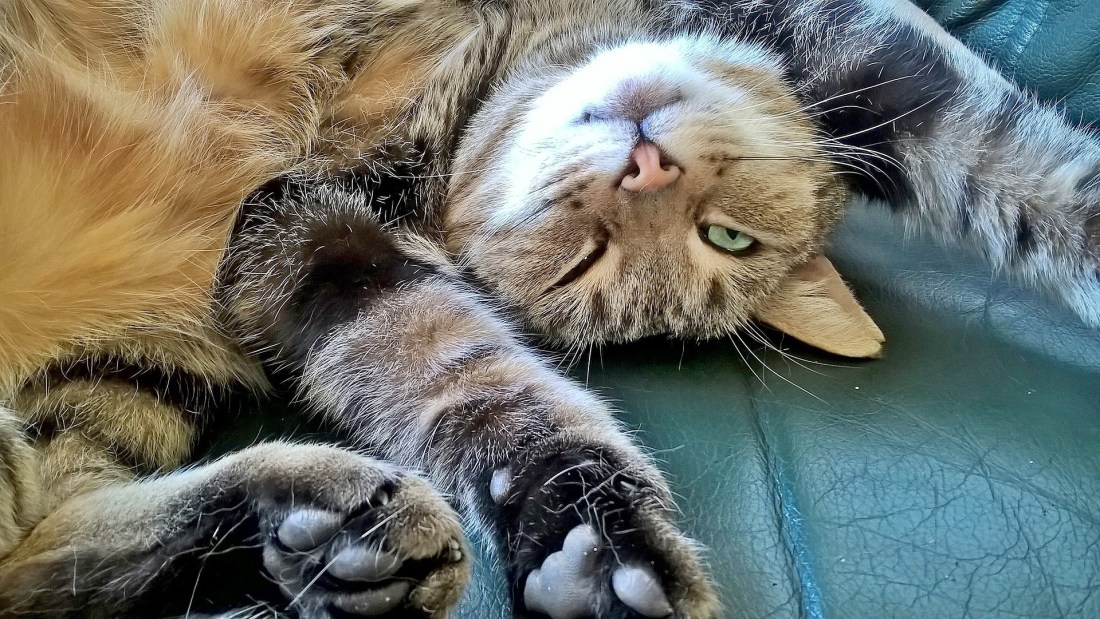
  2. Negeer zoveel mogelijk alles en iedereen dat je op andere gedachten probeert te bedenken. Een kitten die je in de keuken hebt opgesloten bijvoorbeeld en keihard mauwend aangeeft dat zij wel graag iets wil doen. Stel prioriteiten.
  3. Sta op een gegeven moment op uit bed om enkele basisbehoeften te vervullen. WC, drinken, eten kitten tevreden stellen, laptop halen en aanzetten etc.
  4. Breng zoveel mogelijk tijd door op 1 plek. De mens mag dan geen winterslaap houden, we kunnen wel eens in de zoveel tijd minstens 1 dag doen alsof.
  5. Doe wat niet-essentiële klusjes tussendoor zodat je wel een goed gevoel hebt over je nietsdoen-dag. De was, kat te eten geven, vuilnis buiten de deur zetten.

Tips

  1. Ter extra ontspanning is een huisdier erg nuttig. Let er echter op dat dit ook averechts kan werken. Vooral jonge dieren doen graag iets, dus voor je het weet ga je daarin mee.
  2. Zorg ervoor dat het geluid zoveel mogelijk geminimaliseerd of aangenaam is. Voor zover je daar controle over hebt (achterstallig boren in de ochtend, praatgrage beestjes).
  3. Draag comfortabele kleding, ongeacht of het veel of weinig is (indien de omgeving waarin je je bevindt dat toelaat).
  4. Eet en drink genoeg. Laat dit soort dingen zoveel mogelijk naar je toekomen. Zelf dingen maken heb je nog genoeg tijd voor op andere dagen.
  5. Knuffel met mensen, of dieren. En praat online of in persoon tegen ze (afhankelijk van je nietsdoen-kledingstijl). Stel uitgebreid tentoon dat je niets aan het doen bent, dat je als normaal persoon deze bewuste keuze hebt gemaakt.

Wees er trots op dat je niets kunt doen! Velen missen deze broodnodige vaardigheid in het leven.

It is the second new year of the year!

Living in China has its advantages. You can eat 24 hours a day, you can cycle pretty much wherever you want, you can spit on the streets or pretty much everywhere (not that I do so of course, I am a proper educated lady) and you get to celebrate new year twice!

Granted, the first new year celebrations are quite anticlimactic. People do wish each other happy new year, there are parties, drinks and get-togethers but it is not the same. There are no fireworks, many people simply go to bed before 12 and the atmosphere is not there. No holidays, tomorrow is just another day, except with a few number changes.

For the real festivities, you need to look at the Lunar New Year (based on the Lunar calendar, of which I do not understand anything either). It generally takes place somewhere end of January-end of February-ish (wish it was one month!) and lasts about 7-10 days officially.

So what happens? The usual, millions of people are on the move, villages are (or should be) flooded with people, an amount of food and alcohol is consumed that reaches to the heaven, praying to the heavens by going to the temple, general happiness, joy and good quality family time (possibly with the added bonus of being pressured by family members to settle and get married).

You probably get the general idea, but how does it actually feel? I have no clue. I have no Chinese family I know and the previous times with Chinese New Year I was on an airport in Shenzhen (watching the KFC employees having hotpot at around 3AM and contemplating who had the saddest New Year) and afterwards in Taiwan (where there were temple festivities, but also mainly very quiet); and last year I was in Japan where I did go to Yokohama (the Chinatown of Tokyo so to say) but it is of course not the same. Oh yeah, and Chinese New Year celebrations in the Netherlands, which enlightened me that this existed at all.

But this year is different! I will be in Beijing! what to expect? Well, eating and making dumplings, most things in general to be closed, very empty streets, hopefully some fresh air, half the days off that the usual Chinese get (although we do not have to compensate) and a lot of noise (so perhaps a stressed kitten will get added to the mix). I actually thought of making new year’s resolutions again this morning. But then I did not really make any for the Western new year either. Except subconsciously to really stop with biting my nails (improving!), to write more (improving!) and to stay positive (improving!).

So I guess the only thing left to write is ‘Happy New Year!’ and keep on going in the year of the rooster!

Tijd en spontaniteit

Een paar maanden geleden herlas ik dit artikel over de perceptie van tijd in verschillende culturen.

Toen ik in Peking studeerde, kwam ik voor het eerst langere tijd in aanraking met echte verschillen in tijdsperceptie. Zo waren van de internationale studenten de Duitsers altijd stipt op tijd, ik (tellend als Nederlander) in ieder geval niet meer dan 10 minuten te laat en kwamen de Fransen gerust 30 of meer minuten te laat aanzetten zonder waarschuwing.

In mijn ogen is luiheid hier niet het probleem (hoewel een Duitser dat ook weer anders zou kunnen zien). Na uitgebreid overleg (poldermodel!) gaf onze Fransman aan dat dit zijn gedrag de gebruikelijke gang van zaken was in Frankrijk. Zo gedragen wij ons natuurlijk (meestal) naar de manier die in onze landen normaal en geaccepteerd is. Kortom, we hebben in Europa nog genoeg te heggelen en steggelen (alweer!) , laat staan met een land aan de andere kant van de oceaan.

Maar dan toch China. Ik moet zeggen, nu ik hier wat langer woon, waardeer ik de Chinese manier van plannen wel. Het doet me een beetje denken aan mijn jeugd in Echt, in Limburg waar mijn ouders de achterdeur altijd open hadden (en hebben) staan voor iedereen die even binnen wil lopen. Lekker spontaan, niet teveel gedoe en ongedwongen.

Laten we eea even vergelijken:

Afspreken met Nederlanders

  1. Idealiter geeft een van beiden 3 weken van tevoren aan dat er afgesproken gaat worden.
  2. Vervolgens vindt de traditionele ‘kalenderuitwisseling’ plaats. Meestal zijn er in de komende drie weken minstens 5 dagen per persoon waarop iemand niet kan. Het is belangrijk om van iedere dag te benoemen welke activiteit plaatsvindt/waarom je niet kunt. Als we elkaar niet te zien krijgen, zijn we in ieder geval alweer iets meer op de hoogte van elkaar.
  3. Als je geen geschikte datum kunt vinden, bedank elkaar en spreek de hoop uit elkaar toch weer een keer te zien. Als je wel een datum kunt vinden, bespreek waar, wie en wanneer.
  4. In principe is het wenselijk om 10 minuten te vroeg, op tijd, of maximaal 10 minuten te laat aan te komen.
  5. Eventueel kan het voorkomen dat je niet kunt, laat dit op tijd (meestal 10-5 dagen) van tevoren weten.

Afspreken met Chinezen

  1. Maximaal 3 of 4 dagen van tevoren vragen om af te spreken. Ik had het een keer met een vriendin over volgende week, toen zei ze: ‘Oh zo lang nog. Daar hoeven we volgende week pas naar te kijken.’
  2. Stel een dag voor, of een reeks dagen. Een van de dagen is ongetwijfeld goed. Of je kunt aansluiten. Of alleen samen eten. Eten kan altijd.
  3. Als je de hele week voorbij bent, maar onverhoopt geen datum hebt, zeg dan dat je later nog eens kijkt. Dit kan volgende week zijn, maar ook enkele weken later. Als je wel kunt, spreek af waar je gaat eten.
  4. In principe kom je op tijd. Maar je kunt ook 30 minuten van tevoren aangeven dat je 10 minuten later komt. Of 30 minuten. Of 1,5 uur van tevoren laten weten dat het niet meer gaat lukken. Allemaal opties.
  5. Je kunt altijd last minute mensen meenemen. Of achterwege laten.

Nu is kort plannen niet altijd even praktisch, maar het schept ook mogelijkheden. In zekere zin maakt het het leven een stuk verrassender (alsof wonen in een ander land nog niet spannend genoeg is) en is het een stuk spontaner. Zo heb je de hele week vrij, maar snel genoeg vult die zich vanzelf wel naarmate de dagen vorderen. En de weken daarna, en de maanden en jaren. Zo gaat het maar door het hele jaar. Want Chinezen zien tijd als een cyclus. Maar dat voor een andere keer.

Guidelines for working in a Chinese Japanese restaurant

Welcome, glad to have you with us!

Please view below steps for proper conduct at our Chinese Japanese restaurant.

Terms: Chinese Japanese restaurant, a.k.a. a Japanese restaurant in China, not a Chinese-Japanese restaurant. You know right?

Positions these guidelines apply to: Waiter/waitress

Please follow the rules mentioned below. It is of utmost importance to follow these guidelines exactly as they are written!

  1. When a customer (but honestly anyone) enters, be sure to say ‘WELCOME’ in Japanese (Irasshaimase (いらっしゃいませ) ). However, to not let customers be confused that they are in Japan, two important rules must be followed.
    a. Be sure to pronounce Welcome unclearly and incorrect. ‘WECO’, ‘WLCM’, ‘WLECMOE’ are all acceptable. In (Chinese) Japanese it should sound something like ‘Ilashaima’, ‘Irashamse’, ‘Irashase’.
    b. Volume is more important than looks. So be sure to say it in a loud voice (scream if necessary), then you can have any expression on your face that you would like.
  2. Once a customer has entered, be sure that at least two of you talk to her/him.
  3. Guide the customer to a seat first. If the customer is hesitant to sit down on the spot, mention that any of the available seats can actually be taken. If necessary, walk around for a few minutes.
  4. When the customer is seated, be sure to look at her/him for a period of time until it gets awkward. Wait with going away anyway until the customer says you can do so.
  5. If the customer wants to order, be sure to avoid her/his gaze for a while. You might want to chat with your colleagues (of whom at least two should be free at the same time), look at your phone, clean a specific spot with a dirty cloth etc. to make sure you are not looking at her/him immediately. When you are ready, go to the customer for her/his order.
  6. While food is being prepared for the customer, feel free to loiter around, chat with colleagues, look at your phone or pick your nose. For the last activity, try to make sure as much as possible that nobody sees you. If they do, wipe it on your clothes.
  7. Once food is there, be sure to help the customer eat it (mix food, turn food, cut food, put on a stove etc.) so that you do not have nothing to do all the time.
  8. When the customer wants to pay, make sure there is another colleague at the cash desk, so she/he has something to do as well.
  9. As the customer is leaving, scream/shout something like ‘TNAK YO’ or ‘ALIAGTO GOSAIMA’.

If you follow all of these rules, you should be able to deliver service perfectly compliant with our standards. And remember the most important rule of all:

We are a Japanese restaurant in China. We do not solely copy, but add our own Chinese flavor to the service. That is what makes us special.

Film rewriting: Kubo and the Two Strings

So to be a bit more accessible, let’s add some English to this game!

Last weekend, I went to the movies with a friend and (sort of) by coincidence we saw Kubo and the Two Strings. Without actually knowing it either, it was a beautiful stop-motion movie where you could easily lose yourself in its visuals.

But then the story. It was not that it was terrible, not by all means. But I always keep wondering how they manage to keep these tales so predictable. Being an instantly obsessed millennial internet user, I dove right into the IMDB and review pages. Having read a few reviews, it got me thinking that it would be interesting to see how the story could be changed to follow a more original, possibly more interesting, path.

Let’s take a look at the basic storyline below:

“Kubo and the Two Strings is an epic action-adventure set in a fantastical Japan from acclaimed animation studio LAIKA. Clever, kindhearted Kubo ekes out a humble living, telling stories to the people of his seaside town including Hosato, Akihiro, and Kameyo.”

“But his relatively quiet existence is shattered when he accidentally summons a spirit from his past which storms down from the heavens to enforce an age-old vendetta. Now on the run, Kubo joins forces with Monkey and Beetle, and sets out on a thrilling quest to save his family and solve the mystery of his fallen father, the greatest samurai warrior the world has ever known.”

“With the help of his shamisen – a magical musical instrument – Kubo must battle gods and monsters, including the vengeful Moon King and the evil twin Sisters, to unlock the secret of his legacy, reunite his family, and fulfill his heroic destiny.”

Source: Rotten Tomatoes

In one of the reviews I read online, it was mentioned that the hero himself did not have a lot of doubts regarding his fate/travel/destiny. Another thing, that often seems to be the case in these kinds of stories, is the underdevelopment of the villains. They just exist without a background or any other motivation besides being bad(ass). Sounds like a simple way of living, but one that does not incite a lot of recognition. Additionally, I was initially a bit confused with the role of the mother, especially since (spoiler!) she goes from a mentally unstable person to a wise and protective monkey.

So what to do? I propose some simple editing of crucial story elements (spoilers!):

  1. Can we have the mother act a bit more lucid in the scenes where she is not a monkey? Just so it feels more natural once she actually becomes the monkey. That would be very helpful to our audience.
  2. The start of Kubo’s journey starts because he stays outside after dark and can thus be found by the bad peeps. Can we have a better motivation for Kubo to stay outside other than that he somehow does not manage to run the whole way back in one sequence because he just needs to be slow once?
  3. Can we get a look at what Heaven looks like? What is the reason for people in Heaven to be so cold and evil? That is not what I have learned before!
  4. There is no moment of inner turmoil. This guy has his mother turned into a monkey, a beetle as his additional travel companion, is chased by people descended from heaven and has both his parents dying at the same time. How is he keeping his stuff together? Please enlighten me!
  5. Why is there a semi-happy ending with the entire family (even though the parents are in some sort of spirit-form)? Please do not end this movie in such a cheesy way.

Sounds great huh? Now to find some people to shoot this thing again in like 100.000 frames since it is stop-motion. Oh well, it is all about the ideas right?

Want een goed begin is het halve werk

Hmmm bloggen, over alles. Dat is toch wel anders dan een reisverslag, een achtergrondartikel of een universiteitsblog.

Eigenlijk sta ik mezelf er wel op voor dat ik gedisciplineerd ben. Ik drink en rook niet, doe geen drugs, sport braaf een keer of 3 à 4 per week en eet eens per week een appel. Maar op de een of andere manier is het altijd moeilijk om een ritme te houden met dingen die je leuk vindt. Schrijven dus. Ik heb mezelf al ontelbare keren voorgehouden eens goed te gaan zitten voor een artikel. Om maar niet een blog te starten want dat stokt binnen de kortste keren (verwijst naar reisverslag hierboven). Me onder andere mensen te scharen zodat ik extra motivatie heb om te schrijven.

Maar wie weet komt het dit keer allemaal goed. Een nieuw jaar, een nieuw begin en zoveel indrukken om te beschrijven, die ik beter hier kan neerpennen omdat ik mijn eigen redacteur ben. Hopelijk bezorg ik mezelf snel en regelmatig een beetje werk :)!

First things first.

Na een tijdje de verleiding te hebben weerstaan, begin ik toch maar een eigen blog met officiële titel enzo. Ik ben eigenlijk altijd van mening dat het veel prettiger is om voor anderen, met anderen, onder anderen te werken. Als je het zelf moet regelen, is een zekere discipline nodig, die niet altijd aanwezig is.

Maar zulke dingen kunnen dus getraind worden, vandaar dit blog. Over China en meer. Hartstikke leuk, komt dat lezen!