Asia is a country after all

Two questions popped up when I read about budget cuts for universities and how Leiden University is planning to cut costs: How is it possible to even consider merging all these specialized language studies in bigger regional programs? Would they even consider this for any STEM programs? But first, some context about my experience studying Chinastudies in Leiden.

Although I get asked from time to time if I am a student, that time is long gone. And looking at the recent developments and policy proposals in the education sector, I am happy to be done (for now). At the same time, it is a pretty wild idea that there seem to be people working to not improve our education system. Why is that?

Being adopted and going to China at quite a young age, I already knew for a while before going to university that I wanted to study Chinese. Starting in the year after China hosted the Olympic Games, Chinastudies offered a new window onto China and many others on the region as well. Coming from a small city in Limburg, it was the start of seeing more people like me and getting talked to in English. It was the start of uncovering a history, culture and language that felt foreign but eventually became familiar. It was the start of imagining a life beyond the Netherlands and actually blending into a different environment.

During my studies, I would often get the question of what work I wanted to do afterwards. The suggestions mostly were translator or teacher. I understand that there are some studies which train you for a specific job, but the beauty of humanities is that it offers skills that can be useful in a wide range of job fields and positions. That does not mean I did not struggle with finding work, or that I think this aspect could be better incorporated in the curriculum, but it seems these are not the more practical matters that universities want to focus on.

Recently, I listened to a podcast that described Just-In-Time production, which in modern marketing terms would be called ‘lean’. It basically means that factories only produce as much as they need and keep inventory as low as possible. This means the entire output is customer- or demand-driven, which seems to be a system that Leiden University wants to follow as well. Why offer academic programs that nobody wants to study? Why not shrink the number of staff to just the bare minimum? Why focus on the quality of a program instead of the money it generates?

The ignorance that Leiden University’s management shows by even considering to merge so many different humanities programs, is outright insulting. It is a clear case of undervaluing the worth that academic language and culture programs provide and purely looking at cost-effectiveness. Why try to pretend otherwise?

When I was living in China, or travelling in the country nowadays, I realized many Chinese do not know the Netherlands exist. Admittedly, it does not help that the Chinese name for the Netherlands sounds a lot like a province (Helan vs Henan) and I do not like Dutch either. But adding Europe would often elicit some nodding and affirmative noises. “Ah I see, it is in Europe”, was the general feeling I got. “Ah I see, it is in Asia”, is the general feeling I now get from Leiden University’s management.

Praise for pragmatic fictional characters

Sometimes, I think about how it would be if someone like me would be the main character in a high school anime. Some of the standard highlights, would certainly play out a bit differently I imagine.

Beach episode: I do not really care for the beach. My swimming is quite below average, I wear glasses and cannot really see stuff without them, am bad at ball games which seem to be involved in most beach games. However, I would absolutely kill at the watermelon game. Although I always find it a bit of a waste, since much juice will probably be lost, it is a combination of many things I like. Burst of targeted violence and food. A beach episode would probably just involve getting a few watermelons and a few heads smashed.

Summer festival: although I am capable of wearing long clothes during summer, searing sun beams have made me appreciate extra protection instead of the limited cooling bareness provides, I am not good with clothes that limit my mobility. Although I have excellent mental self-control, my physical self-control is less strict. Especially my legs that preferably have some space between each other, but also to allow me to easily move around on my bike or walk the stairs. The games are also not really my thing. They are either rigged, involve skills I do not have sufficiently or involve too many others around me, especially kids. I do like the food part and the fireworks though, I could easily just fill an episode eating at all the stalls.

Cultural festival: teamwork at a large scale is not really my thing. I would probably do my job, be present, participate and stay in the background.

Sports competition: these really combine two opposites for me, at least when I see them in an anime. On the one hand it is about teamwork, on the other hand it is about winning. I am very much about winning, going all out, amazing everybody. But only if I am good at the thing. The sports I have seen featured in anime often involve a team and hand-eye coordination. Bad combination for me. But the drama created by me not doing my best and being passive-agressive about it, could be entertaining. Possibly.

Valentine’s Day: I do not like baking. I find it a lot of hassle for only part of a meal. I would probably be too nervous to give chocolate anyway if I had a crush, so it would end up being a store-bought bar to a friend or something.

Christmas: as a Dutchie, I am more attached to Saint Nicholas than Santa Claus. However, I do like the idea of a sleigh with reindeer in the air. On the other hand, having KFC or fastfood for Christmas does not attract me too much. Also, the emphasis on romance would probably kill me.

New Year’s Eve and Day: temple visit sounds fun! Praying, fortune telling is always more fun if you only do it on special occasions. Also, I would be dying to have a new year’s dream featured and possible interpretations offered. And of course food and money! A perfect combination.

School trip: I expect to not be late or miss the bus for any of this. I would probably have stuff in my mind that I want to do, see or visit at the destination, but I could be too shy to speak up. That could lead to some nice drama and heightened emotions.

A Taste of News: The ideal number

As many in my direct circle know, I read quite some news. I try to mention at least once per day that I read something in the news, casually, in a conversation. And since commentary and reviewing is something else I like to do, I thought of starting a series where I write my thoughts about an article I read. A lot of them will be related to China, since that is one of the topics I follow most closely.

Three Is Best: How China’s Family Planning Propaganda Has Changed

New York Times

It seems that I am currently entering the phase where children are top of mind. I have been talking a lot about people on my opinion of children, motherhood, family and whatnot. And the Chinese Communist Party is of course also still busy with this topic, trying to get a different result with the same tools as always. This is where you can put that famous quote about this being madness.

As an indirect result of the one-child policy, it has been very interesting to see how little fanfare the reforms have attracted. Even in my head it was still murky when the one-child policy was lifted, but having a feeling that it was in the 2010s. The exact year is 2014, which confirms to me that it happened so much more recent than it feels like.

I think the one-child policy was one crazy, bizarre experiment. Trying to reverse it seems like it is bound to fail. Although nothing is more fun than seeing the Chinese official lines doing a full 180 degrees. Adding a few extra kids to the family statue is top comedy. Seeing old slogans that say it is selfish to have more than one child almost seem they were a few decades to early to anticipate this shift. Seeing new slogans that say a family is incomplete with only one child, emphasizes how empty these words are when there is nothing to back it up. The same counts with state or family support. Right at the time in the Western world that we are almost fully certain the state will be more reliable than family, the Chinese government is calling to bet on the other horse.

At the same time, the absurdity of this propaganda effectively hides a lot of pain. Pain from families that did not have the right amount of children at the right time. The realization that it is not about the people, it is just about the numbers. In a country where millions of people work in factories, construction sites or on the field without any retirement plan and able to see their families twice a year if lucky, this is the situation in which more children are encouraged. In a situation where women are already being heavily underpaid, facing discrimination and sexism in the workplace and have hardly any choice but to become tiger moms so that their children can participate in the rat race that is life, this is the situation in which more children are encouraged.

At the moment, everyone can rest assured in the knowledge that the government will not go as far yet as they used to. And who knows, maybe it will lead to breakthroughs in research on male fertility which has mysteriously declined in recent decades. Maybe it will bring families together if younger people use old propaganda slogans to retort their older family members. Or it could be that the Chinese Communist Party suddenly sees the light and starts to make some systematic changes that will create an environment more conducive to having bigger families.

There is already enough weight put on the decision to get children. Without having to consider a government that may fine, applaud or demonize you, especially if they want a different answer from you ever so often. And what is maddening is that the traces will be removed. Your memory shall not exist, until it is convenient for the Communist Party. It is very selfish and egocentric behavior, just like you would expect from an only child.

A Taste of News: Save the donkeys

As many in my direct circle know, I read quite some news. I try to mention at least once per day that I read something in the news, casually, in a conversation. And since commentary and reviewing is something else I like to do, I thought of starting a series where I write my thoughts about an article I read. A lot of them will be related to China, since that is one of the topics I follow most closely.

Africa’s Donkeys Are Coveted by China. Can the Continent Protect Them?

New York Times

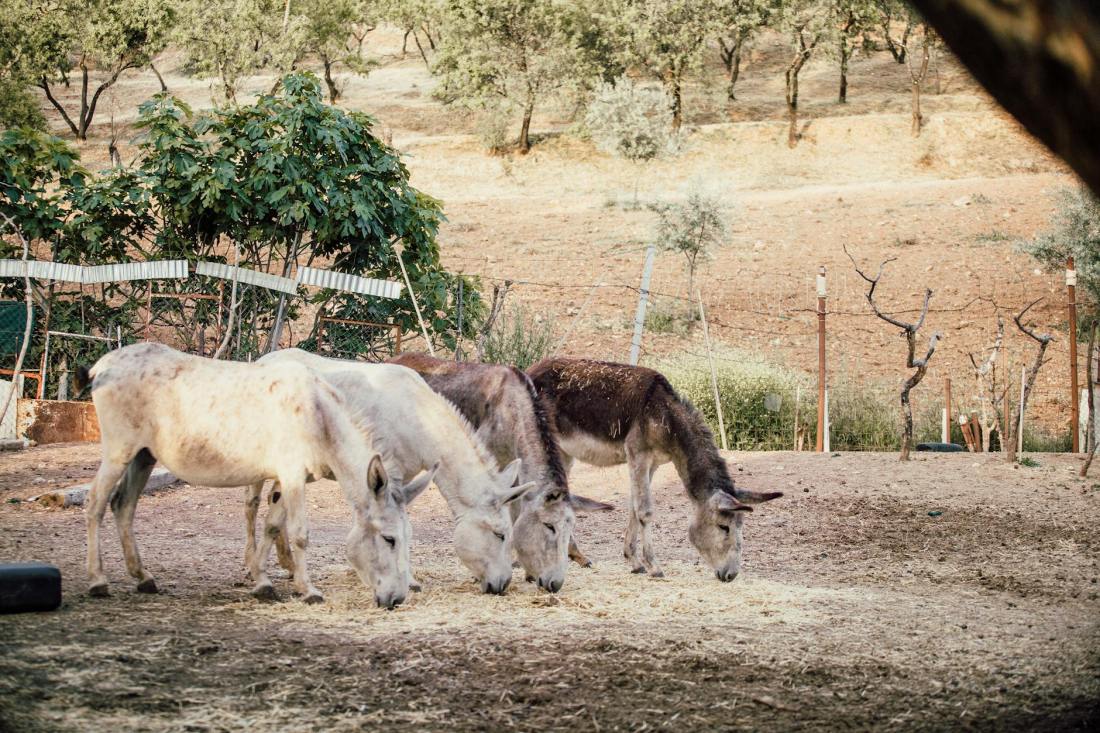
I am a big fan of donkeys. When I was little, we would go on ‘donkey holidays’ which meant spending two weeks hiking through France with some donkeys to carry our luggage. At that time I was still small enough to also be allowed to ride the donkeys from time to time.

Unsurprisingly I was a horse girl during middle and high school, but donkeys have a different atmosphere. Their big ears, small hoofs and stumbling gait endears them in a way that is distinctly different from horses. It also helps that they are pack animal and you will most often see them with an inordinate amount of stuff on their backs while seemingly carrying it without any complaining.

Thus, it really surprised me to read that donkeys are an ingredient used in Traditional Chinese Medicine (TCM). Generally, I have heard more about the exotic things they need to heal anything wrong with the body. From deer antlers to pangolin scales, let alone the range of plants that could be needed.

Similar to many other TCM ingredients that are touted as absolutely vital to heal certain ailments, it is interesting to think how much these consist of ‘standard’ natural materials such as keratin and collagen. I have bitten my nails for decades, I am not sure if that made me much healthier than I would have been otherwise.

What really suprised me, was the fact that donkeys cannot reproduce or breed easily. This sent me on a quick Google search, which after the decently informative but slightly too activist Donkey Sanctuary website, led me to the American Association of Equine Practicers website which states in its opening paragraph “Donkey medicine can be fun and rewarding and a break from routine equine practice.”

My two main random fun facts on donkey reproduction that I learned were the following. A female donkey is called a Jenny, a male is called a Jack or jackass. It would be quite funny to do this in Dutch as well. That we do not only talk about Jut and Jul as the standard Dutch people, but that they also refer to a bull and cow? What fun!

Donkeys are pregnant for a long, long, long time. Between 372-374 days. In my ears, having heard plenty of pregnancy tales in the past years, that sounds terrible. More than a year in this state, is awful. No wonder donkeys do not breed that easily. No fun, but it is a fun fact.

What is it with people liking plants?

Okay, I accept that walking in the forest, on a grassy mountain or at a sandy beach feels great. The sun on your face, wind through your hairs and fresh air in your lungs. But what I have never really understood, is why people insist on trying to bring it inside the house.

When I was small, my parents tried to ensure I would be a devoted garden girl. It failed miserably. I dutifully pulled out weeds and tore grasses from in between tiles and watered some greenery. But after getting one plant and having it die on me within 2 months, I was away for 2 weeks and nobody watered it for me, I quickly decided this was way too high maintenance for me.

Since then, I have never had any plants in my house. I remember clearly that a few years ago my mom gave me a plant, which slightly offended me even as if she did not know I would never want such a thing, before I realized it was fake to my huge relief. I lived a blissful life without any plants in the house, up ’till a few years ago.

My current partner likes plants. He even rescued a plant from my former roommate whose plants were sort of perpetually dying. He gets happy when his flowers bloom, new roots grow and trims his plants lovingly. And he tries to sneak in more plants if I let down my guard. Luckily, I am always on high alert.

When he was on holiday for a month last year, I needed to actively remind myself that the plants needed water. It was quite the stress. Also, we now sometimes have annoying flies in the house, although that is good to train my motor skills I guess.

Moving to our new place last year, we even got some plants from friends. Where I would normally have to donate these to my parents or bring them to a plant shelter, they could actually get spot somewhere in our new home. All in all, I am not complaining and I know it is a luxury that I can be surrounded by plants without having to do something for it. But watering the plants spontaneously? I am not a plant mom.

A Taste of News: Fearing the family

As many in my direct circle know, I read quite some news. I try to mention at least once per day that I read something in the news, casually, in a conversation. And since commentary and reviewing is something else I like to do, I thought of starting a series where I write my thoughts about an article I read. A lot of them will be related to China, since that is one of the topics I follow most closely.

AI Game Mimicking Nosy Relatives Takes China by Storm

Sixth Tone

Lunar New Year took place last weekend. Happy year of the dragon! May you prosper! The gods will bring you luck and happiness. Which of course means a stable job, a spacious house and a lovely family.

Festivities make for special times. I can immediately recall which time was the most memorable of all the New Years spent in China, but today we are not talking about that. This news article was recommended to me on Facebook, one of the few organizations I still follow on the platform, and had an extraordinarily high number of likes. Unsurprisingly. I think Chinese New Year is most well-known for a few things: the great number of people that move around the country (the infamous greatest migration worldwide), the great number of dishes you will consume during the holiday and the great number of annoying questions your relatives will unrelentlessly pound you with.

I think this is one of the cases where you cannot win, unless you are young and only need to collect money from a red envelope. If you are a student, you need to get good grades and find a partner timely (but big minus points if it seems you are sleeping around or dating multiple people, that is not proper behavior), if you have started your first job you should not argue with your boss and find a partner timely, if you have a partner you should buy a house and get a kid, if you have a partner and a house and a kid you should make sure it is well-behaved and getting good grades. In other words, the comments are endless. And this game must be difficult, excruciatingly so.

Because there are somewhat extraordinary pressures on Chinese returning for the new year to their families, it is no wonder that it is an endless source of different societal behaviors that may be more or less true on a larger scale. Children hiring partners online to take home has been a big story for a couple of years, children not going home is starting to become a bigger story to emphasize individualism and assertiveness, traditional costumes being replaced by cheap uniformity bought online. I am surprised I am not reading more about certain foods being replaced but I guess that is the thing most people probably can agree on to keep as traditional as possible.

I always find it fascinating when people seem to be more concerned with how things should be, than why things are a certain way. And what I think the screenshots of this game show very well, is that it is always indirect. This is the network of guanxi at a microscale. Everybody represents someone else, besides themselves. It is not only about their own hopes, but the sense of responsibility they feel towards other family members to put somebody on the spot.

Although I doubt this game will be played by those who would benefit the most from some self-reflection, perhaps it can serve as a practice to those who need to submit to this ritual every year. Maybe you find some new appreciation for your actual family members. Or discover that they are even worse than AI could imagine.

A Taste of News: Rocking that wall

As many in my direct circle know, I read quite some news. I try to mention at least once per day that I read something in the news, casually, in a conversation. And since commentary and reviewing is something else I like to do, I thought of starting a series where I write my thoughts about an article I read. A lot of them will be related to China, since that is one of the topics I follow most closely.

Rock Climbing Gains Traction as After-Work ‘Meditation on a Wall’

Sixth Tone

I like mountains. Living in the Netherlands, I feel the lack of mountains has increased my need for height. At the same time, it sometimes seems that bouldering and climbing both exploded in popularity the last few years.

When I was still swiping on the dating app, the algorithm seemed to discover fairly quickly that it should show me some sporty guys. As a result, almost every other guy was either an avid skiing fan or a bouldering champion. In real life, the balance seems to be quite different, although my current partner also boulders.

For the Chinese, it is almost surprising that the sport is only now catching on. Bouldering and climbing seem quite adjacent to martial arts disciplines. It reminds me of Shaolin monks who could probably (not really) scale boulders and mountains without any problems. Unsurprisingly, the article mentions that practitioners do find the sport quite meditative.

Another thing that surprises me in the popularity of bouldering is that it is not very competitive. Although this is a broad generalization, my memories of doing sports in China is that you are pushed to do something to become good at it and so that you can then win. I guess the lack of competition makes it a good antidote for the rat race that is modern society.

Moreover, the article mentions that climbing is also becoming more popular. With all the empty flats and skyscrapers, I guess there should be a good opportunity to turn those locations into climbing gyms. It is at least slightly safer than turning them into bungee jumping attractions.

An ode to biking

Having Chinese heritage and grown up in the Netherlands, I feel my love for biking is coming through both nature and nurture. Even though I complain plenty about biking when visiting other places, since the bikes are not always top-quality but neither are all 4 that I have standing here, it is one of the best ways to move quickly and see more without tiring too much.

As the 15-minute city concept is winning in popularity, and as an unofficial reviewer of things, I thought I would reflect on the places I have biked and rank them. Since I do mostly bike in the city, if we go outdoors I would prefer my feet or a horse.

Beijing, China

Overall: a good place to bike if you want to care minimally about rules and safety, like to shout at people and try to bike on highways.

Pro: Beijing always felt a bit lawless, even though it is the center of power. I remember shouting at everyone on the road because: point A, there are a lot of vehicles on the bike lanes like electric carts, scooters, steps, hooverboards, cars and buses that may or may not belong there; point B, using Dutch curses or comments really grabs attention since it is unexpected for the Chinese.

The city has a very clear gridlike layout which makes it easy for biking since there are a lot of straight roads and wide boulevards. It is also a great way to try how close you want to bike next to cars or other faster-moving traffic. And it often moves quicker than many public transport options, which are especially crowded during peak hours and often make you walk more than you expect.

Con: Beijing traffic can be entertaining, but also annoying and slightly too dangerous. The amounts of times I biked past a car and was almost hit by a door was too high for comfort. There are also way too many traffic lights, because the grid creates a million moments when you will need to cross. In the old center around the Forbidden City with the small alleyways, hutongs for those in the know, can be a maze to find your way through and when a car comes, because why would they not be driving through these very narrow alleys, you are basically blocked from continuing your way.

And lastly, you may not be surprised to hear that many accidents happen and you are quite vulnerable on a bike. I have had many colleagues getting hurt (whereas I was the only one getting somebody else hurt on my bike but that is a story for another time) and you see many reckless delivery drivers trying to do their job (a.k.a. moving stuff as quickly from one place to another) which often seems to involve trying to go through you.

London, Great Britain

Overall: if your mind is not entirely consumed by the fact that you need to ride on the opposite side of the road, you can do some nice biking.

Pro: there is a public bike system in London, which I always encourage. Even though there are some height differences, these are not too big to be of any inconvenience with a limited-quality bike. There generally tend to be bike lanes which are mostly only occupied by bikes.

Con: why oh why did these people decide to ride on the other side of the road?! I do not think I will ever be able to wrap my mind around it. If you go straight, no problem, but you do need to curve eventually one way or the other. Also, bikes are not that common yet so it does feel like a car can creep up on you at any moment.

Aalborg, Denmark

Overall: it is definitely a bike-centered place and offers some nice routes throughout the city.

Pro: Denmark is probably one of the most well-known countries for its biking culture besides the other Scandinavian countries and the Netherlands. Of course this means that I am extra strict on its biking facilities since I think the biking culture is one of the few things the Netherlands really has going for it.

Biking in Aalborg this summer, I think it was quite comparable to biking in a Dutch city. Bike lanes aplenty, bikes aplenty, nice bike routes and wide boulevards where you can bike and walk next to each other (still a concept I am not convinced of). The main difference was that most people wore helmets (a concept I am more convinced of).

Con: I was surprised how many cars still were riding through the city with bike lanes on the side. I feel in most Dutch cities cars either need to drive quite slow or are rerouted on a ring outside the city. Also, there is quite a lot of wind which is unsurprising but always annoying.

Lyon, France

Overall: if you do not mind having to go up and down a bit with probably a bit of effort it is a nice city to bike through, especially if you want to see its different parts.

Pro: a public bike system! I think the shame in the Netherlands is that you need at least a personal public transport card to make use of our ‘ public’ bike system, OV-fiets. Anyway, it was quite nice to bike in Lyon (also because we could rent bikes 3 days for 5 euros and of course (a)bused that as much as possible) although the public bikes vary a bit in quality.

The city is quite sprawling so rather then waiting for public transport and then having to go through 5 stops to get to your destination, biking feels a lot more efficient. There are also some areas, like the Parc de la Tête d’Or and Parc Gerland that are nice to bike through. Also along the Rhône and Saône there is plenty of biking space and you could even go all the way to Genève.

Con: some of the bikes creak a lot, which is a bit annoying. The old city center also has a lot of cobble stones so it is probably not very nice to bike either. And going downhill I had a few moments where I was afraid any pebble on the road could send me flying off the bike with a pretty bad landing. There are also quite some roads which could use some maintenance.

A Taste of News: Rizz it up

As many in my direct circle know, I read quite some news. I try to mention at least once per day that I read something in the news, casually, in a conversation. And since commentary and reviewing is something else I like to do, I thought of starting a series where I write my thoughts about an article I read. A lot of them will be related to China, since that is one of the topics I follow most closely.

Oxford’s 2023 Word of the Year Is … ‘Rizz’

New York Times

Ah, at last the end of the year is close. Lists shall be created daily to commemorate anything and everything. And looking at this headline, I could not help but wanting to write down some ideas about this word.

The more year-end-lists are being created, the more I am aware of my age. As older things tend to be put in categories with taglines like ‘do you remember…’ or ‘nostalgic for…’ I seem to understand less and less of the new things coming in.

In other words, every time a new word enters the mainstream, I am almost surprised to find myself with knowledge of it. I most certainly will not really have a use for ‘rizz’ but it is recognizable to me.

I am not really a fan of the word, mainly because I think it is not used seriously. If a word can only be used ironically, it means there is something up with the concept it represents.

On the other hand, it is a pretty benign word to have made it to the top, all things considered. I certainly have more feelings towards some of its contenders. Fear for Swiftie, exasperation for de-influencing, frustration for prompt.

So I will accept this truth and bemusedly listen to the youngsters who use it. Oh but not Tom Holland, any moviestar at that level does not get away with saying he has little rizz. It is about time for certain people to realize that the shy, bubbly personality is a type of charisma. A very effective one at that.

An elegy for the elections

Dear readers,

Thank you for gathering here today. We have assembled to commemorize the latest elections. It was truly peak democracy, even though we close this chapter with sadness in our hearts.

Although the past 3 weeks went by fast, nothing could have prepared us, in our bubble, for this outcome. There were plenty of reminders throughout the weeks. Predictions, positive outcomes, negative outcomes, debates about things that seemed to matter a lot at one point and less at another.

You were elusive. Seemed unpredictable and stubbornly common. Who would lead and who would follow. Surely, many households, friend groups and colleagues carried out discussions at dinner and lunch tables. You were the talk of the town, probably not because people were looking forward to you but more so to have it over with.

And then you came. I remember the grey sky that morning. My reluctance at having to make a choice. The fleeting feeling of thinking I could make a difference. And in some small way we all did of course.

But then came the ashtonishment. The all too familiar feeling of being confronted with your own limits. Disbelief at the situation. Scrolling on social media for people who felt the same, expressed in funny memes to soften the message. Worrying about possible implications of the whole situation.

Shall I move sooner than I was planning? Does moving even help? Is it a serious solution to consider? I am not sure what makes sense now or in the future.

I firmly believe in representation. But if the representation feels agressively targeted to groups that I belong to, it makes things difficult. The election had to happen, but the result should not have happened. Hopefully everyone has some peace, we will need it in the coming years.