You have a funny sense of humor

Truly, how many times do we say that we like or do not like someone because of her or his humor? Certainly, there are those among my friends and other people I know with whom I share my jokes or do not. And then there are of course those who just laugh about anything anyway (you know who you are!).

But to be honest, humor is something that is really culturally specific. I have often said things in an ironic or sarcastic manner, such as “Why would it be that way, huh?” or “We know what they are doing with that…” Having an honest answer or receiving honest questions to these rhetoric sayings always puts me off a little.

At the same time, I have watched some Chinese television where I either find most jokes not funny or plainly do not understand. The last situation expecially occur when it is traditional Chinese cabaret (相声) or something related to traditional opera etc. I have literally watched twenty minutes of this programme where whole comedy troupes compete, are allegedly very funny, but it does not really come across.

A thing that is quite funny, are Chinese puns. I was going on a trip with some friends recently and saw a Chinese shop called 非常稻, the English translation being Very Rice. Where the English version is literally a wordplay, the Chinese spoke a bit deeper to me. It reminded me of the first sentences of the Daodejing, the sacred text of Daoism. This sentence in Chinese is道可道非常道, which in a way can be translated as “The Way that can be expressed is not the everlasting way.” Although this does not have a direct link to rice bowls (which is really what the restaurant sold), it is still quite clever.

This different use of the first sentence of the Daodejing also reminds me of a short play I did while in university. But that is something to be told another time.

How to get old really quickly

No, not your Facebook timeline. Nothing happens on there anyway, especially when you are in China.

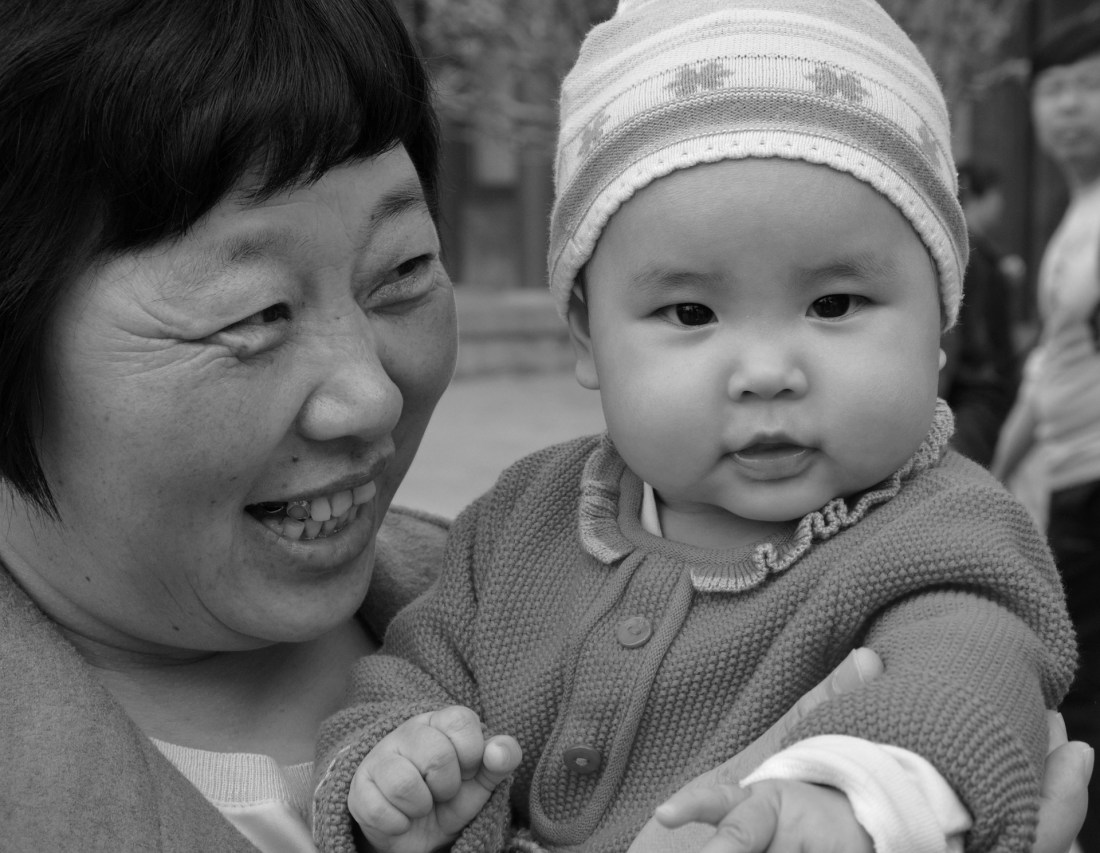
So, a while ago I had a talk with a friend of mine on relationships, age, marrying children and such a future that many people envision for themselves. We already both agreed it would not happen in our foreseeable future, you can read a previous Dutch post for more on that, but there are of course different views on the course of life. Specifically, in China where many people seem to be 5-10 years younger than they are. So this results in seeing women walking around your age with babies or children of age 4 or even older. And parents who would seem quite old with a little kid, but quite young again when they turn out to be the kid’s grandparents. It was not for nothing that I had the idea you could only become a grandmother or father once you were over 70 years old.

But not only do people tend to get kids a bit earlier here, there is more pressure earlier to get kids too. My friend and I based it off a timeline, in which people’s views change quite quickly and radically within a few years. It basically goes like this:

1.  18-21 years old

You are still young and innocent, studied long and hard to get into your university and need to focus whole-heartedly on your studies. Do not waste your time on such frivolous activities like dating or partying. You are still young. You will find love once you are ripe for it.

2.  22-24 years old

Okay, you are done with university, found a good or otherwise stable job. It is now time to actively think about the next steps. You cannot stay alone for the rest of your life of course. And your parents and family is also not getting younger as years pass by. Find that partner you want to stay with the rest of your life and make your life complete.

3.  25-27 years old

You have worked for a while now and probably saved up quite some money. What are you going to spend it on without spouse and a house? You are missing out and very quickly, your family will be too. Youth is fleeting and your parents’ worries will only increase. Is that what you want them to feel?

4. 28-30 years old

It is too late. You are old and need to settle down as soon as humanly possible. You might have a good job, a fun life and be an interesting person in general, but it just does not cut it. Do you not want your parents to know their grandchildren? Who is going to want you at this age? Who will take care of you once you are old? In short, you are a failure.

Would you like some service with that?

Service in China is a double-edged sword. On the one hand, things are possible here that are totally unacceptable in the Netherlands. On the other hand, things are impossible here that are generally accepted in the Netherlands.

Pro’s:

  1. Calling a waiter or waitress – Admittedly, this is not as common anymore as before. The rise of Western-style restaurants also brings with it the usual struggles to attract someone’s attention. But there are still plenty of establishments where you will hear a “FUWUYUANR” regularly in between all the other conversations. I highly prefer it to side-eyeing, cheerleader-waving or raising-your-hand-up-as-if-you-know the answer motions.
  2. Making a mess – Whether it is yourself or the table, it is almost always accepted without any comments. Bones, fish grates, shells are all nasty and troublesome, but at least you can easily get them out of your sight by just dispensing them on the floor. Provided your hand-eye coordination is reasonable and you do not accidentally hit yourself.
  3. Free refills – I remember that there was still a discussion in the Netherlands if you could get free tap water. Also, if you order a cup of tea in most restaurants or coffee tents, you will have to pay the full price again for a second cup of steaming water in which you will use your first teabag. Not so in China. In most places you can refill water and tea endlessly until you feel uncomfortable about having had more free than paid drinks throughout your stay.
  4. Your living room from home – Unless it is really crowded, you can generally lounge the entire afternoon in one spot. Order one drink and refer to the point above to make sure you are hydrated throughout your stay. Most waiters will only approach you to refill your glass, or ignore you. They are also very skilled in doing that.

Cons:

  1. Service without a smile – Some jobs can be very boring or mind-numbing. And you can see it right of their faces. People will serve you with as less interest in you or their job as possible. Not looking at you, doing only the bare minimum and certainly without a smile. In that way, many Chinese do look alike.
  2. Working is optional – I remember that for most of my jobs in the Netherlands, there are quite strict rules about when to use your phone. Not so much in China. Whether there are any clients or not, whether chatting or watching a drama, everyone is certainly not focusing on you.
  3. Inefficiency – I already mentioned that there are often a lot of people working anywhere and a large part of them are doing nothing. It is a bit similar to my instructions for working at a Chinese Japanese restaurant. Also, when a question is asked, they will be sure to not do anything directly but for example inquire if you are sure that you want what you asked for.
  4. Passivity – The customer is king is still sometimes the case in China. But that also means that any (illegal) smokers, irritating children, drunken men or screeching women will be accepted and not reprimanded. Jumping in front of you in the line? Pushing you in or out the subway? Being polite or not? It is all accepted as part of life.

Biking Battles: Work never seemed so far away

So you accept your role as prey and see if you need to call on your other bunny friends. After putting down the foot on the pedal, you decide to go for it and join your fellow friends.

The start is a wide road, separated from the main car road. So it should be easy cruising through the sun (when it is there), however in reality it only means that you need to pay more attention to the cars trying to sneak into your biking lane. They are not even being sneaky. Acting like the predators they are (see The jungle road) they push you away while giving you the side eye to make sure you do not even touch their precious skin.

Furthermore, it is not entirely clear to you how much brain power bunnies have, but there are enough moments where it seems very low, yours included. The amount of curves you made along the road and scares you had by suddenly having scooters, cars or even buses making some or a lot of noise because of your maneuvers would make any normal person question your sanity. But adaptability is the highest means the ones lower down the pyramid have to make it, so you go along of course.

And then suddenly you have trees, shade and absolutely nothing else changes. The largest difference it makes is that you can play hide and seek with your opponents and startle innocent pedestrians. A real obstacle are the bus stops on the side. The people getting off seem like real mice crawling around, seemingly walking deliberately in front of your bike or freezing at your first sight. After toying with them for a bit, you decide to go for the last stretch.

It is a bridge. With two roads that need to be crossed, way too many traffic lights and very little patience. Whenever you see the chance, you just hop in between everything. This means paying most or your attention to where vehicles come from, not the stupid lights. You especially need to be careful when going against the (traffic) flow since everyone always seems to act as if this is a rarity. And if worse comes to worse and you need to cross the road without the traffic lights, just inch forward and try to look the drivers behind their wheels in the eye. You are one tough bunny!

You manage all that, and you will arrive at the oasis. Green everywhere, people fishing, cars slightly following the rules (since the military is watching or acting like they are) and silence. Oh and then you need to go to work. Nothing is perfect after all.

Li’s Lievelingswoorden: Even kijken

Kijken doe je met je ogen. Althans, dat kreeg ik altijd te horen toen ik klein was. Niet dat ik ernaar luisterde natuurlijk. Ook op latere leeftijd ging ik nog vaak tegen mijn opvoeding in. Sommige vrienden werden gek van mijn rondneuzen tussen spullen waarbij alles aangeraakt en bevraagd werd.

Nu ik in China zit, heb ik ook meer dan genoeg te kijken. En ja, de Chinezen doen dat ook een stuk meer met hun handen, het zit in de natuur! Iedereen leest hier boeken uit in de boekwinkel (ze gaan er echt voor zitten) en zelfs bordjes met ‘niet aanraken’ worden routineus genegeerd. Een droomland wat dat betreft voor mij. Komt bij dat ik me onlangs realiseerde dat het Chinese karakter voor kijken geïnterpreteerd kan worden als een hand en oog gecombineerd. Klopt vast niet helemaal, maar wel een leuk idee.

Als we echter nog wat verdergaan, is het helemaal niet zo dat je kijken per se fysiek hoeft te doen. En daarmee komen we bij deze uitspraak: “Even kijken”. Net zoals alle fijne stopwoorden zijn deze ook multifunctioneel. Volgt er een komma, drie puntjes, of een ander stopwoordje (“hoor”)?

Zo blijkt maar weer dat we ook niet noodzakelijk met onze ogen kijken. De helft van de tijd dat iemand iets vraagt (wat we gaan eten, weekendplannen, boeken die ik nu aan het lezen ben, wanneer ik voor het laatst heb opgeruimd) kan ik heel goed mijn antwoord beginnen met “even kijken” en gewoon in het niets staren. Of juist mijn oog of beide ogen sluiten om een blik in mijn hersenen te werpen waar toch de meeste kennis is die ik bezit.

Dus ja, kijken doe ik het liefste met mijn handen of mijn hersenen. Komt misschien ook doordat ik een bril draag, dat mijn ogen pas op de derde plaats komen.

Biking battles: The jungle road

So before moving onto the long road, let us take a look at what kind of people are most often encountered on the Chinese roads. A comparison with the jungle is not strange, you have for example the predators:

  • The king of the jungle: Trucks, buses and any other vehicles which are heavy, large and intimidating. They cruise along, sometimes with people furiously shouting and/or honking but almost never stopping. They can suddenly lash out with their legs and doors, just to spite you. You know you should not challenge them too much. They have teeth and they bite. Although eating and hitting innocent people is still illegal of course…
  • Cheetahs: Very fast, lean and mean cars. Except, they belong on the Savannah or the open road. Not the clogged streets of Beijing. They roar loudly to let you know that they are dangerous, but barking dogs do not bite. Unless of course they suddenly have a precious piece of open road in front of them. Oh and you should not touch them. One scratch and you are gone.
  • Hyena’s: They are lagging behind, dealing with the leftovers. They are in great, huge numbers. Diverse, irritating and only slightly frightening. They are the ones tuktuks, scooters, bikers and even pedestrians dare to defy. When they hit, of course they hit hard. But as long as you stay out of reach…

So what about the prey?

  • Birds: You can go very fast, if you want to. You can almost manage to squeeze in between everything and anything. But just like some birds cannot fly, these birds often choose not to fly. Just carry on their daily business as they go excruciatingly slow and even slalom along the road while doing their best not to die multitasking. They do make a lot of noise however, whether they are moving or not. Would be nice if the sounds were as nice as birds’ twitter or songs.
  • Rabbits: They are quite harmless and with a growing number. They are usually a group of cyclists, some really put their foot down making noise, others are less brave and just sway from side to side. When they want to, speed is made and a lot of road covered. However, they are also quite single-minded. Just getting ahead already costs a lot of effort, so often following the rules or watching out are optional tasks.
  • Mice: When they are in a group, they have a lot of power. They can basically cross roads whenever they want, however they want. But if they move by themselves, they are the lowest on the foodchain. Literally everyone speeds past them and they are the first ones to take a hit. It also helps that they do not make it easy for themselves by being easily distracted by either eating, looking on their phone or checking their hair in the mirror.

In other words, the road to work is long, hard and dangerous. How to manage?

Biking battles: The origin

“Let me bike to work today.” Quite an innocent thought, if you might say so yourself. So you pack your stuff, glance outside to make sure it is not raining and go out.

At the bicycle parking lot of your compound you look for a while for your bike. It is black and, like most others, rusty and old so it does not stand out too much. It takes you a while to find it, because you realize the community workers moved things around again. To have a large space in the front of the lot to put nothing. Probably for a higher purpose, or to perform some rituals. Things happen for a reason right?

Nevertheless, you get on your bicycle and bike away with a speed which makes the security guard pause and stare in his morning talks. Your compound is quite old and although they often renovate the roads, the fact that people people do not care and keep walking makes sure that the road stays in the same state.

After having crossed that first hurdle, you enter the main road. Here, the real fun starts of course. The traffic lights designate the invisible race that is taking place here. Bikes, steps, unicycles and scooters are going ahead, because the buses, cars and trucks have speed and mass to compensate. You are eager to get to work, so after making sure the right lights are red, you cross in one smooth go.

It always amazes you with what kinds of vehicles people enter the road and what they take with them. Lately, carrying bikes on your tricycle or truck seems to be the new trend. And you always have the hilarious look of people on folding bikes with an electric motor on it, does that not defy the purpose of a folding bike?, or the ones who can barely sit on their steps because they are so small and lightweight.

So getting on the road is only the beginning. The road ahead is long and you need to get to work. On time preferably. What to do?

I will have hot water, thank you

Walking to work today (with blue skies and in bright sunlight mind you!) thinking about something quintesstentially Chinese: hot water. Okay, hot water is of course not only limited to China, luckily, but the way they use it here is quite Chinese I would say. They drink it. Without any added flavor. Except perhaps for some other chemicals that are in the water here naturally (or not so naturally).

Anyway, I remember that when I started to drink hot beverages, I would drink tea, but with sugar. Not with milk, I did not like English tea like that. And also no green tea, because it was too bitter. Then, when I was 11 we went to China for the first time. None of us, except for the local guides, could speak Chinese (and I dare say my English was quite spotty then too) so most of the times there was no sugar. Furthermore I discovered that there was often not even tea or any flavor in the pot. Plus the water was boiling hot, so that even a full table of foreigners mostly only finished half a pot of tea.

All this mystery continued for a while, but did not leave me unmoved. Sugar disappeared from my tea routine. Milk entered it in the form of milk (bubble) tea (that is milk powder though, not liquid milk) and scorching temperatures no longer became a match for my tongue and mouth.

So after having ample of experience drinking tea and hot water, I am officially trained. I can mostly drink any water directly after it has been boiled, can drink it with or without a flavor and drink loads of it. This is especially helpful in China since you can get a refill of your tea ad infinitum. I heard my friend complain that the Starbucks in the Netherlands charges 30 cents (eurocents!) for it. Ridiculuous!

The advantage of hot water is that you have a hot drink, which does not have too strong a taste and can neutralize other tastes. Very handy in China where strong flavors reign and the tongue can sometimes get a bit too much coming at it.

Also, Chinese teas have so many varieties and flavors. No bitterness in green tea. It is amazing, the best. Although I am too lazy to cook it at less than boiling temperature. I do remain a foreigner of course.

About learning Japanese in China

So pretty much my next favorite country besides China, Belgium and France is Japan (probably should keep a spot for a Scandinavian country too since the chance of me finding a partner there is very high). Because I have been slacking with my Japanese studies since about 2013, mainly keeping it up through watching anime and reading manga at about one page per 15 minutes, I found a buddy to start doing Japanese again with. In China.

If I could say anything about the Chinese education system without really participating in it, I would sum it up as being: rigid, not very interactive and faithful to the textbook. This would actually turn out to be true more or less once I started. I could start a separate career as diviner!

For a Dutch person, this is of course quite the opposite of what we like to have. We tend to focus more on interaction (even if it is students saying a lot ‘I do not know the answer’), flexibility (ooh the ‘Leids Kwartiertje‘) and being creative with content (‘Yes teacher, I feel watching a movie would be very helpful in the learning process.’). So how does it feel to experience a wholly different system?

Rigid: Well this is mainly manifested in the way that each class is pretty much the same structure. 20 minutes discussing the new words, 10 minutes of reading the standard text, 1 hour of grammar and 30 minutes exercise. The fact that I know this structure already after only 2 lessons is in itself kind of amazing.

Not very interactive: Yup, this matches. I just described that we had only 10 minutes of reading and 30 minutes of practice. This is still divided by about 5-7 people. Furthermore, it is very easy to just not participate. The fact that we have teenagers (yes, 15-year olds. Nostalgic.) means that they are readily using this. One of two has clearly been sent here by his parents as extracurricular activity and is consequently one of the least motivated persons I have ever experienced studying a language. The girl obviously has watched (quite) some anime since she insterts a ‘Nani?’ (Japanese for what) between everything and is just in general sassy in a way that is not really constructive (‘Congrats teacher on writing the wrong character.’).

Faithful to the textbook: We have a bingo! Incidentally, even the short test (which is really not worthy of being called a test) uses the exact same sentences as the textbook examples. Like, word for word. And then the teacher advises us that we should really not look in our books. It is quite cute, if it was not about something as relatively serious as teaching a language.

So I might sound quite negative here. The fact that we are cramped in a small rectangular room which is about 15 square meters (does remind you of Japan in a certain sense I guess) and an atmosphere that is lethargic does not help either. However, there are also bright spots:

  1. I follow the class with a Dutch-Turkish friend, so we are the foreign stars of the class.
  2. My level is easily the highest in the class (which does not say a lot, this is the second-to-lowest level we are following) so I can act smug and be a know-it-all legitimately.
  3. It is effective to at least be actively engaged with this language for 4 hours a week. Those are 4 more hours than before!

So that also consitutes a bingo. Guess it is a tie for now.

Daar wordt een mens blij van

Natuurlijk specifiek een mens genaamd Li-Anne. Met het nieuwe jaar net begonnen, uiteraard vol goede moed, is het niet verkeerd een soort februari-evaluatiemoment in te richten. Zeker voordat de Valentijnsdagpromoties weer keihard beginnen en ik op iedere hoek van de straat geconfronteerd wordt met kaarten, chocola en cadeaus die ik aan niemand stuur en van niemand krijg. Behalve mijn ouders natuurlijk. Of nee, laat maar. Daar heb ik ook al 5 jaar geen Valentijnskaart meer van gekregen.

Maar er zijn ook dingen op te noemen, zeker in China, waar ik wel blij van wordt. Zoals:

  1. Hotpot
  2. Japans eten
  3. Jianbing
  4. Baozi
  5. Peking eend
  6. Bubble tea
  7. Caramel latté (met extra suiker want ik ben geen koffiedrinker)
  8. Mala Xiangguo
  9. KFC Old Beijing Wrap
  10. Chinese thee (die je tot het oneindige kunt bijvullen, JA!)

Oh, je wilde dingen weten die niet met eten te maken hebben? Zeg dat dan!

  1. Frisse lucht (nu al bijna 3 weken lang met Chinees Nieuwjaar. Adem in, adem uit)
  2. Fietsen in de frisse lucht (ik blijf toch een ((nep))Nederlander)
  3. Rondlopen in de hutongs (voor een zeldzaam moment van rust)
  4. Met mijn kat series/films kijken (voor een zeldzaam moment van rust)
  5. Mensen over de vloer hebben net nadat ik heb schoongemaakt (waarna dat laatste weer opnieuw kan beginnen)
  6. 1,5 uur lunchpauze hebben (want in China eet ik praktisch altijd 3 keer per dag warm, JA!)
  7. Chinezen die ongeacht de gelegenheid, plaats en tijd altijd eten meenemen
  8. Met gezelschap in een koffietentje hangen en in hard Nederlands op alles commentaar geven
  9. Doen alsof ik Chinees ben en ook zo worden behandeld
  10. Eindeloos in bed liggen, rollen, zitten, werken en eten omdat ik een tweepersoonsbed voor mij en mijn kat alleen heb.

En het is bijna weekend. Dat wordt pas echt genieten!