We take your time

So time is money and it is often said that there is nothing more valuable than time. At the same time, we spend too much of our day on the phone, behind screens and with way too many triggers that ask our attention. Well, I have the perfect solution for you to relive a feeling of utter boredom and frustration.

It is called: waiting. Specifically at many official or large institutions. Think of governmental organisations, banks, hospitals, mobile providers etc. The wonderful thing in China is, you can do this on the weekends, in your own time. Although, I would also like to mention it is great that everything is open 7 days a week here. I am happy that I do not need to work during the weekends regularly, but luckily others are sacrificing themselves for me.

So you wake up on Saturday and think to yourself: “I am just simply going to open a bank account.” Well, the unwritten rule is that if you enter at any time after 9.15, you need to wait at least 1 hour. Why? What is the case with all these official-looking people walking around, but not actually doing anything? Only a single counter open for all these people? Why does it seem like they spend at least 2 hours helping every client? These are great questions to ponder over when you waited so long that your phone is dead.

What often makes me agitated as a Dutch person (we value money) is that for many services you need to pay upfront. When I went to the pet hospital for my cat’s veterinary examination, I needed to hand over quite some money for a relatively mundane service. And of course you ask them after you paid what comes next, to which the answer is: “Just sit there and wait, we will call you soon.” Well, with the amount of time that passes, you can be sure that the staff want you to have enough time to think over your day, life or why you actually wanted a pet.

It works wonders, really.
Winkel je weg

De zomer is net begonnen, dus natuurlijk is de zomermode alweer in de uitverkoop! Hoewel ik ondertussen genoeg horrorverhalen over kleren en de kledingindustrie heb gelezen en gezien, is een ‘sale’ bordje toch vrij onweerstaanbaar. Bovendien breekt me het zweet gelijk uit als ik zie wat voor truien en broeken in de winkels hangen met 35 graden buiten.

Maar kleding is allang niet meer iets dat men fysiek doet. Een tijdje geleden liep ik met een vriendin een winkelcentrum in. Bij het juwelierszaakje werd eerst druk onderhandeld over alle prijzen, die helaas toch erg vast bleken te staan. Terwijl allerlei sieraden gerangschikt werden naar geschiktheid, nam mijn vriendin ook stiekem wat foto’s van de producten. Meekijkend over haar schouder zag ik dat gelijk een vergelijking werd gemaakt met andere oorbellen die online verkrijgbaar waren en er ongeveer hetzelfde uitzagen. Niet genoeg echter, dus er werd alsnog in persoon een slag geslagen.

Nu heb ik zelf een vrij grote afkeer van online kleren kopen. Nadat ik een jaar of 5 geleden in een onbestemd moment iets van 5 kledingstukken bij H&M online bestelde en ze na aankomst allemaal niet bleken te passen, had ik gelijk mijn buik vol van online kleren kopen. Bovendien heb ik de goede gewoonte lang te twijfelen over kledingstukken, liefst meerdere malen per dag (of indien mogelijk per week) binnen te gaan en dan nogmaals 20 minuten diep na te denken alvorens het toch niet te kopen.

Hoewel in China alles online verkrijgbaar is, maakt dit de verleiding niet groter. Uiteraard zijn er ook plekken waar de grote merken hun kleding verkopen, maar het komt nog steeds inefficiënt op mij over om eerst iets te bestellen, dan het te passen en vervolgens mogelijk weer terug te sturen. Daar komt uiteraard bij dat voor de echte bodemprijzen, er een extra, onvermijdelijk verrassingselement bij komt kijken. Want hoe je truitje, rokje of jurkje er echt uitziet, weet je pas als het uit de verpakking komt.

Dus het hangt er uiteindelijk maar net vanaf waar jij winkelplezier aan beleeft. Koop je liever de kleding die je ziet en goed past in de winkel, of bestel je liever een verrassingspakket wat na een thuismodeshow waarschijnlijk grotendeels teruggaat? Of als je op zoek bent naar een bepaalde stijl, dan kun je hier wat inspiratie opdoen!

Good looks never go out of style

It is no surprise that both the Netherlands and China have very different opinions on what constitutes good clothing and nice style. You could almost say they are polar opposites, with the Chinese often adhering to more is more and the Dutch to less is more.

But that is of course not the complete picture. Let me paint a short overview of the female looks that can be seen in both countries on the streets:

Standard attire:

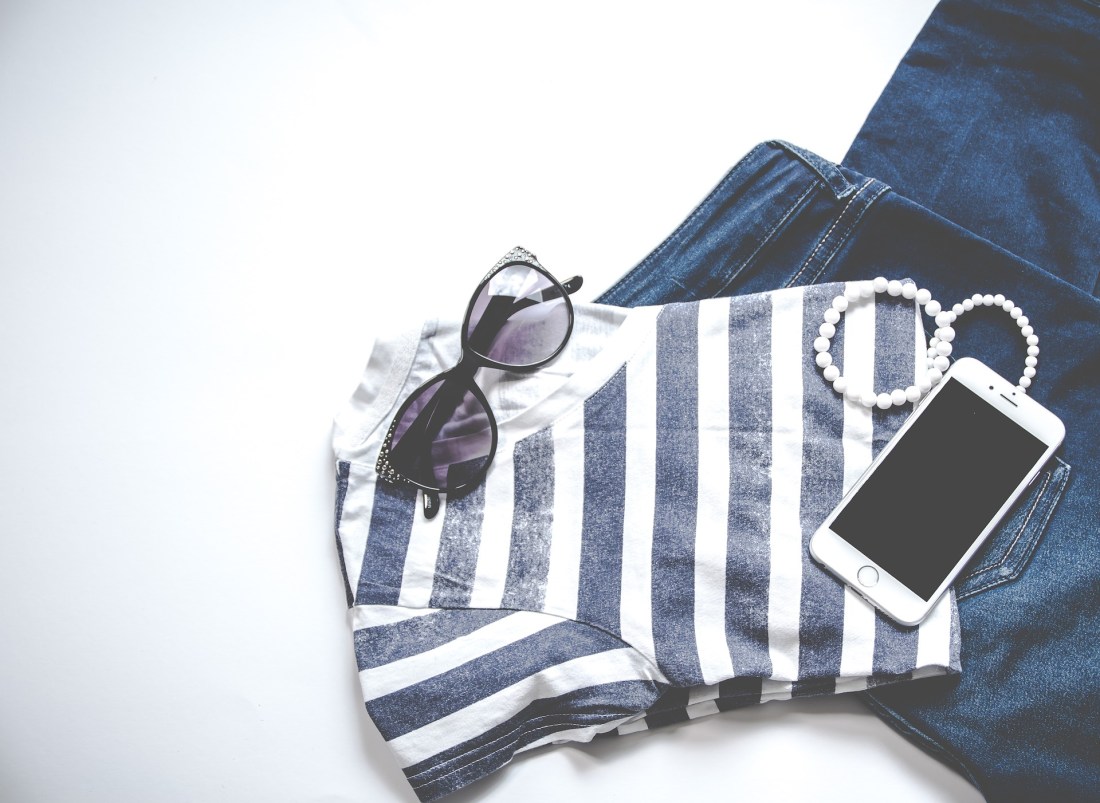
Denim Dutchies – The Dutch are not necessarily very pessimistic, but they do seem very blue. Denim, especially skinny jeans, are our informal national attire. It is amazing how there is a basic outfit that everyone wears, from teenager to women in their forties. Pick a random top (often in a subdued color), throw on a pair of skinny jeans and a pair of ankle boots and you are now dressed the same as 85 % of the Dutch female population.

Colorful Chinese – Not to be outdone, the Chinese often also have a basic outfit that everyone wears. It is basically called everything goes. Pair that t-shirt with bad English on a ripped pair of jeans, match it with lacquered shoes with pompons and a hat with ears. And it is funny that even though everyone is wearing very different combinations, it somehow looks similar because it is such an eccentric combination of clothes.

Relaxed attire:

Tricot tricks – Soft, stretchy and with every print imaginable. Tricot is something probably every Dutch woman has hanging in her house. Often with a funky print to give it that hip edge. Oftentimes tricot is very popular for wrap dresses, chique and comfy at the same time. Or so we like to believe.

Sleepwalking – Your pajamas. Or those house suits. Both are fine pieces of outerwear for your average Chinese. Whether you are going for grocery shopping, picking up your kids or going to the theater. Why would you trade in any of your comfort and not match your top and bottom?

Trendy attire:

Basically basic – Most Dutch are more interested in wearability and quality than following the latest trends. Sure, they might take a daring outing to fashionland once in a while and return with a tiger sweater or breathtakingly ugly sneakers. But hey, at least you can wear those and they are somewhat practical.

Impractically Instagram-ready – Korea and Japan dictate many of the fashion trends in China. This means that a lot is copied and a lot is combined differently than originally, since it is available so quickly. It also means that brands take much more risks when putting clothes in stores. I have seen sweaters accessorized with things that resemble cheerleader pompons. The Chinese understand that fashion and practicality are two different things.

How much is in this?

Ready-made meals. In the Netherlands I could take pride in the fact I most often cooked myself. Now that I am too lazy, I can still say most food is sort of home-made. Or at least prepared in a kitchen?

This is of course not the whole story. I have recently started reading a book which does give more of an idea of the whole story. Of course most people with a marginal interest in food, would only deem it natural about half of the time. Especially if you see what is dished up on this side of the world.

China is a country with a long culinary history, like many Asian countries. However, the fact that there are really well-prepared, exquisitely flavored and beautifully presented dishes, does not mean you see them daily. In fact, it is quite funny that most restaurants use menus with pictures in them. The food is bound to disappoint in one way or another.

Balance is a delicate thing, and something that a lot of the things you might order in China are devoid of. Especially the Northeast region is famous for its large, heavily flavored dishes. Too salty, too sour, too sweet and too much. Order a drink in any cafe (whose service might vary, as described earlier) and it will be heavy on the sugar. Although I love my hot morning breakfasts, they are definitely not light. Fried, with a few heavy sweeps of soy sauce marinade and spicy peppers.

So the disbalance that I sometimes experience daily here, is definitely one of the reasons for doing a bit more sports. It is kind of paradoxical that on the one hand I eat more varied here, since I could not be bothered to make many of the dishes I eat myself, but not necessarily healthier. Whereas in the Netherlands you can feel a bit more controlled over your sugar intake for instance, that is almost impossible here. I have even heard people complaining that the toothpaste is too sweet. Sweet tooth would be the perfect brand name for that one!

Wat een weer is het weer

Belangrijke aankondiging: Ongeveer sinds mei 2017, is het vandaag weer eens voor het eerst onder de 20 graden in Peking. De winterjassen mogen weer tevoorschijn komen, de deken kan weer op het bed en poes kan weer een dikke vacht gaan groeien.

Alle gekheid op een stokje, het scheelt wel weer een graad of 10 met de temperatuur van gisteren. Deze stijgingen en dalingen horen bij het leven in Peking (naast de andere ups en downs die je al beleeft). Een van de redenen waarom het meer zin heeft om het weersbericht wat actiever te volgen.

Een andere reden is natuurlijk de luchtkwaliteit. Over het algemeen laat ik me er graag op voorstaan dat het weer me niet zoveel uitmaakt. Warm, koud, droog, nat het is allemaal relatief nietwaar? Maar sinds ik in China ben, volg ik het toch vrij actief. Of er zit in ieder geval wel wat meer urgentie achter de vraag: Wat voor weer is het vandaag?

Nu lijkt de gemiddelde Nederlander toch wel vrij gefocust op het weer. Misschien komt het door het (vermeende) gebrek aan zon dat in (delen van) ons land geldt. Het stereotype dat Nederlanders gelijk naar buiten gaan bij de eerste zonnestralen, is in ieder geval zeker voor een groot deel waarheid.

Uiteraard is het weer in Nederland natuurlijk ontzettend mild. Met een beetje geluk komt daar verandering in als de klimaatverandering een beetje meewerkt, maar vooralsnog zijn het vooral milde winters en zomers, nat het hele jaar door. Daar ben je in Peking mooi vet mee, met behoorlijk koude winters, snikhete zomers, een regenseizoen (dat zich dit jaar goed laat gelden), reguliere windvlagen uit Mongolië en haast non-existente herfsten en lentes.

En dat is dan enkel wat het weer doet, de omgeving past zich daar ook nog op een andere manier op aan. Dik ingepakt in de winter, dik ingepakt in de zomer. Ijskoud in elk overdekt etablissement in de zomer, snikheet in de winter zodat je bijna je zomerkleding weer aan wilt trekken. Kortom, naast het leven, zorgt het weer ook voor genoeg spanning en vermaak.

Would you like some service with that?

Service in China is a double-edged sword. On the one hand, things are possible here that are totally unacceptable in the Netherlands. On the other hand, things are impossible here that are generally accepted in the Netherlands.

Pro’s:

  1. Calling a waiter or waitress – Admittedly, this is not as common anymore as before. The rise of Western-style restaurants also brings with it the usual struggles to attract someone’s attention. But there are still plenty of establishments where you will hear a “FUWUYUANR” regularly in between all the other conversations. I highly prefer it to side-eyeing, cheerleader-waving or raising-your-hand-up-as-if-you-know the answer motions.
  2. Making a mess – Whether it is yourself or the table, it is almost always accepted without any comments. Bones, fish grates, shells are all nasty and troublesome, but at least you can easily get them out of your sight by just dispensing them on the floor. Provided your hand-eye coordination is reasonable and you do not accidentally hit yourself.
  3. Free refills – I remember that there was still a discussion in the Netherlands if you could get free tap water. Also, if you order a cup of tea in most restaurants or coffee tents, you will have to pay the full price again for a second cup of steaming water in which you will use your first teabag. Not so in China. In most places you can refill water and tea endlessly until you feel uncomfortable about having had more free than paid drinks throughout your stay.
  4. Your living room from home – Unless it is really crowded, you can generally lounge the entire afternoon in one spot. Order one drink and refer to the point above to make sure you are hydrated throughout your stay. Most waiters will only approach you to refill your glass, or ignore you. They are also very skilled in doing that.

Cons:

  1. Service without a smile – Some jobs can be very boring or mind-numbing. And you can see it right of their faces. People will serve you with as less interest in you or their job as possible. Not looking at you, doing only the bare minimum and certainly without a smile. In that way, many Chinese do look alike.
  2. Working is optional – I remember that for most of my jobs in the Netherlands, there are quite strict rules about when to use your phone. Not so much in China. Whether there are any clients or not, whether chatting or watching a drama, everyone is certainly not focusing on you.
  3. Inefficiency – I already mentioned that there are often a lot of people working anywhere and a large part of them are doing nothing. It is a bit similar to my instructions for working at a Chinese Japanese restaurant. Also, when a question is asked, they will be sure to not do anything directly but for example inquire if you are sure that you want what you asked for.
  4. Passivity – The customer is king is still sometimes the case in China. But that also means that any (illegal) smokers, irritating children, drunken men or screeching women will be accepted and not reprimanded. Jumping in front of you in the line? Pushing you in or out the subway? Being polite or not? It is all accepted as part of life.

Oud en ongetrouwd

Ja, ik kan wel grappen en doen alsof ik het niet serieus meen, maar bovenstaande slaat toch allereerst op mezelf. Nu ik nog op het midden tussen 25 en 30 zit, kan ik nog meedoen met iedereen die 30 als het rampgetal ziet. Waarop je gelijk een fossiel wordt en prompt versteend op één plek komt te zitten, vastgeketend door werk, gezin en verplichtingen.

Hoe de werkelijkheid in elkaar zit, zullen we vanzelf merken. Maar in China zou voor mij natuurlijk de ramp allang zijn begonnen. Gelukkig kan ik me ervan verzekeren dat mijn ouders daadwerkelijk grappen als ze over huwelijksadvertenties of blind dates beginnen. Zoals tegenwoordig steeds breder bekend, ligt die situatie in China wel anders.

Zelf ben ik nooit zozeer geïnteresseerd geweest in het huwelijk. Misschien had het ermee te maken dat mijn moeder geen sprookjestrouwjurk in de verkleedkist had liggen, maar een hippie-achtig fladderkleed. Mijn barbiepoppen heb ik nooit met elkaar laten trouwen, hoewel ze volgens mij wel vreemdgingen. Wel zo gemakkelijk als je geen trouwjurk hebt, maar wel een sappig verhaal wilt vertellen.

In het dagelijks leven word ik zelden gevraagd of ik getrouwd ben. Kennelijk weet ik mijn ongetrouwde status vrij waarheidsgetrouw over te brengen. Maar de frequentie waarmee de woorden huwelijk en trouwen vallen in de gesprekken die ik voer, is behoorlijk hoog. Per toeval zijn de meeste van mijn vrienden niet getrouwd en is vaak ook nog niet aan de randvoorwaarden (stabiel inkomen, huis, partner) voldaan. Er zijn echter zeker (toch vooral) dames die op zoek zijn. Vanwege intrinsieke en extrinsieke motivaties.

Hoewel trouwen in Nederland misschien minder prominent in de gesprekken voorkomt, is het hebben van een partner wel degelijk een bepaalde verwachting. Ondertussen ben ik al meer dan 5 jaar partnerloos (hoewel ik nu 1 jaar samen ben met mijn kat, we hebben elkaar goed leren kennen) en het is opvallend hoe hier tegenaan wordt gekeken.

Ongeacht of het in China of in Nederland is, meestal wordt er vanuit gegaan dat je doel toch is om met iemand samen te zijn. Ik heb wel meerdere keren gehad dat ik zei: “Ik heb geen vriend of vriendin.” en dat de ander zei: “Zo iemand als jij vindt snel genoeg iemand.” Een soort verkapt compliment. Het klinkt een beetje alsof een gedachte als “Ja je bent wel een leuk persoon, maar zonder partner toch niet echt compleet hè.” erachter zit.

Nou ben ik niet de gehele tijd vrijwillig alleen geweest, maar het vreet ook niet zozeer aan me dat ik het heel actief probeer te veranderen. Waarschijnlijk is dat een van de redenen waarom er nog geen rij voor mijn deur staat met kandidaten om te beoordelen. Voorlopig houd ik het bij 1 kat. Als dat aantal ooit groeit tot 5 of meer, dan is het misschien tijd om eens verder te kijken.

This is sick!

Actually, in Dutch we can also use the word ‘sick’ as a positive adverb. Once you are sick, it feels quite illogical to use it in that sense.

For me, being sick abroad is almost my second nature. I must have seen almost as many doctors and hospitals in my country as I have abroad. I must emphasize that in the Netherlands, going to the doctor or hospital is taken up as a more drastic measure. if you have a cold, the flu, or are just not feeling well, we might go to the GP but normally we just suck it up and huddle up in a blanket. As a consequence, most of our conversations about feeling sick are relatively low-profile. ‘I am not feeling very well.’ ‘Something’s been in the air lately so I think I caught that too.’ ‘My whole body feels listless, I need a good rest.’

In China, that is quite different. On the one hand, the chances of having food poisoning and/or diarrhea are much larger here. Therefore, you might just hear somebody say very casually: ‘That hotpot did not go well, I had diarrhea for 3 days.’ The dutch, not the most prudish but still, would feel a bit uncomfortable directly stating that in a casual conversation. The same goes for constipation.

Another difference, is the amount of medicine. I now happen to have a cough and a cold which has already kept me in the cough-sneeze-breathe state for almost a week. Almost all Chinese will ask me if I have taken any medicine, and if so Chinese or Western medicine. In the Netherlands, we almost tend to pride ourselves on our ‘toughness’ and ability to bear sicknesses without any medicines.

I do have a feeling in China apothecaries and/or doctors still receive commission over medicines. I recently was in the hospital for someone else who had a hole in his head and he received four different medicines for the next 4 or 5 days. It seemed like a bit of overkill. I had the same when I had ‘a simple’ pharyngitis and also received about 5 different medicines.

However, sticking to my Dutch roots and trying to survive on as less medicines as possible is also quite a challenge. But who does not like a challenge?

What words mean

The brain is a strange thing. Once you do not know something, you cannot imagine how it is when you understand or know it. Once you do know it, you automatically forget how it is when you did not understand or know it.

Last weekend, I had a niece visiting who was in China for the first time. It made me remember how everything was when I visited China for the first time, or even when I did not know the language as well as my face would assume. With all the characters and different pronunciation(s), you adapt to a wholly new way of conveying things and processing information.

Of course, a cultural component also plays an important role with the establishment of these differences. In many Asian cultures, it is less common to be very upfront about feelings, ideas or opinions. China also has this up until a certain degree. The Netherlands and other northern European countries are on the other side of the spectrum, voicing thoughts openly.

Since I grew up in the Netherlands with Dutch parents, I am quite direct, but not the most extreme. Even within the Netherlands, differences exist, mostly between the northern and southern parts. Then again, China is even larger so I cannot even pretend to be speaking for China in general. However, the Chinese expression, 口是心非, the mouth says yes but the heart says no, can be applied widely. But in more surprising ways than you might imagine.

Being positive but meaning negative

  1. ‘I will see.’ / ‘If I have the time I will come!’ There are the standard instances when you ask someone to do something, go somewhere with you, participate in something and the other’s response can vary. Furthermore, these kind of propositions and answers can be held in forehand, or a few hours before the event itself. See my Dutch post on time for more background.
  2. ‘Let us meet (soon)!’ Is this ever meant though? The digital equivalent in China is adding someone on WeChat and instantly forgetting about her/him. Like, only receiving the standard ‘I added you, we can now start chatting!’ and not even moving beyond that.
  3. ‘Please do everything in your own tempo.’ Whether it is study or sport or anything you are trying to master, your tempo had better match the class’s or teacher’s. For sports, feel free to reach as far as you think is anatomically possible. We will push, pull and lie on you to get you further. Read my Dutch article on sports in China for more enlightenment.

Being negative but meaning positive

  1. ‘You do not need to bring anything.’ Actually, I have never been in the situation where I really did not bring anything. The advantage is that you do not need to bring a highly personalized gift. Food or drinks are usually appreciated. Often accompanied by a ‘You should really not have done that.’ while handily storing it in the cupboard.
  2. ‘Your English seems to have become worse.’ A friend of mine was told this by a Chinese friend of hers. Mind you, jokingly. The Chinese are often full of these contradictions, seemingly to inform you: ‘I know you well and have high expectations of you / know you can do better, which I express in this way.’
  3. ‘It will not be long.’ If it is anything related to food and drinking, this is a blatant lie. If it has anything to do with a bank, hospital or police station, this is also a blatant lie. If it has to do with meeting again, this can be a blatant lie. Or they start stalking you.

What to do?

Since this is an era of typing instead of writing, I sit behind my computer desk with not an exactly blank screen, but getting close. What to write about today? Actually, I have no idea. Or I actually have a bit too many ideas. That is okay, it is how I spend most of my life. Not actually knowing what to do.

Is that a bad thing? Well, in this day and age where we can plan everything, most people seem to want to have more surprise and wonder in their life. For the Chinese, this feeling seems to be less prominent, probably because people think more short-term (see my previous Dutch post on this topic). Furthermore, moving to a different country is quite a good measure to experience more wonder and amazement. What makes it even more fun, is that in my case it is mutual.

Whenever I exchange more than 3 sentences with a Chinese person, it goes something like this:

/Hi, you are Chinese?

\I count as a foreigner I guess…

/Are you from Hong Kong or Taiwan?

\No, I am not. Do another guess.

/Japan? Korea? Vietnam?

\No I am from Europe, from the Netherlands.

/Really? You do not look Dutch at all!

\Well… Actually I was born in China.

/So your parents are Chinese?

\No, my parents are Dutch.

/But do you speak Chinese at home?

\No, my parents are Dutch.

/Are your parents in China?

\No, my parents are in the Netherlands.

/Is your family in China?

\No, my family is Dutch and in China.

/But you are Chinese.

\No, I am Dutch.

/But you speak Chinese.

\Well, I studied it for more than 5 years so yes.

/Do you speak Chinese with your parents?

\No, they are Dutch.

/But it is great that you returned to China and speak Chinese now! You are Chinese from the inside after all.

\Uhm… No not really though…

So what does this tell us?

  1. Chinese automatically assume everyone who looks like them to probably be like them. Sort of like the opposite of what we have in the Netherlands, where everyone who looks different is assumed to probably be a foreigner.
  2. It is difficult for both parties to grasp each other’s world views and background. How is a Chinese-looking person not identifying as Chinese and not knowing all the Chinese poems and songs? How do the Chinese not see and realize I am not a Chinese person and am quite different from them, more so inside than outside though?
  3. In China, I am seen as a Chinese which I am not. In the Netherlands, I am seen as a foreigner which I am not.

Enough everyday wonder and amazement for me while living in China. You should try it too, honestly I can only recommend it.