When you try to make cleaning easier

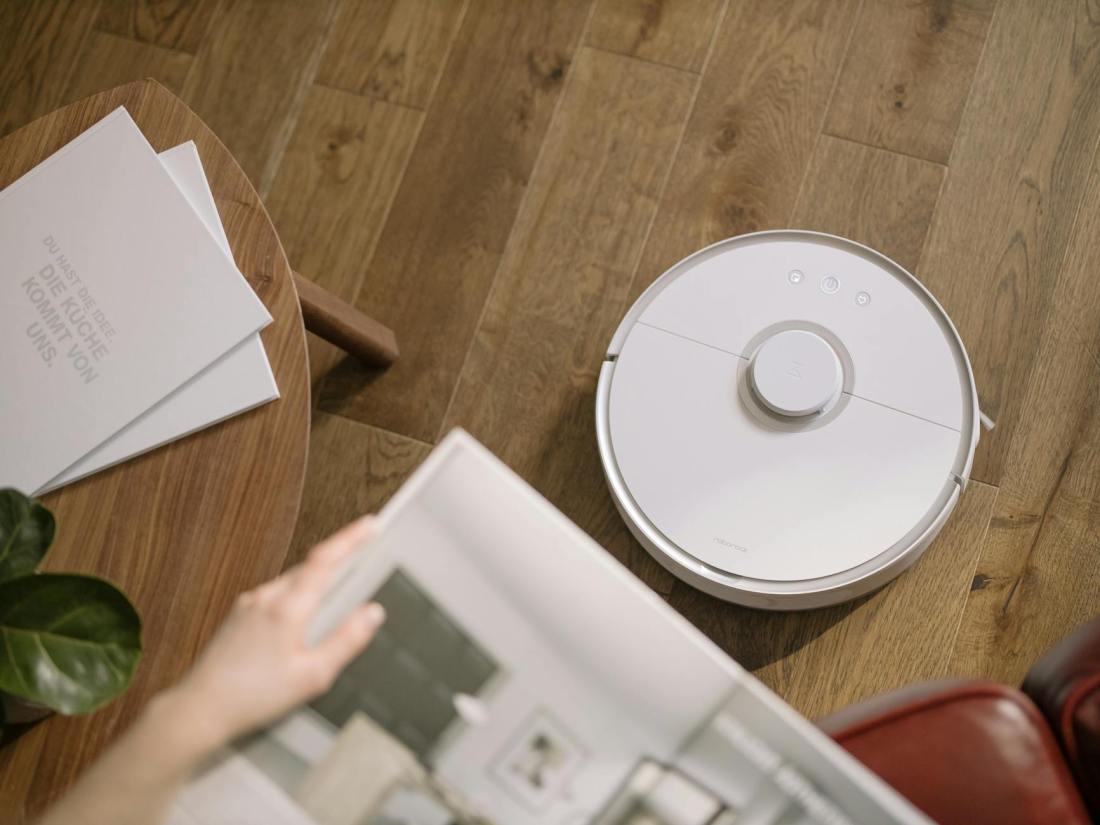
Sitting in my kitchen, I can hear the robot vacuuming and mopping upstairs. Although vacuuming is not a chore I particularly dislike, it is convenient to think that it can be done when you are not at home.

As one of the older millennials, I feel like I still hold on to some pride to do things without too much technology involved. Smart technology only makes me suspicious. I do not need a smart fridge, a smart coffee machine or a smart rice cooker. The Google Home in my house has been off and disconnected from electricity since its entrance. I think the only thing about smart technology that I read about, is the fact that they tend to record way more information then necessary. We already live without curtains, no further transparency is needed.

But a vacuum robot seems weirdly benign. As a word, robot conjures more old-school images of machines that buzz and blink when you turn them on. Humans are in full control, the machine is not meant to think along but merely follow orders or a program. And sure, any simple machine these days involves an app which opens it up again to much more information than it probably needs. But that big bad company seems far away and the robot certainly cannot make use of any information that is on my phone. And seeing the cleaning lines on the map appear almost fully equally spaced is very satifying.

At the same time, I mainly like the convenience of the robot because I usually do not turn it on myself. Having someone else takes care of the whole process, makes it all even more seamless and automatic. Alas, I am on my own again for a couple of weeks and thought I should not need to resort to old school vacuuming.

So I took the robot from its docking station, wetted the mop as expected, checked its water and sent it of on its cleaning journey. I fiddled with the necessary map I needed to put it on, then I thought I had put everything away but somehow the robot really wanted to have a hangout session with our drying rack. All in all, it took some time before everything was right as it should be and the cleaning lines started appearing on the map.

The old adagio is still true. Everything is automated but nothing happens automatically. Well, at least not when I am by myself.

A Taste of News: Save the donkeys

As many in my direct circle know, I read quite some news. I try to mention at least once per day that I read something in the news, casually, in a conversation. And since commentary and reviewing is something else I like to do, I thought of starting a series where I write my thoughts about an article I read. A lot of them will be related to China, since that is one of the topics I follow most closely.

Africa’s Donkeys Are Coveted by China. Can the Continent Protect Them?

New York Times

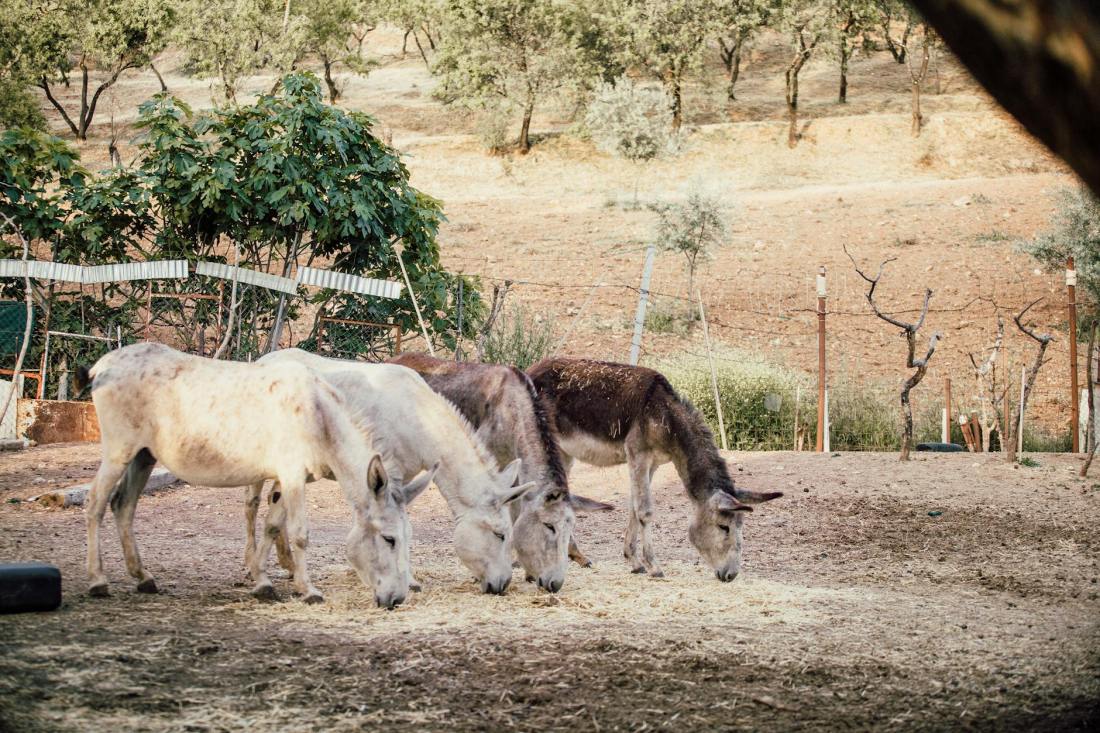
I am a big fan of donkeys. When I was little, we would go on ‘donkey holidays’ which meant spending two weeks hiking through France with some donkeys to carry our luggage. At that time I was still small enough to also be allowed to ride the donkeys from time to time.

Unsurprisingly I was a horse girl during middle and high school, but donkeys have a different atmosphere. Their big ears, small hoofs and stumbling gait endears them in a way that is distinctly different from horses. It also helps that they are pack animal and you will most often see them with an inordinate amount of stuff on their backs while seemingly carrying it without any complaining.

Thus, it really surprised me to read that donkeys are an ingredient used in Traditional Chinese Medicine (TCM). Generally, I have heard more about the exotic things they need to heal anything wrong with the body. From deer antlers to pangolin scales, let alone the range of plants that could be needed.

Similar to many other TCM ingredients that are touted as absolutely vital to heal certain ailments, it is interesting to think how much these consist of ‘standard’ natural materials such as keratin and collagen. I have bitten my nails for decades, I am not sure if that made me much healthier than I would have been otherwise.

What really suprised me, was the fact that donkeys cannot reproduce or breed easily. This sent me on a quick Google search, which after the decently informative but slightly too activist Donkey Sanctuary website, led me to the American Association of Equine Practicers website which states in its opening paragraph “Donkey medicine can be fun and rewarding and a break from routine equine practice.”

My two main random fun facts on donkey reproduction that I learned were the following. A female donkey is called a Jenny, a male is called a Jack or jackass. It would be quite funny to do this in Dutch as well. That we do not only talk about Jut and Jul as the standard Dutch people, but that they also refer to a bull and cow? What fun!

Donkeys are pregnant for a long, long, long time. Between 372-374 days. In my ears, having heard plenty of pregnancy tales in the past years, that sounds terrible. More than a year in this state, is awful. No wonder donkeys do not breed that easily. No fun, but it is a fun fact.

What is it with people liking plants?

Okay, I accept that walking in the forest, on a grassy mountain or at a sandy beach feels great. The sun on your face, wind through your hairs and fresh air in your lungs. But what I have never really understood, is why people insist on trying to bring it inside the house.

When I was small, my parents tried to ensure I would be a devoted garden girl. It failed miserably. I dutifully pulled out weeds and tore grasses from in between tiles and watered some greenery. But after getting one plant and having it die on me within 2 months, I was away for 2 weeks and nobody watered it for me, I quickly decided this was way too high maintenance for me.

Since then, I have never had any plants in my house. I remember clearly that a few years ago my mom gave me a plant, which slightly offended me even as if she did not know I would never want such a thing, before I realized it was fake to my huge relief. I lived a blissful life without any plants in the house, up ’till a few years ago.

My current partner likes plants. He even rescued a plant from my former roommate whose plants were sort of perpetually dying. He gets happy when his flowers bloom, new roots grow and trims his plants lovingly. And he tries to sneak in more plants if I let down my guard. Luckily, I am always on high alert.

When he was on holiday for a month last year, I needed to actively remind myself that the plants needed water. It was quite the stress. Also, we now sometimes have annoying flies in the house, although that is good to train my motor skills I guess.

Moving to our new place last year, we even got some plants from friends. Where I would normally have to donate these to my parents or bring them to a plant shelter, they could actually get spot somewhere in our new home. All in all, I am not complaining and I know it is a luxury that I can be surrounded by plants without having to do something for it. But watering the plants spontaneously? I am not a plant mom.

Film rewriting: Maboroshi

Mari Okada can pull some heartstrings. The last film I watched of hers (Maquia: When the Promised Flower blooms) is a feast for the eyes and had me bawling them out half of the time. I think its sadness is up there with Grave of the Fireflies and that episode of Violet Evergarden. Regardless, she tends to have an interesting and quite unique way of viewing things and putting it together so I was quite excited to watch this one of hers.

The synopsis of the film on imdb is:

“Following an explosion at a factory that mysteriously freezes a town in time, two students encounter a mysterious feral child, spurring an impulse of love fueled by the frustration of their daily lives that begins to upend their world.”

I also read another review that was quite positive about it, and although I like the concept and ideas, parts of the execution fell flat for me. I think the despair and dread of being frozen in a particular moment and how different people react to it is depicted well. I also think she shows interesting choices some characters make to change the present based on how they think there will or will not be an ‘actual’ future to look forward to. And upping the stakes by creating a way for characters to disappear is always a surefire way to create some intense moments. But there are some other things I think could have been left out or executed differently.

  1. I feel the orignal mystery about the factory causing the town to freeze in time could be explored further. As it stands now, this is just a fact and everyone accepts it, although clearly some characters have more whacky ideas about why it happened than others. Besides discovering the ‘feral child’ at the factory, the characters do not spend a lot of time uncovering anything about the explosion, where the smoke comes from, why it happened to them. Even if this was just a fully random thing happening to them, that would be interesting to explore and see if it throws some characters further into despair. As it is, the visuals are very striking but I am left wanting more information.
  2. The romance seems to not get enough room to be fully fleshed out. It is a very interesting concept to know that somewhere else you are leading your own future life but you will never get to experience it in your own reality. However, I felt the connection between the two main characters was disturbed in an unfulfilling manner because they get shoehorned in a weird love triangle. One that also has a bit too much of an incestual tone for my taste.
  3. We do not see a lot of the side characters except for short bursts that show pivotal moments but because they are not shown in many other situations, it is not as meaningful as it could have been. If we would see more glimpses of these characters’ past, hopes and dreams then it would hit a lot harder to see some of the arbitrary decisions being made or sympathize more with their feelings

All in all, the film did hit quite some spots but it was not as gut-wrenching as I expected it to be. The concepts and perspectives that were shown are still quite powerful, but the execution left a bit to be desired.

A Taste of News: Fearing the family

As many in my direct circle know, I read quite some news. I try to mention at least once per day that I read something in the news, casually, in a conversation. And since commentary and reviewing is something else I like to do, I thought of starting a series where I write my thoughts about an article I read. A lot of them will be related to China, since that is one of the topics I follow most closely.

AI Game Mimicking Nosy Relatives Takes China by Storm

Sixth Tone

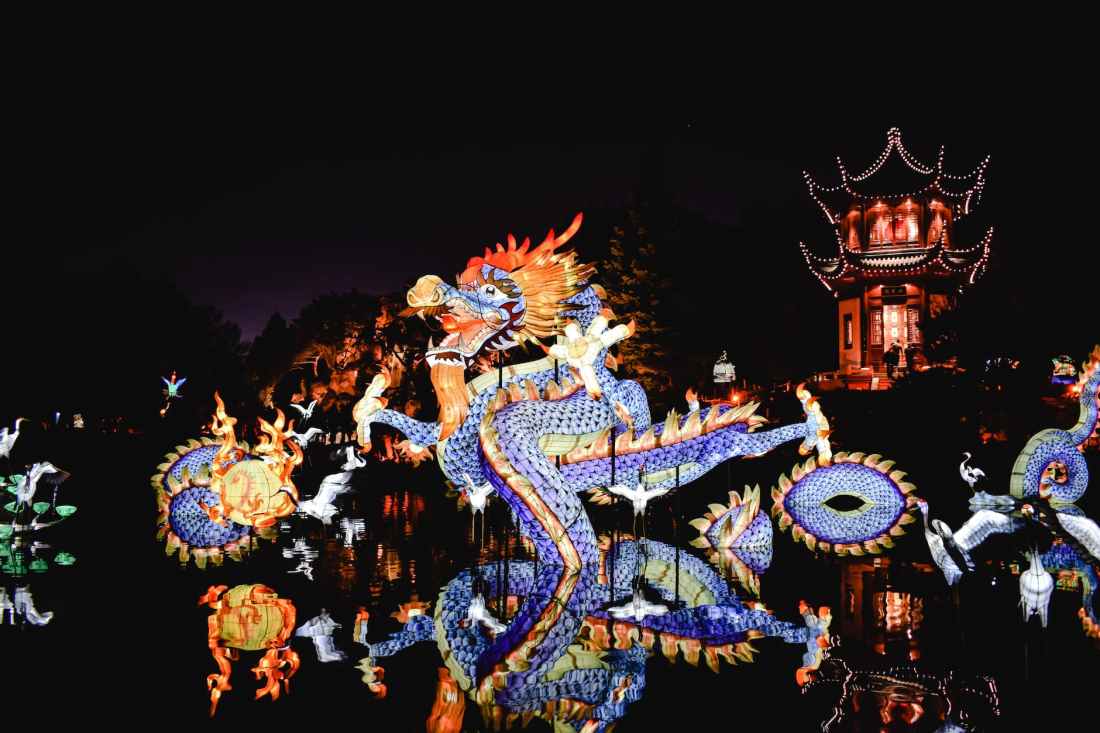
Lunar New Year took place last weekend. Happy year of the dragon! May you prosper! The gods will bring you luck and happiness. Which of course means a stable job, a spacious house and a lovely family.

Festivities make for special times. I can immediately recall which time was the most memorable of all the New Years spent in China, but today we are not talking about that. This news article was recommended to me on Facebook, one of the few organizations I still follow on the platform, and had an extraordinarily high number of likes. Unsurprisingly. I think Chinese New Year is most well-known for a few things: the great number of people that move around the country (the infamous greatest migration worldwide), the great number of dishes you will consume during the holiday and the great number of annoying questions your relatives will unrelentlessly pound you with.

I think this is one of the cases where you cannot win, unless you are young and only need to collect money from a red envelope. If you are a student, you need to get good grades and find a partner timely (but big minus points if it seems you are sleeping around or dating multiple people, that is not proper behavior), if you have started your first job you should not argue with your boss and find a partner timely, if you have a partner you should buy a house and get a kid, if you have a partner and a house and a kid you should make sure it is well-behaved and getting good grades. In other words, the comments are endless. And this game must be difficult, excruciatingly so.

Because there are somewhat extraordinary pressures on Chinese returning for the new year to their families, it is no wonder that it is an endless source of different societal behaviors that may be more or less true on a larger scale. Children hiring partners online to take home has been a big story for a couple of years, children not going home is starting to become a bigger story to emphasize individualism and assertiveness, traditional costumes being replaced by cheap uniformity bought online. I am surprised I am not reading more about certain foods being replaced but I guess that is the thing most people probably can agree on to keep as traditional as possible.

I always find it fascinating when people seem to be more concerned with how things should be, than why things are a certain way. And what I think the screenshots of this game show very well, is that it is always indirect. This is the network of guanxi at a microscale. Everybody represents someone else, besides themselves. It is not only about their own hopes, but the sense of responsibility they feel towards other family members to put somebody on the spot.

Although I doubt this game will be played by those who would benefit the most from some self-reflection, perhaps it can serve as a practice to those who need to submit to this ritual every year. Maybe you find some new appreciation for your actual family members. Or discover that they are even worse than AI could imagine.

Film rewriting: The Boy and the Heron

Ghibli films are among my favorites. I think that tends to be quite the favorable opinion, but I remember when I watched Spirited Away at 16 being utterly amazed at the perfect combination of story, folklore, visuals and atmosphere. And finding out afterwards that this was not just contained in a single film, but ranged further across their productions was marvelous. It was like all of my enthusiasm that I never really had for the Disney classics (I refused watching Lion King more than once since I found it too scarring) suddenly came out at a belated moment for the Ghibli universe.

With animation being less and less put in the children’s corner, it seems that almost everyone was excited for this new Ghibli release by master Hayao Miyazaki. Hardly any news emerged before its actual realization although it seemed to combine many familiar elements often founded in Ghibli and Miyazaki films. A headstrong main character that is slightly egocentric but earnest, peculiar magical creatures that seem to be as helpful as they are antagonistic, competent and capable side characters that teach the main character important lessons. And most importantly, beautiful visuals and fantastical landscapes.

On imdb the synopsis of the film is:

“A young boy named Mahito yearning for his mother ventures into a world shared by the living and the dead. There, death comes to an end, and life finds a new beginning.”

I was quite excited to go into the film since it should be a wonderful time. But I came out of the theater feeling a little bit empty. It was not entirely up to the standards that I felt they set before. Especially for a Miyazaki. And of course all the reviews I scrolled pas were jubilant about the film. I did still really enjoy it, but I also saw some missed opportunities.

  1. I found the family dynamic somewhat lacking. Although I think all characters were well-defined in their own rights, I feel there was not enough attention paid to them through the main arc. The father starts as a very direct personality who is very jovial but also slightly manipulative. I thought there would be a moment where he realized how his behavior influences his son, especially at such a vulnerable moment after losing his mother and moving to a new place, but it seems like he is not going through any kind of realization even when his son and second wife fully disappear.

    Mahito’s ‘new’ mother also does not really have any development to her story. Although she is in a way the catalyst for everything that happens, she is oddly passive in the whole process and does not seem to have changed at any moment. When we first see her, she is very actively trying to show Mahito, the main guy, that she will be a good mother to him. Her depression is also not unimaginable since she is pregnant and turns out to not be able to prevent Mahito from getting hurt. But after he finds her in the dream world, there does not seem to be a clear reason for her to suddenly want to return.

    Lastly, the main character Mahito’s conflict is also not resolved very satisfyingly. His reasoning is not made very clear, why does he suddenly think of his father’s new wife as his mother? Why does meeting his mother in the dream world not shake him more or implore him to further explore his relationship with her? How does he decide to make connections with his environment and what influence does moving away again at the end have on his mental well-being? There are just a lot of aspects that go a little bit too unexplored for my taste.
  2. Why do the important side characters not get further fleshed out? There are a few important side characters that all suddenly appear and then disappear again. First, there is of course the Heron. The visual is very striking, especially at the beginning where the man in the costume is not fully revealing himself yet. But it remained unclear to me exactly what role he played and what his motivations were. He seems to be in the service of the tower master, but at the same time he makes his own decisions throughout the film. He is a magical creature, but does not lose his magic in the real world. He accompanies Mahito on part of the way, but it seems unclear why he is not there for the full way.

    Then there is Etsuko, the old maiden whose younger self Mahito meets in the dream world. She is such an interesting character that seems very underused. At the beginning, the maidens are not very explicitly introduced which is not that problematic, but would have given them some more weight instead of just seeming comic relief. Etsuko does get some extra screentime to showcase her warm grumpiness and bartering personality. In the dream world she is a strong and independent woman, taking care of others, but she does not really seem to teach Mahito any lessons, except for letting him do some harder labor. It would have been nice to also see some more interactions between Etsuko and the other creatures or Himi who she seems to revere. It is fine to not know her full backstory, but her actions do not show us much beyond her capabilities and generally there tends to be more of an emotional aspect to interactions with these characters.

    Himi also seems surprisingly twodimensional as Mahito’s younger mother. It is especially a missed opportunity to not have her reminisce about her younger sister, Mahito’s new mother, with her suddenly being in the world and what it means. When she sends Mahito off to actually meet his new mother in the world, her saying she cannot go in seems more than a copout than an actual inability. And even if she seems to know the future and says she does not mind dying because she will be so happy with Mahito, there is not a lot of showing of this love she has for him. Her role as a bargaining chip also feels a bit flat since this conflict is not very well fleshed out.

    The tower master is a confusing figure since he seems to be a typical antagonistic character, but then remains invisible for most of the film. Judging by the fact that he is in a sense at the core of everything, I would have expected to see more of his behavior, musing about the tower and power, plotting more to get Mahito to certain places or do specific things. His quest for a heir seems to come out of nowhere, as does his fight with another group of creatures. His whole purpose and background is just very vague, which makes it difficult to feel anything but confusion when he is on the screen.
  3. Although it is beautifully rendered, the dream world made me very confused. I get the idea that it is supposed to be an in-between realm merging the living and the dead, but there are basically no rules set at all which makes it difficult to get a grasp on things. New creatures with their own motivations and settings appear all the time, but they seem to be separate vignettes instead of forming a coherent backdrop for the story. Since the storyline is also not very linear, this makes it seem gamelike in a certain way where you are just shown a different world and discussing it, all the while wondering how you will accomplish your quest.

Although there are a lot of points mentioned above that I found unsatisfying, that is not to say I did not like it. Ghibli is still one of the best if it is about immersion. The characters, even if they may fall flat sometimes, still captivate your attention and I did not feel a second of boredom. However, I came out feeling more confused than expected and surprised that my expectations were not fully met. And that is just a shame, but I will still be looking forward to the next Ghibli film, and otherwise there is enough in their backcatalog to not make me complain.

A Taste of News: Rocking that wall

As many in my direct circle know, I read quite some news. I try to mention at least once per day that I read something in the news, casually, in a conversation. And since commentary and reviewing is something else I like to do, I thought of starting a series where I write my thoughts about an article I read. A lot of them will be related to China, since that is one of the topics I follow most closely.

Rock Climbing Gains Traction as After-Work ‘Meditation on a Wall’

Sixth Tone

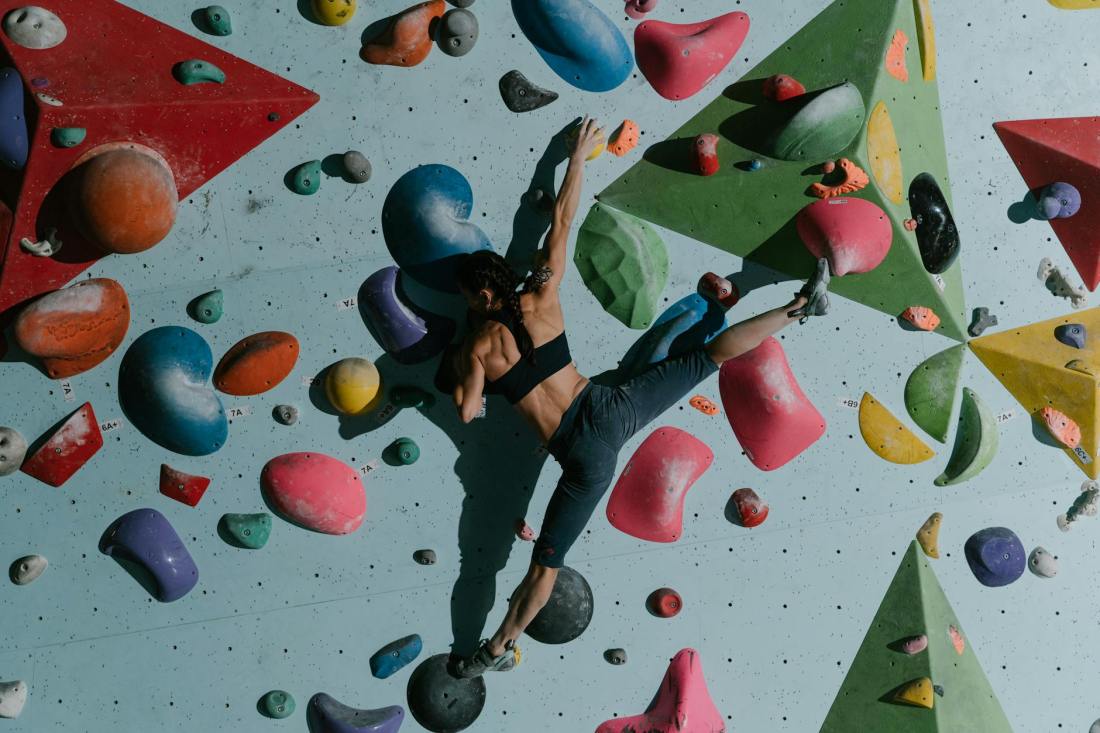
I like mountains. Living in the Netherlands, I feel the lack of mountains has increased my need for height. At the same time, it sometimes seems that bouldering and climbing both exploded in popularity the last few years.

When I was still swiping on the dating app, the algorithm seemed to discover fairly quickly that it should show me some sporty guys. As a result, almost every other guy was either an avid skiing fan or a bouldering champion. In real life, the balance seems to be quite different, although my current partner also boulders.

For the Chinese, it is almost surprising that the sport is only now catching on. Bouldering and climbing seem quite adjacent to martial arts disciplines. It reminds me of Shaolin monks who could probably (not really) scale boulders and mountains without any problems. Unsurprisingly, the article mentions that practitioners do find the sport quite meditative.

Another thing that surprises me in the popularity of bouldering is that it is not very competitive. Although this is a broad generalization, my memories of doing sports in China is that you are pushed to do something to become good at it and so that you can then win. I guess the lack of competition makes it a good antidote for the rat race that is modern society.

Moreover, the article mentions that climbing is also becoming more popular. With all the empty flats and skyscrapers, I guess there should be a good opportunity to turn those locations into climbing gyms. It is at least slightly safer than turning them into bungee jumping attractions.

An ode to biking

Having Chinese heritage and grown up in the Netherlands, I feel my love for biking is coming through both nature and nurture. Even though I complain plenty about biking when visiting other places, since the bikes are not always top-quality but neither are all 4 that I have standing here, it is one of the best ways to move quickly and see more without tiring too much.

As the 15-minute city concept is winning in popularity, and as an unofficial reviewer of things, I thought I would reflect on the places I have biked and rank them. Since I do mostly bike in the city, if we go outdoors I would prefer my feet or a horse.

Beijing, China

Overall: a good place to bike if you want to care minimally about rules and safety, like to shout at people and try to bike on highways.

Pro: Beijing always felt a bit lawless, even though it is the center of power. I remember shouting at everyone on the road because: point A, there are a lot of vehicles on the bike lanes like electric carts, scooters, steps, hooverboards, cars and buses that may or may not belong there; point B, using Dutch curses or comments really grabs attention since it is unexpected for the Chinese.

The city has a very clear gridlike layout which makes it easy for biking since there are a lot of straight roads and wide boulevards. It is also a great way to try how close you want to bike next to cars or other faster-moving traffic. And it often moves quicker than many public transport options, which are especially crowded during peak hours and often make you walk more than you expect.

Con: Beijing traffic can be entertaining, but also annoying and slightly too dangerous. The amounts of times I biked past a car and was almost hit by a door was too high for comfort. There are also way too many traffic lights, because the grid creates a million moments when you will need to cross. In the old center around the Forbidden City with the small alleyways, hutongs for those in the know, can be a maze to find your way through and when a car comes, because why would they not be driving through these very narrow alleys, you are basically blocked from continuing your way.

And lastly, you may not be surprised to hear that many accidents happen and you are quite vulnerable on a bike. I have had many colleagues getting hurt (whereas I was the only one getting somebody else hurt on my bike but that is a story for another time) and you see many reckless delivery drivers trying to do their job (a.k.a. moving stuff as quickly from one place to another) which often seems to involve trying to go through you.

London, Great Britain

Overall: if your mind is not entirely consumed by the fact that you need to ride on the opposite side of the road, you can do some nice biking.

Pro: there is a public bike system in London, which I always encourage. Even though there are some height differences, these are not too big to be of any inconvenience with a limited-quality bike. There generally tend to be bike lanes which are mostly only occupied by bikes.

Con: why oh why did these people decide to ride on the other side of the road?! I do not think I will ever be able to wrap my mind around it. If you go straight, no problem, but you do need to curve eventually one way or the other. Also, bikes are not that common yet so it does feel like a car can creep up on you at any moment.

Aalborg, Denmark

Overall: it is definitely a bike-centered place and offers some nice routes throughout the city.

Pro: Denmark is probably one of the most well-known countries for its biking culture besides the other Scandinavian countries and the Netherlands. Of course this means that I am extra strict on its biking facilities since I think the biking culture is one of the few things the Netherlands really has going for it.

Biking in Aalborg this summer, I think it was quite comparable to biking in a Dutch city. Bike lanes aplenty, bikes aplenty, nice bike routes and wide boulevards where you can bike and walk next to each other (still a concept I am not convinced of). The main difference was that most people wore helmets (a concept I am more convinced of).

Con: I was surprised how many cars still were riding through the city with bike lanes on the side. I feel in most Dutch cities cars either need to drive quite slow or are rerouted on a ring outside the city. Also, there is quite a lot of wind which is unsurprising but always annoying.

Lyon, France

Overall: if you do not mind having to go up and down a bit with probably a bit of effort it is a nice city to bike through, especially if you want to see its different parts.

Pro: a public bike system! I think the shame in the Netherlands is that you need at least a personal public transport card to make use of our ‘ public’ bike system, OV-fiets. Anyway, it was quite nice to bike in Lyon (also because we could rent bikes 3 days for 5 euros and of course (a)bused that as much as possible) although the public bikes vary a bit in quality.

The city is quite sprawling so rather then waiting for public transport and then having to go through 5 stops to get to your destination, biking feels a lot more efficient. There are also some areas, like the Parc de la Tête d’Or and Parc Gerland that are nice to bike through. Also along the Rhône and Saône there is plenty of biking space and you could even go all the way to Genève.

Con: some of the bikes creak a lot, which is a bit annoying. The old city center also has a lot of cobble stones so it is probably not very nice to bike either. And going downhill I had a few moments where I was afraid any pebble on the road could send me flying off the bike with a pretty bad landing. There are also quite some roads which could use some maintenance.

Chinese bites

Since I am trying to keep up my active Chinese language skills, I try to write more regularly in Chinese about contemporary topics.

1.

我每次的题目都会基于每周满文的通讯来写。这周讨论的主题就是关于社会阶层固化。大家开始聊到这件事情的起因就是一个男孩很坦诚的形容了他的理想。他说的就是要跟爸爸、妈妈与爷爷一样当一个银行的行长。这引起了大家的注意,因为大多数人都认为这就证明银行行长的职位是世袭的。

另一方面大家也认为这是童言无忌。这个孩子没有故意要炫耀,只是天真的分享了他的梦想。甚至有人说,由于这种家庭里的孩子从小耳濡目染,所以他们会一直积累特殊行业的相关知识与经验。当然他们也就成为了更适合这种行业和职位的人了。

可是最终这种代代相传会成为一种负面的趋势。我们应该不想住在一个拥有权力就意味着拥有一切的世界上。再加上,有许多子承父业的局面最终都会导致公司失去多半的资产,甚至会破产。因此即使不一定要迅速一个孩子的理想,但是也要意识到会这究竟代表了怎么样的一个系统。

2.

运动界是一个特别的地方,尤其是专业运动员与他们的比赛。我自己对看运动项目毫无兴趣,每次举办奥运会我都会认为这种大型活动只是在浪费钱而已。然后经常会有不同的报道炒作很多故事。比如说一个团队放水保送对手夺冠,或者运动员比赛的理由就是他们吃药了。

况且,即便专业的运动员特别厉害,基本上也不会有一个长期的生涯。 他们一决定不再做全职的运动员,就很容易变得贫穷。他们之前的奖金,经常是赤裸裸的由他们的教练拿走。因为在运动界跟其他的行业一样,有钱能使鬼推磨。真是乌烟瘴气,尤其是运动员受伤以后,很有可能会从队里被直接除名。

总之, 我能理解做运动要有目标,也想要竞技 。可是我认为目前的方法不是适合庆祝与佩服运动员的成绩,而且只是强调每一个人跟一个不公平的制度在战斗中。但是这个制度只会让一小部分的人得利 ,所以恐怕不会在短期之内得到改善。

3.

目前荷兰的房地产市场和中国同样都处于围城的状态中。循环就是这样的:房子开始涨价,随着贷款的利息也增长,接着房子都会越来越快被卖出去,涨到大家都买不起房子了,价格就又会断崖式下降,降到大家又愿意买房子后停止,就像这样会不断地循环下去。

随着这种趋势越来越严重,很多人被逼着反向换房,或者只好贱卖房子。因此导致很多人都要捉襟见肘,再加上可能没有足够的空间,又可能是无法维修他们住的地方。很多比较大的家庭只能挤 在一套小公寓里,而一个老太太却可能独自 住在三室一厅的别墅里。

但是最终的问题就是大家认为租房就是竹篮打水一场空。因为你的钱不会投资到你自己的资产里,而是塞满了别人的钱包。假如我们的社会不会那么看重买房,那么这不仅会使得房租合理化,而且也会保持稳定的房价 。

4.

A Taste of News: Rizz it up

As many in my direct circle know, I read quite some news. I try to mention at least once per day that I read something in the news, casually, in a conversation. And since commentary and reviewing is something else I like to do, I thought of starting a series where I write my thoughts about an article I read. A lot of them will be related to China, since that is one of the topics I follow most closely.

Oxford’s 2023 Word of the Year Is … ‘Rizz’

New York Times

Ah, at last the end of the year is close. Lists shall be created daily to commemorate anything and everything. And looking at this headline, I could not help but wanting to write down some ideas about this word.

The more year-end-lists are being created, the more I am aware of my age. As older things tend to be put in categories with taglines like ‘do you remember…’ or ‘nostalgic for…’ I seem to understand less and less of the new things coming in.

In other words, every time a new word enters the mainstream, I am almost surprised to find myself with knowledge of it. I most certainly will not really have a use for ‘rizz’ but it is recognizable to me.

I am not really a fan of the word, mainly because I think it is not used seriously. If a word can only be used ironically, it means there is something up with the concept it represents.

On the other hand, it is a pretty benign word to have made it to the top, all things considered. I certainly have more feelings towards some of its contenders. Fear for Swiftie, exasperation for de-influencing, frustration for prompt.

So I will accept this truth and bemusedly listen to the youngsters who use it. Oh but not Tom Holland, any moviestar at that level does not get away with saying he has little rizz. It is about time for certain people to realize that the shy, bubbly personality is a type of charisma. A very effective one at that.