Travel tidbits: Taipei

Having traveled in China and Taiwan for the first time since 2020, I have some thoughts. The past 4,5 weeks showed me many things that remain the same, have changed hugely or did not notice as much before. I will put some of these into words in my next few posts.

I am not made for a tropical climate. When we arrived in Taipei, my glasses fogged up as soon as we switched from an artificially cooled climate to the hot outside air, directly followed by sweat production.

The last time I had been in Taipei was quite some time ago, so the city was not that familiar to me. However, its atmosphere still was recognizable, especially its blend of Chinese and Japanese influences with local culture. I was surprised that everything felt a bit more rundown and old timey, especially when compared to the glitz and glamour of the big Chinese cities we just came from. Almost all of the vehicles also have gasoline motors, so that made for a lot of noise that is just not that present anymore in most Chinese cities.

One contrast that is still very clear, is the presence of religion. Although there seems to be a bit more interest in China for certain religious practices, it is of course heavily restricted and practice tends to feel very performative. Not so in Taipei. We stumbled upon some prayer times, holidays where statues were taken out, and many offerings (especially for the God of Wealth). Like Japan, the temples in Taipei vary from opulent to small and makeshift. It is clear that they really form part of the city’s and culture’s fabric, in a very natural way which I think is not that common in a lot of Western countries anymore.

Looking back to Taipei, I think it was the place where I felt most comfortable in my memories and experience. I remembered how good the bubble tea and local desserts are, how varied the nature is with sea and mountains so nearby, how bustling the city is but people do queue for the escalators, how weird it is to suddenly stumble upon some Dutch colonial history so far away (although I wrote about that earlier this year in Dutch here), how uninterested I still am in going up Taipei 101, how the night markets are nice to snack at but a bit hectic and making me nervous thinking about huge cockroaches. Although I always like to have a sense of discovery when going places, in this case a bit of recognition was more than welcome.
Travel tidbits: Shanghai

Having traveled in China and Taiwan for the first time since 2020, I have some thoughts. The past 4,5 weeks showed me many things that remain the same, have changed hugely or did not notice as much before. I will put some of these into words in my next few posts.

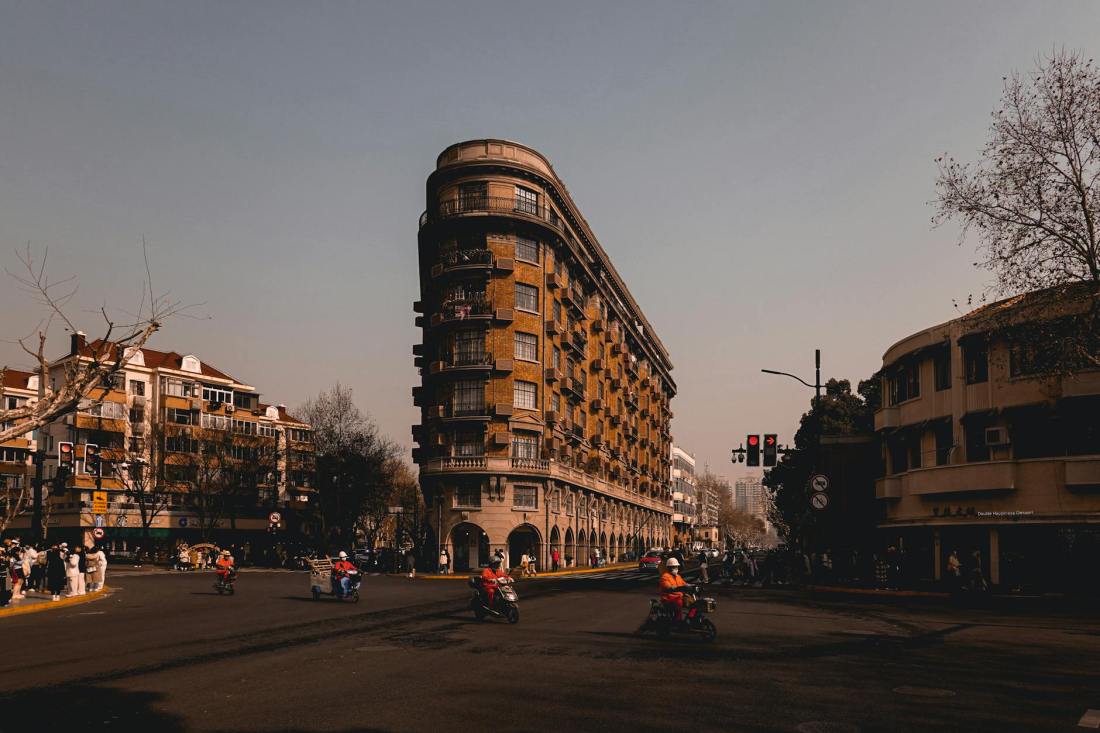
When I moved to Shanghai, I ended up quite liking the city but not loving it as I did Beijing. Returning to it this year, I appreciated its qualities a lot more, although I have reservations about its future as well.

As a focal point for international business, Shanghai feels more relaxed and in a sense ‘less Chinese’ than many other cities. Compared to the increased focus on security in Beijing, the difference was even clearer this time. There were foreigners on the streets quite regularly, and we even saw a group of them on a city tour of some kind.

Although I knew it, I was still surprised at how little I recognized of the city. The street names rang familiar, but the buildings and actual restaurants and shops were all replaced. It is weird to self-doubt your memory as you walk around, when some key buildings still exist but everything around it changed. Or did it never even exist?

Going around the city, I did feel the city’s fabric actually being partly redesigned. I took a look around the neighborhood where I used to guide food tours, and it was totally closed off. Surprisingly, the prison there (Hongkou District), seemed to have expanded, although I did not check if it is on the map now (it was not on a Chinese map before) and maybe it has gotten a different purpose, although the thick walls and razor wire ensured a not-so-friendly impression. The actual houses though, caleld Shikumen in Chinese, were all closed and any entrance gates fully sealed off. It made me kind of sad to remember the hustle and bustle that used to be around here, the good food and snacks that will be impossible to get here anymore.

And this was not the only neighborhood in this state. Another Shikumen around Yu Garden was in the same state. I understand wanting to renovate the areas or possibly redeveloping them to make room for highrise to create more housing. However, seeing the state of China’s real estate market I am doubtful that this large-scale development will end up profiting the general public. It seems more of it is destined for commercial use, judged by information on the tarps at Yu Garden, which I do not think is a good trade-off for the city, nor its residents.

Besides these old parts being closed for redevelopment, there was another shopping mall I used to go to that was completely derelict. It looked like it got flooded or otherwise damaged, but still accessible and on the maps as well. Seeing old photos of it gave me an especially melancholic feeling. So there were some nice surprises about Shanghai, but also some worrying developments pointing to its future. It seems to have retained a bit more of its character, but is still going through plenty of change.

Travel tidbits: Beijing

Having traveled in China and Taiwan for the first time since 2020, I have some thoughts. The past 4,5 weeks showed me many things that remain the same, have changed hugely or did not notice as much before. I will put some of these into words in my next few posts.

First, I will make a comparisons between the cities that I went to and the cities I remember. And of course, the most prominent one among these is Beijing.

Having lived there for almost 3 years, I have a certain soft spot for it. The convenient grid-like structure, while still being able to wander around in the hutong alleys. Its megalomaniac official buildings that exist next to ramshackle or improvised architecture. The mix of old and new, a certain liveliness and rough personality that the city exemplifies.

Thus, it was quite shocking to realize how much of it changed. Gone are the food stands on the streets, everything is in a little shop. Worker’s Stadium is completely cleaned up without any clubs or drunk people hanging out near it. At one entrance there is a Michelin-star restaurant, quite the opposite of how it used to be. Gone are many dirty and messy corners in the city centre that would contrast with the glitz and glamour of the malls. Now everything is commercialized, shiny and new. How could you want it any other way.

Part of the hutong alleys remains the same, luckily. The redevelopment seems to be more focused on actually improving living quarters, than bulldozing anything that seems old. The quiet of the hutongs, compared to the noise at the big boulevards is still immediate and remains a huge contrast. The splendor of highlights such as the Forbidden City, Summer Palace and Great Wall is not diminished, but the city itself seems to have been reeled in. The metro has guards actively patrolling and commenting on behavior. Every ticket needs to be booked on your passport or ID. There are noticeably less foreign faces on the streets.

If I seem overtly disappointed, it is probably nostalgia speaking. I am not saying Beijing is not interesting or special anymore. It is just a whole lot different from how I remember it being. There is a reason I used to come back to Beijing that often when I already lived in Shanghai. I am not sure there are as many reasons now for me to keep coming back.