The Scoreboard: Look Back

As everybody else on this planet, I have an opinion. As many people do too, I like to write about it. Share it generously. And I am excellent at keeping score (mentally), so I will try tallying up my fondness of things according to balance.

Look Back

I’ve always admired a passion that people can have in certain activities. Generally, I’m quite cerebreal when moving through life and it is an amazing feat to me when someone seems to be able to lose themselves in the moment and think singlemindedly about one thing. Such a passion and drive are at the heart of this films.

This is a surprisingly short film, but it packs quite the punch. Starting from a compelling premise, Fujino is being praised for rather mediocre art until Kyomoto’s more impressive creations come along which bruises her ego and almost wants to make her give up. It is only after accidentally being saddled with the task of bringing Kyomoto her diploma that she realizes how much work goes into her craft. And also how much of a need to draw Kyomoto has. Of course it also helps that Kyomoto confesses to be her biggest fan after daring to come out.

This transition from indignation to cynicism, being flattered and then driven to improve is portrayed very compellingly. We see Fujino and Kyomoto hunched over a lot, but the process somehow still feels dynamic. We see them working and growing together, and then separating again by choosing different paths and then one getting cut off.

The ending makes the whole film even more bittersweet, showing an alternative storyline, but with the same need for both of them to create and draw. It is a testament to the innateness of certain things. Regardless of circumstances, there are things that will always matter to you and thus always be done, albeit in a different matter.

And although that may almost seem slightly fatalistic, it also provides some comfort. That you can trust on your needs and have faith in your ways to get them realized. It is a way of celebrating the joy you can have when allowing yourself to be in the moment of satisfaction. Even if it is something that you can only see in hindsight, that does not diminish its value.

I rate it a highly emotional movie that will leave you raring to create something as soon as you finished it.


The Scoreboard: Suzume

As everybody else on this planet, I have an opinion. As many people do too, I like to write about it. Share it generously. And I am excellent at keeping score (mentally), so I will try tallying up my fondness of things according to balance.

Suzume no Tojimari

There are not a lot of directors that I have seen all works from. Obviously, this is a bit easier the shorter the list gets, and Makoto Shinkai is one that does not constantly churn out new films. Still, I have not seen all of his films but definitely the majority of it. And like most other people, I was really touched by Your Name. But I also remember really liking 5 Centimeters per Second and Voices from a Distant Star.

His stories often focus on couples, in the prime of their teenage years, juggling change and difficult decisions. His visuals also have a very particular, crisp and bright look about them. They have the digital enhancement and cleanliness to them, without losing character.

For the most part, Suzume looks gorgeous as well. The landscapes are vibrant and dynamic, and places recognizable, especially as she moves throughout the country. However, I tend to not really like too much spunk in my heroines, and especially at the beginning Suzume exhibits quite a bit of it. It is a bit at odd as well with her stoicness and distant friendliness to her aunt. Also, although the boy is gorgeous, the love story feels a bit shoehorned in. It is the traditional love at first sight from her end, and even though they end up travelling together and getting to know each other quite a bit, it feels weird when a college student seems to get a crush on a high school girl.

Another thing this film suffers from, is the density of its lore. The world is fleshed out quite quickly, there are doors to other dimensions that need to be closed in order to let the worms under Japan not consume the country, but not much is told otherwise. Not about the family line of Souta that has closed doors since ancient times. Not about the escape and wish of the cat who served as the keystone to keep the door closed. Not really about Suzume’s family history beyond her mother tragically dying during an earthquake and her aunt not getting through to her. Not about the magic that turns Souta into a chair and almost prevents him from returning back to his human self. There is so much more to explore which could have helped take the story to another level.

As it stands, there is still a lot to enjoy but I felt myself wanting more when watching it. Because the premise is so intriguing and the basic worldbuilding done quite well, I wanted to delve more into the characters, their motivations and backgrounds. Also, the gimmick of seeing Suzume walk around with a broken chair is quite funny, but gets a bit stale by the end. And Souta is very handsome of course, so I would not have minded seeing more of his face as well.

I rate it nice and heartfelt, lacking a bit to give it that extra punch.

Film rewriting: Maboroshi

Mari Okada can pull some heartstrings. The last film I watched of hers (Maquia: When the Promised Flower blooms) is a feast for the eyes and had me bawling them out half of the time. I think its sadness is up there with Grave of the Fireflies and that episode of Violet Evergarden. Regardless, she tends to have an interesting and quite unique way of viewing things and putting it together so I was quite excited to watch this one of hers.

The synopsis of the film on imdb is:

“Following an explosion at a factory that mysteriously freezes a town in time, two students encounter a mysterious feral child, spurring an impulse of love fueled by the frustration of their daily lives that begins to upend their world.”

I also read another review that was quite positive about it, and although I like the concept and ideas, parts of the execution fell flat for me. I think the despair and dread of being frozen in a particular moment and how different people react to it is depicted well. I also think she shows interesting choices some characters make to change the present based on how they think there will or will not be an ‘actual’ future to look forward to. And upping the stakes by creating a way for characters to disappear is always a surefire way to create some intense moments. But there are some other things I think could have been left out or executed differently.

  1. I feel the orignal mystery about the factory causing the town to freeze in time could be explored further. As it stands now, this is just a fact and everyone accepts it, although clearly some characters have more whacky ideas about why it happened than others. Besides discovering the ‘feral child’ at the factory, the characters do not spend a lot of time uncovering anything about the explosion, where the smoke comes from, why it happened to them. Even if this was just a fully random thing happening to them, that would be interesting to explore and see if it throws some characters further into despair. As it is, the visuals are very striking but I am left wanting more information.
  2. The romance seems to not get enough room to be fully fleshed out. It is a very interesting concept to know that somewhere else you are leading your own future life but you will never get to experience it in your own reality. However, I felt the connection between the two main characters was disturbed in an unfulfilling manner because they get shoehorned in a weird love triangle. One that also has a bit too much of an incestual tone for my taste.
  3. We do not see a lot of the side characters except for short bursts that show pivotal moments but because they are not shown in many other situations, it is not as meaningful as it could have been. If we would see more glimpses of these characters’ past, hopes and dreams then it would hit a lot harder to see some of the arbitrary decisions being made or sympathize more with their feelings

All in all, the film did hit quite some spots but it was not as gut-wrenching as I expected it to be. The concepts and perspectives that were shown are still quite powerful, but the execution left a bit to be desired.

Film rewriting: The Boy and the Heron

Ghibli films are among my favorites. I think that tends to be quite the favorable opinion, but I remember when I watched Spirited Away at 16 being utterly amazed at the perfect combination of story, folklore, visuals and atmosphere. And finding out afterwards that this was not just contained in a single film, but ranged further across their productions was marvelous. It was like all of my enthusiasm that I never really had for the Disney classics (I refused watching Lion King more than once since I found it too scarring) suddenly came out at a belated moment for the Ghibli universe.

With animation being less and less put in the children’s corner, it seems that almost everyone was excited for this new Ghibli release by master Hayao Miyazaki. Hardly any news emerged before its actual realization although it seemed to combine many familiar elements often founded in Ghibli and Miyazaki films. A headstrong main character that is slightly egocentric but earnest, peculiar magical creatures that seem to be as helpful as they are antagonistic, competent and capable side characters that teach the main character important lessons. And most importantly, beautiful visuals and fantastical landscapes.

On imdb the synopsis of the film is:

“A young boy named Mahito yearning for his mother ventures into a world shared by the living and the dead. There, death comes to an end, and life finds a new beginning.”

I was quite excited to go into the film since it should be a wonderful time. But I came out of the theater feeling a little bit empty. It was not entirely up to the standards that I felt they set before. Especially for a Miyazaki. And of course all the reviews I scrolled pas were jubilant about the film. I did still really enjoy it, but I also saw some missed opportunities.

  1. I found the family dynamic somewhat lacking. Although I think all characters were well-defined in their own rights, I feel there was not enough attention paid to them through the main arc. The father starts as a very direct personality who is very jovial but also slightly manipulative. I thought there would be a moment where he realized how his behavior influences his son, especially at such a vulnerable moment after losing his mother and moving to a new place, but it seems like he is not going through any kind of realization even when his son and second wife fully disappear.

    Mahito’s ‘new’ mother also does not really have any development to her story. Although she is in a way the catalyst for everything that happens, she is oddly passive in the whole process and does not seem to have changed at any moment. When we first see her, she is very actively trying to show Mahito, the main guy, that she will be a good mother to him. Her depression is also not unimaginable since she is pregnant and turns out to not be able to prevent Mahito from getting hurt. But after he finds her in the dream world, there does not seem to be a clear reason for her to suddenly want to return.

    Lastly, the main character Mahito’s conflict is also not resolved very satisfyingly. His reasoning is not made very clear, why does he suddenly think of his father’s new wife as his mother? Why does meeting his mother in the dream world not shake him more or implore him to further explore his relationship with her? How does he decide to make connections with his environment and what influence does moving away again at the end have on his mental well-being? There are just a lot of aspects that go a little bit too unexplored for my taste.
  2. Why do the important side characters not get further fleshed out? There are a few important side characters that all suddenly appear and then disappear again. First, there is of course the Heron. The visual is very striking, especially at the beginning where the man in the costume is not fully revealing himself yet. But it remained unclear to me exactly what role he played and what his motivations were. He seems to be in the service of the tower master, but at the same time he makes his own decisions throughout the film. He is a magical creature, but does not lose his magic in the real world. He accompanies Mahito on part of the way, but it seems unclear why he is not there for the full way.

    Then there is Etsuko, the old maiden whose younger self Mahito meets in the dream world. She is such an interesting character that seems very underused. At the beginning, the maidens are not very explicitly introduced which is not that problematic, but would have given them some more weight instead of just seeming comic relief. Etsuko does get some extra screentime to showcase her warm grumpiness and bartering personality. In the dream world she is a strong and independent woman, taking care of others, but she does not really seem to teach Mahito any lessons, except for letting him do some harder labor. It would have been nice to also see some more interactions between Etsuko and the other creatures or Himi who she seems to revere. It is fine to not know her full backstory, but her actions do not show us much beyond her capabilities and generally there tends to be more of an emotional aspect to interactions with these characters.

    Himi also seems surprisingly twodimensional as Mahito’s younger mother. It is especially a missed opportunity to not have her reminisce about her younger sister, Mahito’s new mother, with her suddenly being in the world and what it means. When she sends Mahito off to actually meet his new mother in the world, her saying she cannot go in seems more than a copout than an actual inability. And even if she seems to know the future and says she does not mind dying because she will be so happy with Mahito, there is not a lot of showing of this love she has for him. Her role as a bargaining chip also feels a bit flat since this conflict is not very well fleshed out.

    The tower master is a confusing figure since he seems to be a typical antagonistic character, but then remains invisible for most of the film. Judging by the fact that he is in a sense at the core of everything, I would have expected to see more of his behavior, musing about the tower and power, plotting more to get Mahito to certain places or do specific things. His quest for a heir seems to come out of nowhere, as does his fight with another group of creatures. His whole purpose and background is just very vague, which makes it difficult to feel anything but confusion when he is on the screen.
  3. Although it is beautifully rendered, the dream world made me very confused. I get the idea that it is supposed to be an in-between realm merging the living and the dead, but there are basically no rules set at all which makes it difficult to get a grasp on things. New creatures with their own motivations and settings appear all the time, but they seem to be separate vignettes instead of forming a coherent backdrop for the story. Since the storyline is also not very linear, this makes it seem gamelike in a certain way where you are just shown a different world and discussing it, all the while wondering how you will accomplish your quest.

Although there are a lot of points mentioned above that I found unsatisfying, that is not to say I did not like it. Ghibli is still one of the best if it is about immersion. The characters, even if they may fall flat sometimes, still captivate your attention and I did not feel a second of boredom. However, I came out feeling more confused than expected and surprised that my expectations were not fully met. And that is just a shame, but I will still be looking forward to the next Ghibli film, and otherwise there is enough in their backcatalog to not make me complain.

Film rewriting: Little Women

Things are opening up again, including movie theaters. And one thing I did miss in China, were the smaller places we have here where you can find the non-blockbusters. It is a bit ironic then that the first movie I watched here, was one of the more mainstream ones.

Hearing the title Little Women, it kind of reminded me of A Little Life by Hanya Yanigahara. I have not read both books, but they must be quite different after watching the first one’s adaptation. Little Women is a romantic setting, à la Pride and Prejudice or Wuthering Heights. A Little Life is more of a biopic including many different characters and their struggles, a focus on the realistic instead of the romantic.

So Little Women, then, has the following synopsis on imdb:

“Jo March reflects back and forth on her life, telling the beloved story of the March sisters – four young women, each determined to live life on her own terms.”

It feels similar to Pride and Prejudice and Sense and Sensibility in the setup with multiple sisters who all have quite different personalities. Although I pretty much bawled my eyes out during the second half and liked the movie in general, there were a few things I would have done differently.

  1. I expected to see a bit more evenly divided screen time. Of course it became clear early on that we would just be in Jo March’s head, and Amy March as a good second, but I hoped to learn a bit more about the other 2 sisters’ perspectives as well. Especially Meg March, who is shown having some grudges about the life she chose, but there is no real catharsis from the one argument she has with her husband, to her frolicking in the garden with her kids at the end. Let alone talking about the sickly sister Beth March, who mostly serves just to be taken care of instead of being a fully formed character.
  2. How did they manage to make this main love interest guy look so much like he does not belong in this era? He is cute, but his body language reminded me of a cool guy who just put on these clothes because someone told him too. Also, he is not even fleshed out that much. We see him bantering with his teacher, who marries Meg March, and hear through other characters that he does not have a very good relationship with his father, but none of it is really shown. This makes it even more difficult to look beyond his modern demeanor and see him as an actual Victorian gentleman.
  3. Jo March is played very well by Saoirse Ronan, but her arc is kind of… anti-climactic. Especially since during the movie’s title sequence, a statement is shown saying something like “my life has been tough enough, so I only wrote about frivolous things.” And I am not one to say that it is ‘not tough enough’ if you have to scrape by or lose a family member, but the problem is that you do not see a lot of moments of real despair, besides the main ‘climax’. Even though everyone is not thriving at the beginning, neither of them really have failed. Add to that the fact that you mainly see flashbacks of happy family moments, and all the tension created for the final romance, sort of feels undeserved.

This is not to say that I do not like the movie, I just think it is a bit too sweet for my taste. I really love Pride and Prejudice and liked Sense and Sensibility as well, so I certainly have a soft spot this genre. It just nagged me a bit while watching the movie that I was waiting for a punch, but only got soft pats.

N.B. I did not take into account the original novel (which I have not read) for these critique points.

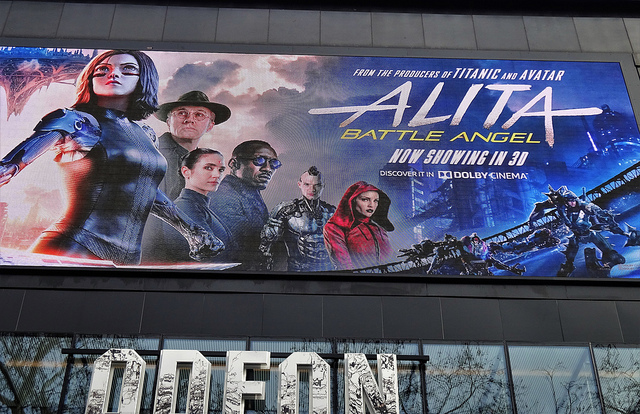
Film rewriting: Battle Angel Alita

https://www.flickr.com/photos/zongo/33133416758

Comics are sort of the new favorite source for films these days. Of course we have Marvel and DC, but also manga (and anime) have served as inspirations in the past years. With mixed results to say the least.

On the other hand, it seems that production values and budgets increase as well, hopefully leading to better quality films (in any sense of the word). This all leads me to the newest addition in this genre, Battle Angel Alita.

This is actually the first manga-based film, where I actually read the manga. It was about 10 years ago, so not too fresh in my mind but I remember enjoying it quite a lot. The basic premise of the movie is as follows:

“A brilliant scientist finds a broken android in the scrapyard. He rebuilds her and discovers she has a strong appetite for battle and sports (motorball). While (re)discovering herself, she becomes part of a competition to rise above others and literally above the city to the promised land.”

Honestly, the story line is quite straightforward so here are a few things I propose to make it a little bit more interesting.

  1. Can we have more shots of sports training? Motorball is like this intense, extreme competition where people, androids and robots literally completely rebuild themselves and lose their lives. Yet, we only get a mock practice game and Alita’s first real game before we are told at the end that she rose to the top in a few months of beating everyone. Where are the photos of those moments?
  2. Could we get a little more background information as to why certain people like or do not like Alita? The best friend of her main love interest (more on that in my next point) just does not like Alita, for no particular reason than that she beat him at the first game where he cheated, but keeps hanging around and going to places. And then in the end, he still dies for his friend even though he just insulted him of becoming weak because of her. That is just not how friendship works.
  3. I like Disney and hot guys as much as the next person, but it just does not match in a gritty, industrial and serious environment. Please throw the scene where he wakes up without a shirt out of the window immediately. Please do not throw in a cheesy quote such as: “You are the most human person I know”, when it is literally directed to an android. Please do not have the guy thanking the girl for changing his world as he falls to his death. And if possible, just find a less standard hot guy type. They just look too clean, no matter how dirty their environment is.

Apparently, this is only the first film in what is to become a series. As a stand-alone film, it is fine. It does the story enough justice, but could certainly improve in the next films. In any case, at least this was not the next Dragonball disaster.

Sound the fire alarm

Having just watched a film in a cinema today, made me realize a thing I already knew before. The world is filled with hypocrisy.

In this case, I am referring to the fire safety clips they always show in Chinese cinemas before the actual film. It might be a strong and trustworthy fireman, an animated helpful robot or your average guy turned fire superhero, all of them urge you what to do in case of a fire. It is just as rote as most of the flight safety reminders when taking an airplane.

Of course, in almost all other cases there is much less, hardly or even no attention paid to fire safety. I remember when I went to China for the first time more than 15 years ago and eating in a hotpot restaurant. These were the times when the soup was still being heated by gas bottles whose tubes basically crossed the entire restaurant floor. And of course there were enough open fires with people happily smoking inside. Nonetheless, we lived to now tell on this tale luckily.

Another instance that comes to mind is in my own apartment building. Living in one these old, traditional 6-story flats already means that fire safety norms are non-existent. There are no emergency exits and stairs, and I doubt there are even smoke detectors installed.

Actually, I am quite positive there are none, because I saw my neighbors burning some money in the hallway a few days ago. Burning money in itself is not that strange, most Chinese do it when someone passes away or for other ceremonial purposes. However, it was quite windy and there was a cloth hanging over the door which seemed to come awfully close to catching on fire by the flames below it.

So naturally, I just headed out quickly and prayed nothing would catch on fire. I do not know if the burning of the money helped with that, but so far everything is still standing.

Film rewriting: La La Land

Shamelessly plugging into the publicity that La La Land already has because of the Oscars and its popularity. Yes, I saw the movie, I even saw it twice. I liked it a lot, love the music, understand (part of) its popularity.

So I am not going to tell you the synopsis of this film, since it is everywhere on the internet and otherwise you know how to go to www.imdb.com (or you just learned now how to). But basically it is a slightly more realistic lovestory with some very good music inserted.

Actually, that is one of my main complaints, there is not enough music in it. Okay, granted I looked for the full music soundtrack on my Chinese (slightly illegal?) music app and it had more than 40 numbers. However, half of them are instrumental tunes which only last for 30 seconds to 2 minutes.

I absolutely loved the first 40 minutes of the film and the first two songs. The opening is one of the happiest traffic jams you will ever see, and I whispered to my friend when we would ever be standing in such a traffic jam with 40 handsome young people who can dance and sing. Shortly afterwards the second song follows which is a nice twist on the getting ready sequence that usually happens before the party.

I reckon it is because the film is between an actress and a musician, so the instrumentals get a lot of time to shine. I did miss some unison singing and flashmob dancing though. I remember watching the remake of the Hairspray film as a musical film a few years ago with some French friends. They were clearly not into musicals, since I heard them whispering at a certain point: “They are singing a bit too much.” Which of course is the whole purpose of a musical film, but never mind.

So to get to the purpose of this writing exercise, herewith some recommendations for La La Land:

  1. I understand it is an idealized version of having it difficult, but being able to regularly go to parties, afford a nice apartment (even shared) and take off from work when you want to (and not even serving customers adequately), does really defy expectations quite a bit. Would it not be nice if she had some harsher conditions to go against?
  2. So can we have a bit more motivation for the change of heart for these starstruck lovers to start looking at each other differently? I mean, he swipes sand in her shoe and then they start dancing. Why yes, is that not a great dating move?
  3. For the final reel of how ideally their relationship/lives should have gone, can we shorten it a bit? By this point we have already been watching for about 1,5 hours, and we can basically imagine ourselves how it should have went. The first part of re-enacting the original movie was fun, but could the family/kid part not have been shortened? Yes it could have been.

But perhaps if it was even slightly more realistic, there would not have been as many Oscar nominations and wins. Oh well, who cares about that anyway right?

Film rewriting: Kubo and the Two Strings

So to be a bit more accessible, let’s add some English to this game!

Last weekend, I went to the movies with a friend and (sort of) by coincidence we saw Kubo and the Two Strings. Without actually knowing it either, it was a beautiful stop-motion movie where you could easily lose yourself in its visuals.

But then the story. It was not that it was terrible, not by all means. But I always keep wondering how they manage to keep these tales so predictable. Being an instantly obsessed millennial internet user, I dove right into the IMDB and review pages. Having read a few reviews, it got me thinking that it would be interesting to see how the story could be changed to follow a more original, possibly more interesting, path.

Let’s take a look at the basic storyline below:

“Kubo and the Two Strings is an epic action-adventure set in a fantastical Japan from acclaimed animation studio LAIKA. Clever, kindhearted Kubo ekes out a humble living, telling stories to the people of his seaside town including Hosato, Akihiro, and Kameyo.”

“But his relatively quiet existence is shattered when he accidentally summons a spirit from his past which storms down from the heavens to enforce an age-old vendetta. Now on the run, Kubo joins forces with Monkey and Beetle, and sets out on a thrilling quest to save his family and solve the mystery of his fallen father, the greatest samurai warrior the world has ever known.”

“With the help of his shamisen – a magical musical instrument – Kubo must battle gods and monsters, including the vengeful Moon King and the evil twin Sisters, to unlock the secret of his legacy, reunite his family, and fulfill his heroic destiny.”

Source: Rotten Tomatoes

In one of the reviews I read online, it was mentioned that the hero himself did not have a lot of doubts regarding his fate/travel/destiny. Another thing, that often seems to be the case in these kinds of stories, is the underdevelopment of the villains. They just exist without a background or any other motivation besides being bad(ass). Sounds like a simple way of living, but one that does not incite a lot of recognition. Additionally, I was initially a bit confused with the role of the mother, especially since (spoiler!) she goes from a mentally unstable person to a wise and protective monkey.

So what to do? I propose some simple editing of crucial story elements (spoilers!):

  1. Can we have the mother act a bit more lucid in the scenes where she is not a monkey? Just so it feels more natural once she actually becomes the monkey. That would be very helpful to our audience.
  2. The start of Kubo’s journey starts because he stays outside after dark and can thus be found by the bad peeps. Can we have a better motivation for Kubo to stay outside other than that he somehow does not manage to run the whole way back in one sequence because he just needs to be slow once?
  3. Can we get a look at what Heaven looks like? What is the reason for people in Heaven to be so cold and evil? That is not what I have learned before!
  4. There is no moment of inner turmoil. This guy has his mother turned into a monkey, a beetle as his additional travel companion, is chased by people descended from heaven and has both his parents dying at the same time. How is he keeping his stuff together? Please enlighten me!
  5. Why is there a semi-happy ending with the entire family (even though the parents are in some sort of spirit-form)? Please do not end this movie in such a cheesy way.

Sounds great huh? Now to find some people to shoot this thing again in like 100.000 frames since it is stop-motion. Oh well, it is all about the ideas right?