
The Scoreboard: Panty and Stocking with Garterbelt

As everybody else on this planet, I have an opinion. As many people do too, I like to write about it. Share it generously. And I am excellent at keeping score (mentally), so I will try tallying up my fondness of things according to balance.

Panty and Stocking with Garterbelt

As much as I like epic stories, I tend to not always have the patience for them. I prefer to know there’s an end, that I’m not left wanting more when I don’t know it’s available or going to come at all. This is why I tend not to watch longer anime series. However, I may make an exception if they’re already finished and highly rated.

So having taken a break from anime and coming back after about a decade, makes it easy to bingewatch some series that had seasons years apart from each other. Such is the case with Panty and Stocking with Garterbelt, that I remember coming out when I still watched anime more actively, and only had a sequel a whopping 15 years later. When it came out in 2010, there were already discussions if you could actually classify it as an anime, since the visual style is much more westernized and it clearly draws a lot from western culture as well.

The overarching story is quite meaningless and just serves to establish some basic rules. Panty and Stocking are sisters and angels, sent down to earth because of their bad behavior and under the guard of priest Garterbelt they need to defeat monsters so they can collect enough coins to go back to heaven. Besides these three characters, there is a geeky love interest for panty, a kind of monstrous doglike behavior that can swallow almost everything and a pink convertible that Panty and Stocking drive on and through most anything on their adventures.

Panty is a blonde sexbomb, taking the sex there very literally since she is always busy in bed or just finishing business in bed. Stocking is a straightfaced goth lolicon who can eat any amount of sweets that are available. Garterbelt is secretly a BDSM freak that loves to make money on the side whenever possible. Both are named after their weapons which they take out in a magical girl-esque sequence that is one of the few ‘traditional anime style’ parts in the series. Antagonists in the form of demon sisters Scanty and Kneesocks, and later angel brothers Polyester and Polyurethane arrive.

By the sound of those names and the above descriptions, you can guess you are in for a wild ride. Most episodes in the series are divided in 2 or more parts, that generally have little overarching storyline. However, they compensate plenty with wacky antics, experimental visual styles and a direct brashness that complements their juvenile humor. It is a series best watched in doses so that all of the poop, pee and sex jokes do not accumulate too quickly, but it is a unique series that probably makes you chuckle or scratch your ears every episode. I rate it a fun mix of east and west with a hefty side of raunchy humor.
The Scoreboard: The Twelve Kingdoms

As everybody else on this planet, I have an opinion. As many people do too, I like to write about it. Share it generously. And I am excellent at keeping score (mentally), so I will try tallying up my fondness of things according to balance.

The Twelve Kingdoms

As much as I like epic stories, I tend to not always have the patience for them. I prefer to know there’s an end, that I’m not left wanting more when I don’t know it’s available or going to come at all. This is why I tend not to watch longer anime series. However, I may make an exception if they’re already finished and highly rated.

Additionally, a period of sickness may allow me to breeze through the episodes as the binge watching that I generally abhor. But I must confess after finishing The Twelve Kingdoms that I do think parts of it are best consumed at once.

Stories about normal, possibly unhappy, people getting transported to a fantasy world where they have to grapple with new purpose and responsibilities have become really popular in anime over the past 15 years. Called isekai in Japanese, literally meaning different world, it’s a genre that I’m slightly hesitant about. Of course, nothing is more attractive than a premise that any of us may one day be swept away and turn out to be destined for something bigger than we could have ever imagined, but I can tend to struggle with these stories if I cannot sufficiently sympathize with the main character on its new journey.

And I did have some trepidation after the first few episodes if Nakajima Youko would be bearable as a heroine. She’s a serious, smart but also very obedient high school student who is suddenly attacked and then transported to another world with Twelve Kingdoms, based on ancient China. She accidentally involves two classmates as well in her adventure, one who’s always had a dream she would be a ‘chosen one’ and another who’d much rather return to his comfortable life alone. Youko meanwhile learns to stand up for herself, face fears and difficult choices, and quickly enough becomes a heroine you can actually root for.

The series seems to have adapted most of the main storylines contained in the original light novels. This means there’s basically 4 different parts with partly overlapping characters, but mainly independent storylines. The parts about Youko take up the bulk of the series. The beginning which shows all of her trials and the revelation that she’s a queen of one of the kingdoms, and a middle section which shows her quelling an uprising shortly after ascending the throne. The other parts are much shorter and deal with other rulers.

The world of The Twelve Kingdoms is rich and dense. It’s clearly based on ancient Chinese civilization, although the writing is not all existing Chinese characters, with a highly stratified hierarchy and a Heaven that decides it all. Rulers of the kingdoms are chosen by auspicious, mythical creatures called kirin. If a ruler starts to enact policies that are not beneficial to its kingdom, the kirin will get sick and eventually die, leading to the death of the ruler as well. Then a new kirin will be born who will choose a new ruler.

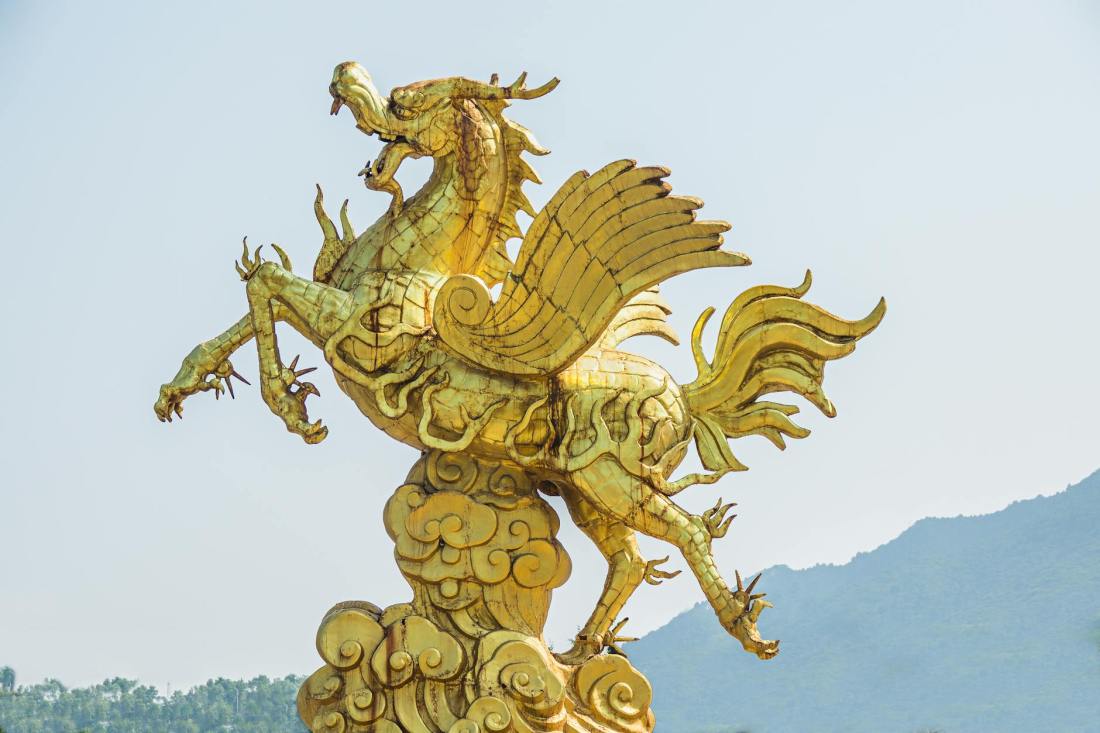
It’s a bit of a pity that the kirin look more like a dog-unicorn hybrid than the legendary hooved chimerical creature it actually is with a dragon’s head. But the show has a nice, albeit dated, look to it and clearly depicts the different kingdoms. Instead of being all about grandiose battles and adventures, the series is mostly interested in political scheming and human interactions. This sets it apart from many other entries in the genre and makes for an interesting perspective on the world, although it does move at an uneven pace sometimes.

It also feels like the story could have benefitted from some more room to breathe, especially the two shorter parts of which one just ends without any resolution. It seems that the continuation of that story happened long after the series was finished and the cop-out was unintended, but it’s still quite frustrating.

All the same, The Twelve Kingdoms sweeps you off of your feet to a different world and time, offering a rich and immersive experience. I rate it, not as deadly as becoming a courtesane to the royal court and much more enjoyable to watch.

The Scoreboard: Suzume

As everybody else on this planet, I have an opinion. As many people do too, I like to write about it. Share it generously. And I am excellent at keeping score (mentally), so I will try tallying up my fondness of things according to balance.

Suzume no Tojimari

There are not a lot of directors that I have seen all works from. Obviously, this is a bit easier the shorter the list gets, and Makoto Shinkai is one that does not constantly churn out new films. Still, I have not seen all of his films but definitely the majority of it. And like most other people, I was really touched by Your Name. But I also remember really liking 5 Centimeters per Second and Voices from a Distant Star.

His stories often focus on couples, in the prime of their teenage years, juggling change and difficult decisions. His visuals also have a very particular, crisp and bright look about them. They have the digital enhancement and cleanliness to them, without losing character.

For the most part, Suzume looks gorgeous as well. The landscapes are vibrant and dynamic, and places recognizable, especially as she moves throughout the country. However, I tend to not really like too much spunk in my heroines, and especially at the beginning Suzume exhibits quite a bit of it. It is a bit at odd as well with her stoicness and distant friendliness to her aunt. Also, although the boy is gorgeous, the love story feels a bit shoehorned in. It is the traditional love at first sight from her end, and even though they end up travelling together and getting to know each other quite a bit, it feels weird when a college student seems to get a crush on a high school girl.

Another thing this film suffers from, is the density of its lore. The world is fleshed out quite quickly, there are doors to other dimensions that need to be closed in order to let the worms under Japan not consume the country, but not much is told otherwise. Not about the family line of Souta that has closed doors since ancient times. Not about the escape and wish of the cat who served as the keystone to keep the door closed. Not really about Suzume’s family history beyond her mother tragically dying during an earthquake and her aunt not getting through to her. Not about the magic that turns Souta into a chair and almost prevents him from returning back to his human self. There is so much more to explore which could have helped take the story to another level.

As it stands, there is still a lot to enjoy but I felt myself wanting more when watching it. Because the premise is so intriguing and the basic worldbuilding done quite well, I wanted to delve more into the characters, their motivations and backgrounds. Also, the gimmick of seeing Suzume walk around with a broken chair is quite funny, but gets a bit stale by the end. And Souta is very handsome of course, so I would not have minded seeing more of his face as well.

I rate it nice and heartfelt, lacking a bit to give it that extra punch.