
As everybody else on this planet, I have an opinion. As many people do too, I like to write about it. Share it generously. And I am excellent at keeping score (mentally), so I will try tallying up my fondness of things according to balance.
The Twelve Kingdoms
As much as I like epic stories, I tend to not always have the patience for them. I prefer to know there’s an end, that I’m not left wanting more when I don’t know it’s available or going to come at all. This is why I tend not to watch longer anime series. However, I may make an exception if they’re already finished and highly rated.
Additionally, a period of sickness may allow me to breeze through the episodes as the binge watching that I generally abhor. But I must confess after finishing The Twelve Kingdoms that I do think parts of it are best consumed at once.
Stories about normal, possibly unhappy, people getting transported to a fantasy world where they have to grapple with new purpose and responsibilities have become really popular in anime over the past 15 years. Called isekai in Japanese, literally meaning different world, it’s a genre that I’m slightly hesitant about. Of course, nothing is more attractive than a premise that any of us may one day be swept away and turn out to be destined for something bigger than we could have ever imagined, but I can tend to struggle with these stories if I cannot sufficiently sympathize with the main character on its new journey.
And I did have some trepidation after the first few episodes if Nakajima Youko would be bearable as a heroine. She’s a serious, smart but also very obedient high school student who is suddenly attacked and then transported to another world with Twelve Kingdoms, based on ancient China. She accidentally involves two classmates as well in her adventure, one who’s always had a dream she would be a ‘chosen one’ and another who’d much rather return to his comfortable life alone. Youko meanwhile learns to stand up for herself, face fears and difficult choices, and quickly enough becomes a heroine you can actually root for.
The series seems to have adapted most of the main storylines contained in the original light novels. This means there’s basically 4 different parts with partly overlapping characters, but mainly independent storylines. The parts about Youko take up the bulk of the series. The beginning which shows all of her trials and the revelation that she’s a queen of one of the kingdoms, and a middle section which shows her quelling an uprising shortly after ascending the throne. The other parts are much shorter and deal with other rulers.
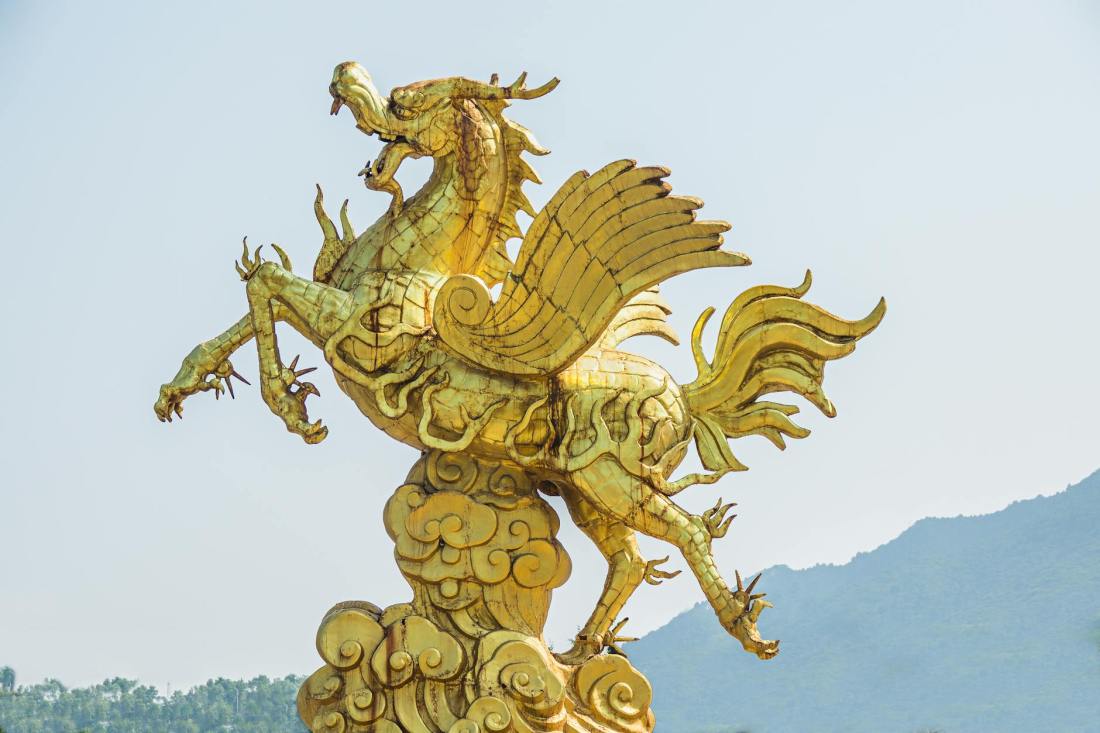
The world of The Twelve Kingdoms is rich and dense. It’s clearly based on ancient Chinese civilization, although the writing is not all existing Chinese characters, with a highly stratified hierarchy and a Heaven that decides it all. Rulers of the kingdoms are chosen by auspicious, mythical creatures called kirin. If a ruler starts to enact policies that are not beneficial to its kingdom, the kirin will get sick and eventually die, leading to the death of the ruler as well. Then a new kirin will be born who will choose a new ruler.
It’s a bit of a pity that the kirin look more like a dog-unicorn hybrid than the legendary hooved chimerical creature it actually is with a dragon’s head. But the show has a nice, albeit dated, look to it and clearly depicts the different kingdoms. Instead of being all about grandiose battles and adventures, the series is mostly interested in political scheming and human interactions. This sets it apart from many other entries in the genre and makes for an interesting perspective on the world, although it does move at an uneven pace sometimes.
It also feels like the story could have benefitted from some more room to breathe, especially the two shorter parts of which one just ends without any resolution. It seems that the continuation of that story happened long after the series was finished and the cop-out was unintended, but it’s still quite frustrating.
All the same, The Twelve Kingdoms sweeps you off of your feet to a different world and time, offering a rich and immersive experience. I rate it, not as deadly as becoming a courtesane to the royal court and much more enjoyable to watch.

 Bitesized Writing