A Taste of News: China’s singles society

As many in my direct circle know, I read quite some news. I try to mention at least once per day that I read something in the news, casually, in a conversation. And since commentary and reviewing is something else I like to do, I thought of starting a series where I write my thoughts about an article I read. A lot of them will be related to China, since that is one of the topics I follow most closely.

Is China Drifting Toward a ‘Singles Society’?

Sixth Tone

With single’s Day coming up (because why not more consumerism 2 weeks before black Friday?), it seems more than appropriate to focus on Chinese singles today. This article hits some familiar points. The disparity between highly educated urban women and lower education rural men. The importance of marriage that permeates Chinese and many Asian societies. The difficulties that singles face regarding costs of living and income vulnerabilities.

Something different that it touches upon, is the disparity of views on singlehood between the singles and society at large. Additionally, it makes a difference between ‘choosing to be single’ and ‘drifting into singlehood’.

This first point is something I experienced when I still lived in China. I thought I had written on this before, but a few scrolls down do not reveal anything. But moving to China at 25 and leaving again at 29 revealed clear differences in perception of the age brackets. At the most extreme, it went from all is well to all is hell. From you will for sure find someone to you cannot find someone anymore. From your mind will change to your parents will be devastated. And this attitude for sure has its origins in the fact that marriage is not only socially acceptable and encouraged, it actually provides a clear path to a better life for you and your future offspring.

The second point is something I have been wondering about myself in the almost 10 years I was single. There is for sure a large grey area between these 2 states and most definitely some changing back and forth. I definitely drifted into singlehood initially, my previous breakup costing a lot of time and effort to heal from. After some half-hearted efforts at dating, I more consciously made the choice to stay single when I moved abroad. As the years passed by, the ‘happy single’ image seemed to fit better and better. It was almost movielike how surprised people were, including myself, when I got into a relationship.

I think it is this fluidity of just happening to be single, actively embracing it, and then dating again that is missing for a lot of Chinese women. The paradox is always that you should find a partner, but cannot be too overt about the process. Ideally, there is no process for you to go through, you just meet the person or are introduced to them.

When we are expected to adhere to these invisible rules, it limits not only individuals, but society as a whole. With the emphasis of the Communist Party leadership on women fulfilling certain roles, I unfortunately do not expect this to become more flexible anytime soon.

A Taste of News: 1.000 trees in Shanghai

As many in my direct circle know, I read quite some news. I try to mention at least once per day that I read something in the news, casually, in a conversation. And since commentary and reviewing is something else I like to do, I thought of starting a series where I write my thoughts about an article I read. A lot of them will be related to China, since that is one of the topics I follow most closely.

Dezeen Awards China 2023 Shortlist: 1.000 Trees Phase 1 by Thomas Heatherwick

Dezeen

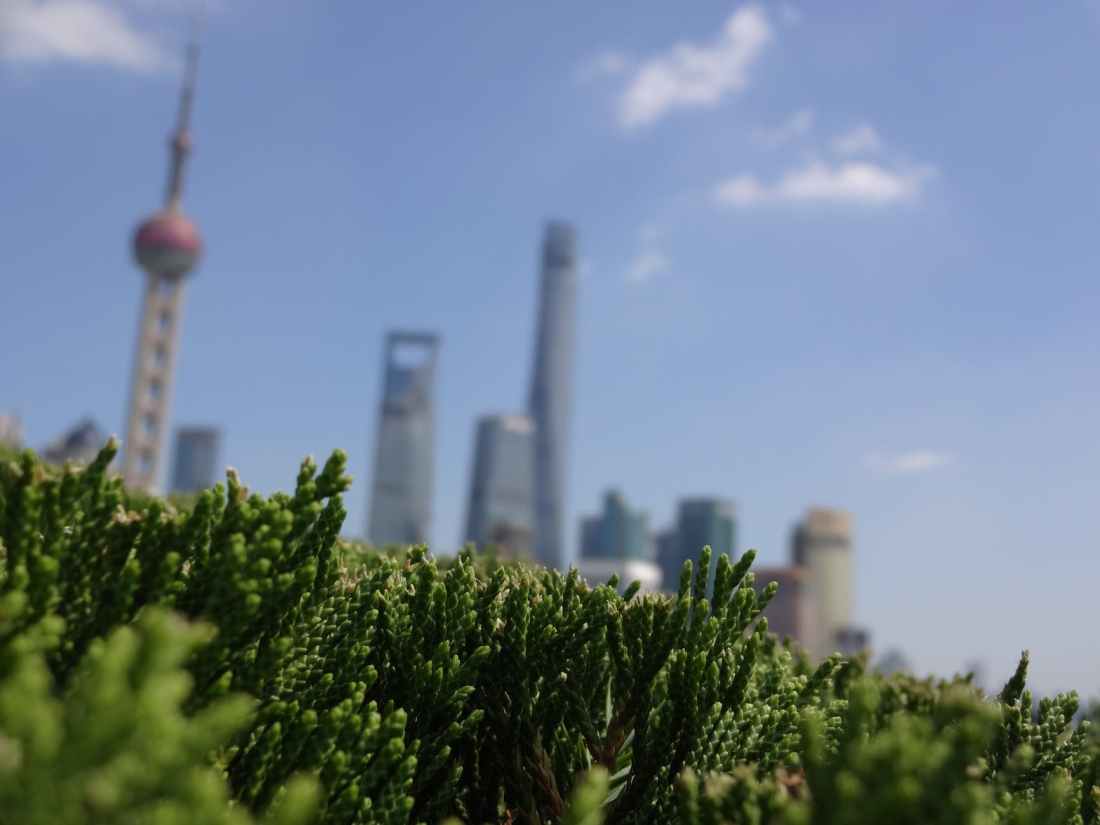
Seeing this building pass by in an awards list definitely piqued my interest. I have seen this building mainly as a collection of grey blocks and round platforms. The forms were distinct against the sky and along the river, but they seemed to stand out in the bad way many Chinese buildings will stand out. By being special but also quite ugly.

As it was on the shortlist for a new architecture award from a well-known platform, it made me look up which judges are involved. A quick scroll shows what seems to be a relatively well-balanced team of Chinese and British architects and designers. But I always have a nagging feeling that often buildings for these kinds of awards get chosen more on looks than practical use.

At the same time, somewhere a memory got triggered that I read something about a list of ugliest Chinese buildings and this one being among the top. A quick search proved me right, it was the top pick for 2021. Having read some articles by Thomas Heatherwick als made me doubtful of the attitude its founder has, and reading the quote of the Ugliest Buildings competition judges only reinforces this:

They felt it “lacked a basic understanding of Chinese culture and did not bother engaging in extensive, in-depth emotional communication with the public in advance.” Although it is written in a fuzzy way, I do agree that the building is mainly meant to be eye-catching and does not reflect or reinvent any Chinese aspects in an interesting way. With a bit of luck I will be in Shanghai next year and able to judge it with my own eyes.

A Taste of News: Chinese female roles

As many in my direct circle know, I read quite some news. I try to mention at least once per day that I read something in the news, casually, in a conversation. And since commentary and reviewing is something else I like to do, I thought of starting a series where I write my thoughts about an article I read. A lot of them will be related to China, since that is one of the topics I follow most closely.

China’s Male Leaders Signal to Women That Their Place Is in the Home

New York Times

Being a Chinese woman has never seemed easy to me. When I lived in China, I got a taste of it in some situations and it does feel like the attitude switches between extremes and also clear age shifts.

Reading that there is more emphasis from senior Chinese leadership on women’s roles in the family seems to me similar to the movement of the ‘tradwives’. It feels in many places there is a wish for stable, clear roles that make you feel like life is a little less complicated. At the same time, the Chinese characteristics are clear in that there is a distinct top-down dynamic. Of course leadership is in the front seat when they want to ensure that everyone aims for the right direction.

At the same time, I think it is often overblown how much the leadership influences these kinds of developments. We see that Chinese women have become more and more independent, even subverting expectations about birth preference in some cases.

And even though it may seem the party is actively steering people, it is definitely not a one-on-one influence. Sure, I also got questions if my parents were not apalled at the fact that I do not want children, and I got my fair share of comments that I should not be single in my late twenties. At the same time, Chinese people are resourceful and practical. If you are an intelligent and capable woman, you will generally have opportunities to capitalize on that. So it will be interesting to see if this government stance will develop into something more tangible like an actual campaign or if it just remains a message for the general public to hear.

A Taste of News: Halloween in China

Because one can never have too many categories that only have 1 post, I am starting something new to see if it helps me to start writing more regularly again.

As many in my direct circle know, I read quite some news. I try to mention at least once per day that I read something in the news, casually, in a conversation. And since commentary and reviewing is something else I like to do, I thought of starting a series where I write my thoughts about an article I read. A lot of them will be related to China, since that is one of the topics I follow most closely.

Shanghai’s Halloween Party, a Rare Chance for Chinese to Vent in Style

New York Times

Halloween is one of my least favorite holidays. I did not celebrate it when I was younger and at my current age I have a feeling it is more related to commerce (what is not these days?) than any actual celebrations. The whole ringing door bells and asking for candy thing is related to Saint Martin for me and then you get to hold a lantern and sing a song, so that seems vastly superior to me.

What struck me from the article is the spot where all the Chinese partygoers were photographed. Whenever I see a photo of Shanghai or Beijing, I cannot help but try to figure out where it was taken. Especially the big overpass rings a bell, somewhere in the back of my brain. Some of the other photos are probably taken around Xuhui Road?

Secondly, I identify heavily with all of the non-dressed people in the background who are either frozen in an awkward position or looking on their phone. This is how I would feature on one of these photos. This is how I would celebrate Halloween.

Thirdly, I am surprised that any politically tinted costumes were found. I would say this is a slightly Western bias to look for these kinds of themes, but I do find it nice to see the Chinese are being as creative as ever within their limits. The cucumber is going to give me nightmares though.

Tricky translations: shawarma

Trying out a more language-focused feature on cheesy translations and slogans related to food in Chinese.

Foreign food in China has a kind of multi-level enjoyment. Not only will you be tasting familiar food that is hopefully tasty, but you can also relish in the translation they chose for your dish. Case in point here is shawarma, something that is quite popular in the Netherlands (possibly one of the few warm breakfasts the Dutch consider, although mostly only when they are students). Shawarma has not necessarily been one of my favorite dishes when I was in the Netherlands, and being back again for over a year I have not eaten it again yet. Its main redeeming feature is probably that it can be combined with lettuce, cheese and fries into the infamous kapsalon, although I normally eat that one with doner kebab.

While in Beijing, there were a few large shopping malls I went to eat. The amount of food that is available in Asian shopping malls is really unparalleled to anything we have in the Netherlands. Regardless, more choice also makes it more difficult to decide and I would often pace up and down the lanes with increasing hunger. I remember seeing for the first time the name of this restaurant and almost bursting in laughter. It was called: 想我么 shawarma. In English that translates to ‘do you miss me shawarma’. The catch is that ‘xiang wo ma’ also sounds like shawarma.

I am not sure who came up with this name. I have heard stories from friends that the person who thought up the Chinese name for Coca Cola was awarded price money (although I can find no very reliable sources with a quick Google search). Looking into it a bit more, it seems the restaurant was a collaboration between Chinese and foreign business partners in Beijing. They appear to have split and the Chinese partner omitted the ‘xiang wo ma’, but the foreign partner is still using it for their separate restaurant.

As a name, even though it is so cheesy you would not need anymore cheese with your shawarma, it works very well. Another quick Google search turned up some customers who were baffled by being asked if they had missed them. And it is very easy to remember, even for people with only a limited understanding of Chinese. I hope the restaurant can somehow get big enough to make ‘xiang wo ma’ the official translation for shawarma. I can already imagine it going viral on Douyin, creating a new holiday when you romantically eat shawarma with your friends, family and partner, as well as a cute mascot for merchandise.

But in the meantime we are stuck just eating shawarma.

The friend circle: Olympics & book

In WeChat there is this nifty feature called ‘friend circle’, which is basically akin to a Facebook timeline. Since I am not in China anymore, I do not actively follow most of what is happening in the friend circle anymore. To motivate myself to check it out a bit more often, I will list some random things I saw while scrolling down. It is also a nice way to keep a bit of a pulse on what is happening in China, of course subjectively.

Olympics

I am very uninterested in watching most sports. I am very interested in doing some sports, but the Olympics that are currently happening, do not really interest me at all. However, I saw quite some posts in my friend circle about this Japanese gymnast. Apparently he made a grave error, but still got high points regardless. And people are now critiquing the judge, the gymnast and the Olympics as unfair, partial and shameless. To be honest, I really cannot understand all the fuss being made about these things. And it is very easy to just write on Twitter “THE JUDGES NEED TO GET THEIR EYES CHECKED” if you can do that from the comfort of your home, while probably sitting down. Things the sporters are not doing.

The most interesting things about sports, is the similar reactions you see by almost everyone. The comments, about the judge’s eyes, or the sporter being a failure, or the sarcasm that he got his points is uniform. Sports really unite. But in a most ugly way.

Book

A book that one of my contacts bought, popped up that seemed interesting. The title is Seeking A Little Upward Mobility Amidst A Frenetic Life. In English, the title sounds like every other self-help book which is probably correct since the blurb says: “[This] is a spiritual book by a famous author. Listen to famous authors talk about how they read, how to keep their inner peace. How to learn to be silent, and how to cherish time. Life is too chaotic, but that doesn’t stop us from getting ahead.”

I have a sort of innate dislike of self-help books. On the other hand, I always try to motivate myself to read more. Especially in Chinese. I can read Chinese quite well, but it goes very slow. Kind of like French, where I can understand pretty much everything but prefer to look up at least 1 word per page just to make sure. And that transition to the dictionary does not go very smooth unfortunately. The story does not continue there. So a Chinese book always serves as a welcome reminder, that I would like to not spend a whopping 7 years on finishing another Chinese book, but that if I would still do should better start now.

What to add to your tea: a rant

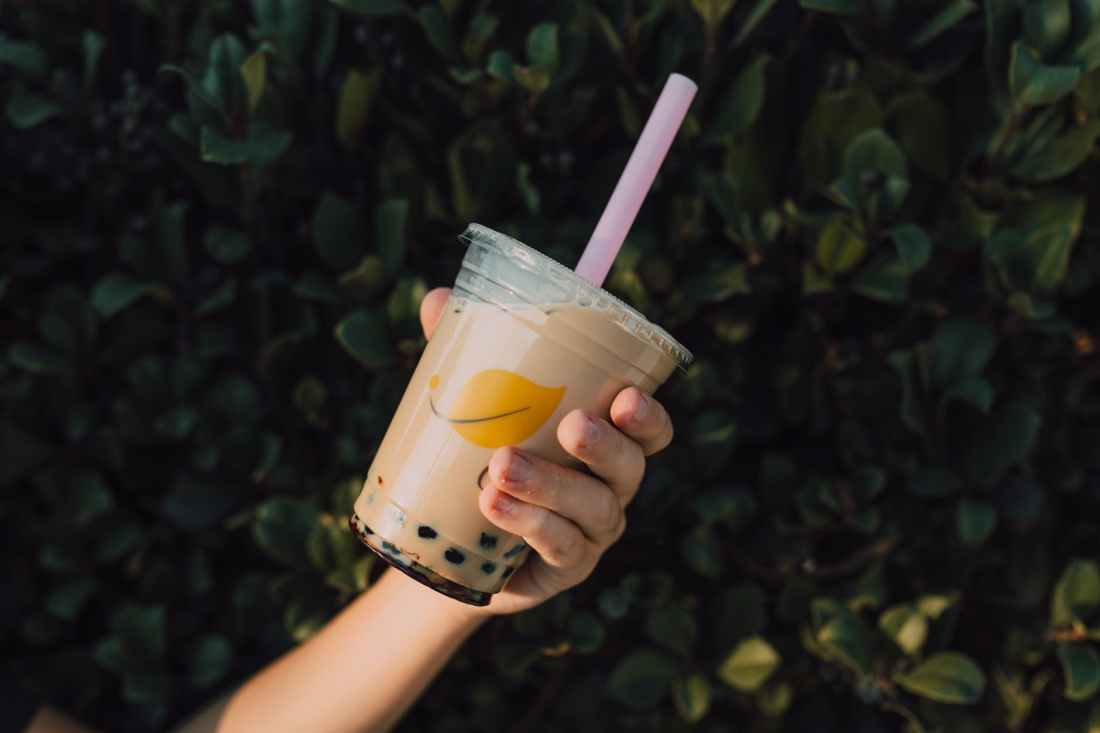
Anybody who knows me, knows I am crazy about bubble tea. It is something I developed relatively late, but got very passionate about quite quickly. And I am rubbing it in everyone’s face that I was smart to drink all that bubble tea while in China, because we do not really have it here in the Netherlands. Let me correct that: we do not really have it where I live. Let me further correct that: they do not really have it how I want it.

To be honest, as long as there is variety, I am a very easy person. Probably counts for most people. I only ask, for some pudding. We eat vla here, it is very similar. Heck, they eat flan in France and they literally throw that stuff in your bubble tea at Yi Dian Dian. And I know bubble tea is very trendy now. Especially the cream cheese variations. But it is not the same. In this sense, I am conservative and a purist. Just give me my pudding.

And sure, if you do not have pudding I may go for jelly. The grass jelly and bubbles go quite well together, complementing flavors and textures. I sometimes got very adventurous and would opt for some yakult and coconut jelly. But that is only if I did not feel like milk tea, which honestly would only happen if I got it 4 or 5 times per week to begin with. And at Yi Dian Dian (although Coco has my heart, let that be stated black on white) they had some nice coffee jelly as well, if I wanted a hint of bitter. Sometimes I would combine taro and pudding on cold winter days with warm milk tea for a drink that could actually serve as a dinner (snack), filling you up and keeping you warm at the same time. In summer I would often opt for the smaller bubbles, just to give it a different texture. But with pudding of course.

Although I sometimes strayed, it was mostly out of necessity. If the next Coco is 1 km away and there is a Happy Lemon next door, sure. If I really craved some bubble tea and passed by a Gong Cha, I would not say no. I tried Hey Tea! 2 times, once taking a special bike ride with a colleague to one shop where there wasn’t a crazy line. The other time actually waiting for close to 90 minutes because somebody else was treating me to it. And these lackluster experiences ensured I would never stray for long.

It is almost concerning that I am able to write longer pieces about bubble tea with an ease that does not come with many other topics. But I guess that shows you can really feel passionate about some things. I am eagerly waiting for the day I will be reunited with the few brands I would have points cards for. I used to have a Coco umbrella even! If they are ever opening applications for overseas ambassadors, I need to be first in line.

Summer is not the same this year. I hope it will soon be as I remember it.

Daily tidbits: Why not make things more complicated?

I have been in touch with customer service quite a lot these days. That is always a frightening thing, although I have had my fair share of better and worse experiences. However, in this case it was Chinese customer service, because I needed to arrange some things for my phone number.

There is something amazing about the way everything is so interconnected in China. When you have an issue, there is always a way to address it. You can chat with customer service or give them a call, basically 24/7. At the same time, it never ceases me to amaze me how complicated they can make things at the same time.

When I still lived in China, I moved to Shanghai and got a new phone. I needed a new simcard, a nano one instead of the mini I had. after calling my provider’s customer service, which is totally separate in Shanghai from Beijing and provides no way to be redirected, they told me that I needed to come back to Beijing for a new simcard. So just to get something with a little bit less plastic, I needed to travel more than 1.000 kilometers. Which I did and found ridiculous.

Now that I am in the Netherlands but still using my Chinese phone number for certain occasions, it’s a different issue. I had freezed my number, but was unable to easily recover it again due to forgetting my password. I again chatted with different officers at different times in the Chinese night but in the end I was only able to finalize the process by contacting a friend in Beijing and having her directly call them.

I am not sure if this is arranged in this way for a specific reason. Is it to ensure that the physical staff still has a role to play? Is it because they want take customer service difficulty to the next level? Is it because they are available 24/7 that all staff is so tired they cannot think of any customer-friendly alternatives? To be honest, I think it is just another way for us to remain grounded. That we remember we can do great things, and also make simple things impossible.

Familiar flavors: Hotpot

With the holidays right around the corner, food and dinner finally get the attention they deserve in the West. Not entirely coincidentally, that was what a big part of my daily life revolved around in China. And even though there is limited family gathering this year, there have been plans to do hotpot. Which will be great, but just not the same.

Hotpot

What is it?
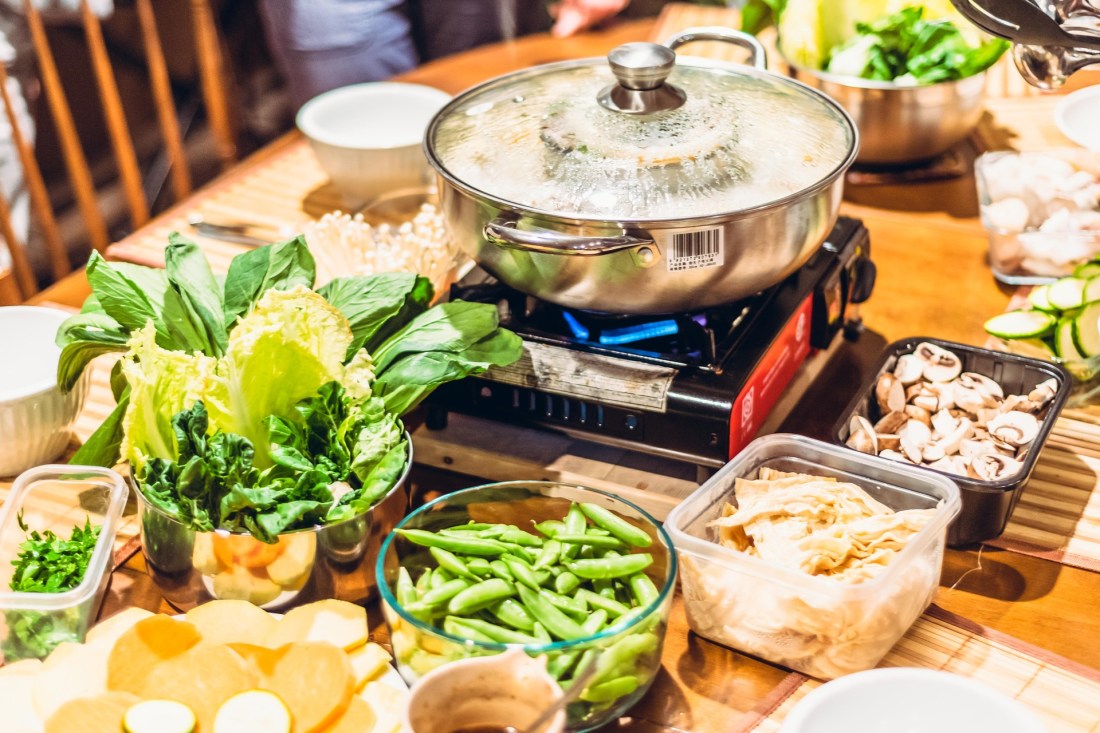
Simply said, you boil raw veggies and meat in a soup. Does not sound too special or appealing, but it is great. You have many different kinds of soups, really the cornerstone of hotpot. Additionally, you have the fun of literally cooking your own food, and enjoying some nice soup on the side. Sitting around a big hot pot of soup really gives you warm fuzzy feelings (also because of the warm food entering your belly) and you can basically eat anything for hotpot. You combine hotpot with a dipping sauce most often sesame sauce (the best, one and only I will recognize) but especially in southern China everyone makes their own concoction out of different options.

When to eat it?
If we believe haidilao, a big chain, then 24/7. But normally, hotpot is eaten during winter, most often for dinner or as a very elaborate midnight snack (hence the 24/7 opening times). Rules are there to be broken of course so summer time makes for a nice hotpot opportunity as well. Nothing can rival winter hotpot inside and winter outside though.

Anything bad?
Some hotpot soups can be very spicy. I remember I went to Sichuan with a couple of friends and I literally could not taste anything I fished out because the soup made my whole mouth numb and tingle. Otherwise there are no real drawbacks to hotpot, you can avoid anything you do not like that others put in there. It can only be a shame if some things are overcooked and then only found after they have disintegrated.

Where to get it?
Haidilao and Xiabu xiabu are probably the 2 most well-known chains. Xiabu xiabu is more of a fastfood chain with rows of individual, 1-person hot pots. Haidilao is on the other end of the chain, not-quite-fine-dining hotpot but famous for its good, (slightly creepy but) very friendly service, long wait lines (but you can do your nails while waiting so…) and high quality products. And of course there are many other places to go to for hotpot as well, although your mileage may vary.

How much do I miss it?
About 8.5/10, especially now it is winter. There is hotpot in the Netherlands, but it is far from my home and probably quite expensive. And it is also about the convenience of hotpot, the fact all the veggies are pre-cut and served directly on a plate, then quickly going into your mouth. And lastly it is also about the company you share the table with. So here is to hoping 2021 will bring the real stuff!

Learn more

The 3 Chinese ways to repair a bike

I biked a lot while in China. Of course it has to do with my Dutch upbringing, but it’s a nice way to move through a big city. Less walking than the extensive metro network, less traffic jams and people around you than in the overcrowded buses.

But nothing lasts forever, certainly not the average Chinese bike. Even though they may leave the bubble plastic on it (which makes it look only more dirty after a week). And because I am a responsible adult, I naturally repair my bike for these small things.

The Chinese have a special way of dealing with bikes. Although they used to be the standard modus operandi, they have long since been replaced by a plethora of ridiculous and less ridiculous vehicles like: electric scooters and steps, hoover boards, unicycles, tuk tuks, and more. But repairs for bikes, and most other 2-wheeled vehicles as well, still take place next to these small iron closets that are opened every morning by the repairers. I don’t really know why, but normally these shops are also combined with a shop to make keys or repair them. Perhaps theh run lucrative businesses copying the keys for the bike locks so they can sell the bikes?

In any case, the actual repair process almost always goes along of the 3 ways described below.

1. You have something that is broken and they can easily repair it with something that will break again in a few weeks. But hey, you can still use it in the meantime.

2. They give it a good hit with either a limb or a tool. Often this solution proves to be surprisingly long term.

3. Once they start to repair it they get stellar advice from their neighbor. Or the next person waiting for the repair. They may even ask you. The result varies on the advice given of course.