An ode to biking

Having Chinese heritage and grown up in the Netherlands, I feel my love for biking is coming through both nature and nurture. Even though I complain plenty about biking when visiting other places, since the bikes are not always top-quality but neither are all 4 that I have standing here, it is one of the best ways to move quickly and see more without tiring too much.

As the 15-minute city concept is winning in popularity, and as an unofficial reviewer of things, I thought I would reflect on the places I have biked and rank them. Since I do mostly bike in the city, if we go outdoors I would prefer my feet or a horse.

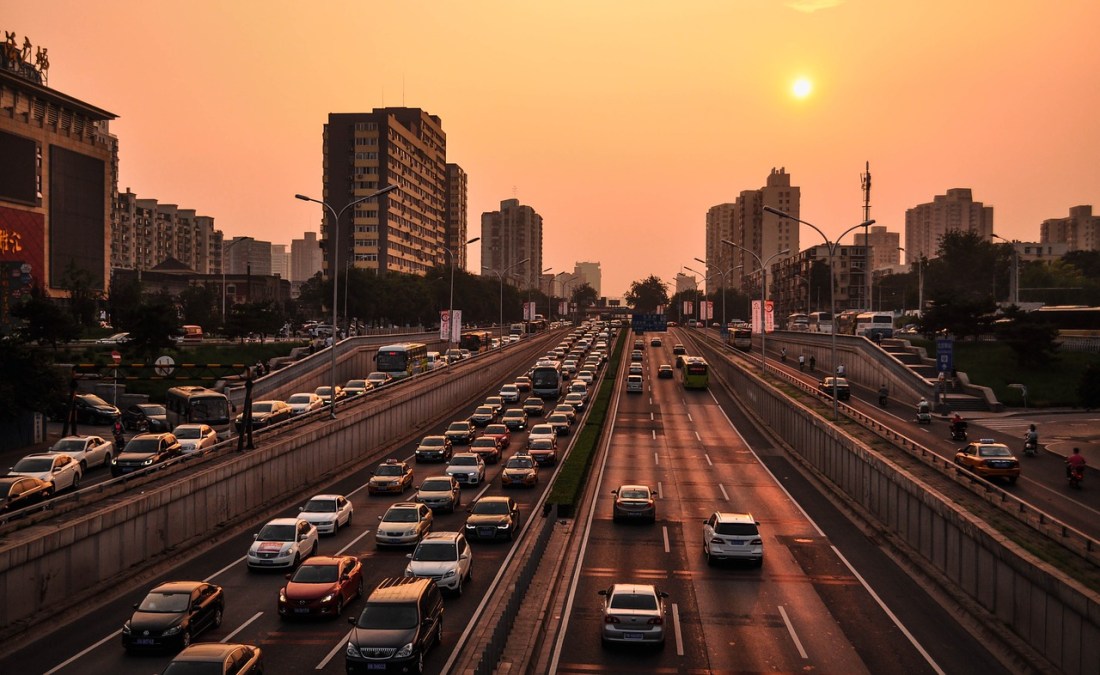
Beijing, China

Overall: a good place to bike if you want to care minimally about rules and safety, like to shout at people and try to bike on highways.

Pro: Beijing always felt a bit lawless, even though it is the center of power. I remember shouting at everyone on the road because: point A, there are a lot of vehicles on the bike lanes like electric carts, scooters, steps, hooverboards, cars and buses that may or may not belong there; point B, using Dutch curses or comments really grabs attention since it is unexpected for the Chinese.

The city has a very clear gridlike layout which makes it easy for biking since there are a lot of straight roads and wide boulevards. It is also a great way to try how close you want to bike next to cars or other faster-moving traffic. And it often moves quicker than many public transport options, which are especially crowded during peak hours and often make you walk more than you expect.

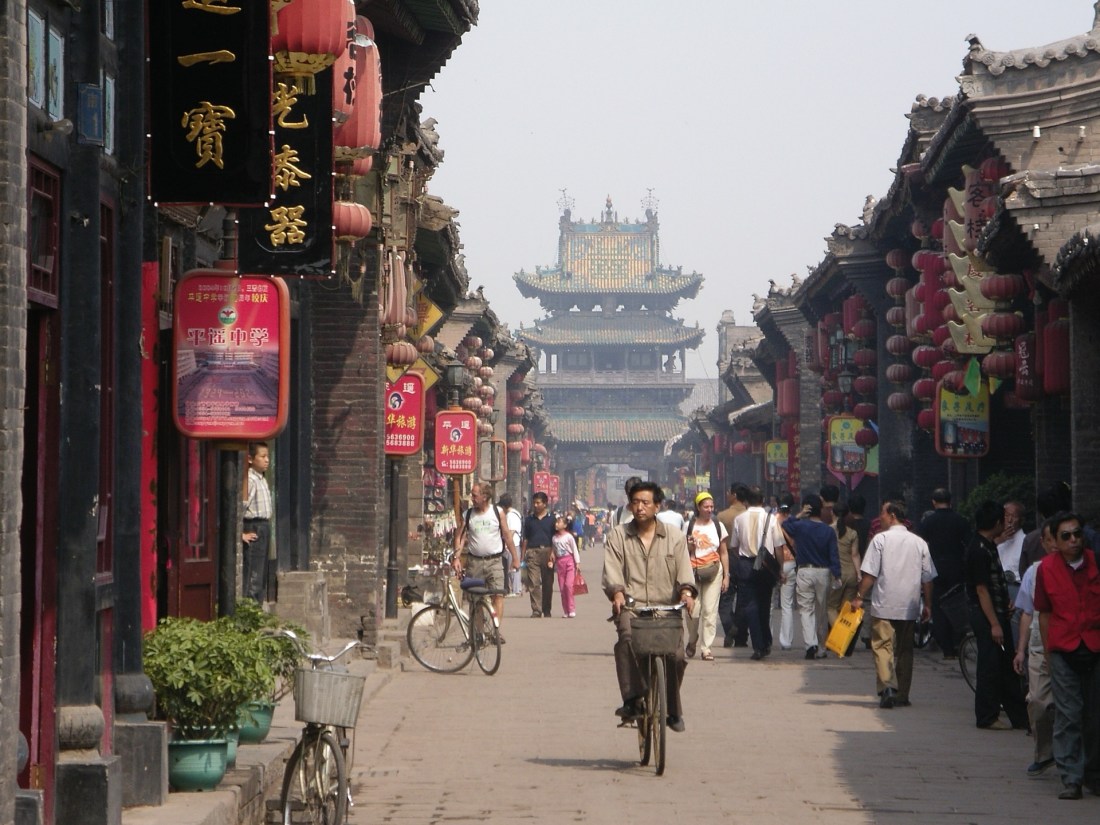
Con: Beijing traffic can be entertaining, but also annoying and slightly too dangerous. The amounts of times I biked past a car and was almost hit by a door was too high for comfort. There are also way too many traffic lights, because the grid creates a million moments when you will need to cross. In the old center around the Forbidden City with the small alleyways, hutongs for those in the know, can be a maze to find your way through and when a car comes, because why would they not be driving through these very narrow alleys, you are basically blocked from continuing your way.

And lastly, you may not be surprised to hear that many accidents happen and you are quite vulnerable on a bike. I have had many colleagues getting hurt (whereas I was the only one getting somebody else hurt on my bike but that is a story for another time) and you see many reckless delivery drivers trying to do their job (a.k.a. moving stuff as quickly from one place to another) which often seems to involve trying to go through you.

London, Great Britain

Overall: if your mind is not entirely consumed by the fact that you need to ride on the opposite side of the road, you can do some nice biking.

Pro: there is a public bike system in London, which I always encourage. Even though there are some height differences, these are not too big to be of any inconvenience with a limited-quality bike. There generally tend to be bike lanes which are mostly only occupied by bikes.

Con: why oh why did these people decide to ride on the other side of the road?! I do not think I will ever be able to wrap my mind around it. If you go straight, no problem, but you do need to curve eventually one way or the other. Also, bikes are not that common yet so it does feel like a car can creep up on you at any moment.

Aalborg, Denmark

Overall: it is definitely a bike-centered place and offers some nice routes throughout the city.

Pro: Denmark is probably one of the most well-known countries for its biking culture besides the other Scandinavian countries and the Netherlands. Of course this means that I am extra strict on its biking facilities since I think the biking culture is one of the few things the Netherlands really has going for it.

Biking in Aalborg this summer, I think it was quite comparable to biking in a Dutch city. Bike lanes aplenty, bikes aplenty, nice bike routes and wide boulevards where you can bike and walk next to each other (still a concept I am not convinced of). The main difference was that most people wore helmets (a concept I am more convinced of).

Con: I was surprised how many cars still were riding through the city with bike lanes on the side. I feel in most Dutch cities cars either need to drive quite slow or are rerouted on a ring outside the city. Also, there is quite a lot of wind which is unsurprising but always annoying.

Lyon, France

Overall: if you do not mind having to go up and down a bit with probably a bit of effort it is a nice city to bike through, especially if you want to see its different parts.

Pro: a public bike system! I think the shame in the Netherlands is that you need at least a personal public transport card to make use of our ‘ public’ bike system, OV-fiets. Anyway, it was quite nice to bike in Lyon (also because we could rent bikes 3 days for 5 euros and of course (a)bused that as much as possible) although the public bikes vary a bit in quality.

The city is quite sprawling so rather then waiting for public transport and then having to go through 5 stops to get to your destination, biking feels a lot more efficient. There are also some areas, like the Parc de la Tête d’Or and Parc Gerland that are nice to bike through. Also along the Rhône and Saône there is plenty of biking space and you could even go all the way to Genève.

Con: some of the bikes creak a lot, which is a bit annoying. The old city center also has a lot of cobble stones so it is probably not very nice to bike either. And going downhill I had a few moments where I was afraid any pebble on the road could send me flying off the bike with a pretty bad landing. There are also quite some roads which could use some maintenance.
The 3 Chinese ways to repair a bike

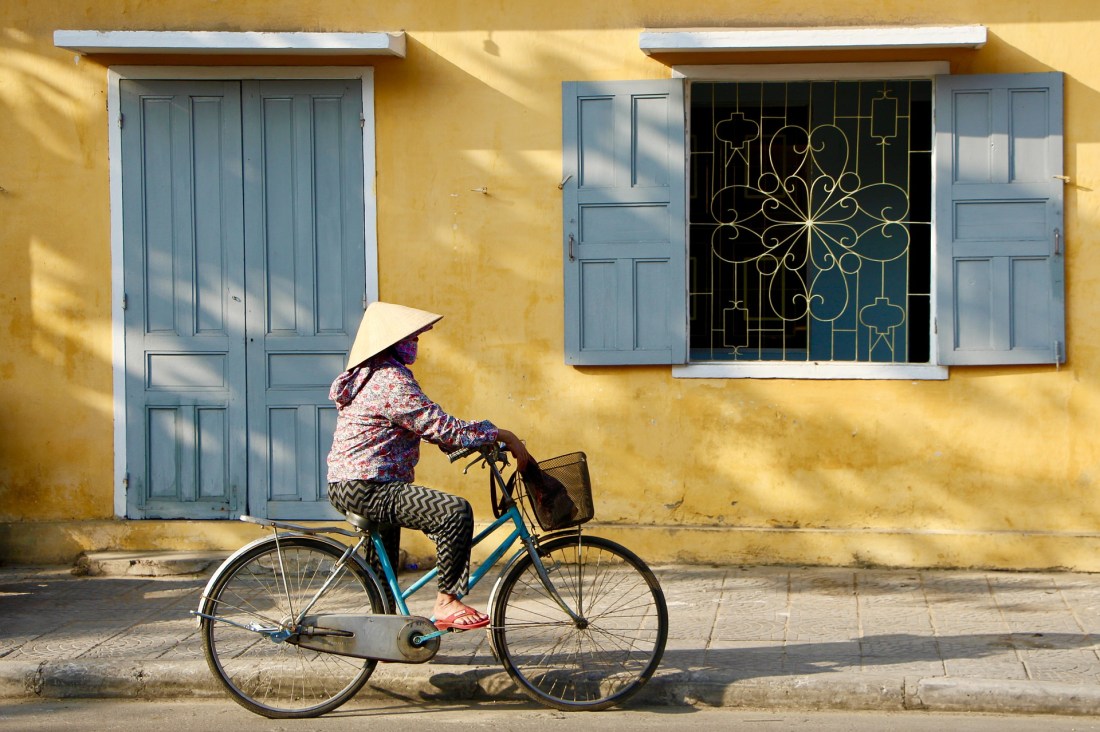
I biked a lot while in China. Of course it has to do with my Dutch upbringing, but it’s a nice way to move through a big city. Less walking than the extensive metro network, less traffic jams and people around you than in the overcrowded buses.

But nothing lasts forever, certainly not the average Chinese bike. Even though they may leave the bubble plastic on it (which makes it look only more dirty after a week). And because I am a responsible adult, I naturally repair my bike for these small things.

The Chinese have a special way of dealing with bikes. Although they used to be the standard modus operandi, they have long since been replaced by a plethora of ridiculous and less ridiculous vehicles like: electric scooters and steps, hoover boards, unicycles, tuk tuks, and more. But repairs for bikes, and most other 2-wheeled vehicles as well, still take place next to these small iron closets that are opened every morning by the repairers. I don’t really know why, but normally these shops are also combined with a shop to make keys or repair them. Perhaps theh run lucrative businesses copying the keys for the bike locks so they can sell the bikes?

In any case, the actual repair process almost always goes along of the 3 ways described below.

1. You have something that is broken and they can easily repair it with something that will break again in a few weeks. But hey, you can still use it in the meantime.

2. They give it a good hit with either a limb or a tool. Often this solution proves to be surprisingly long term.

3. Once they start to repair it they get stellar advice from their neighbor. Or the next person waiting for the repair. They may even ask you. The result varies on the advice given of course.

Losing your way around

A few weeks ago, when I was still allowed to walk around freely, I found myself in an unfamiliar city with some time to kill. I knew the fastest way to walk from my current spot to the train station, but decided against it since it was nice weather and I would not have anything to do at the train station anyway. So taking my time, I strolled through some typical Dutch neighborhoods and made a detour to the old city center as well, making sure not to stray too far from my goal. It worked out well.

I tend to do this quite often, but realized that the reason it went well, is because I did it in a relatively small city (the Netherlands is small after all). When I lived in Beijing and Shanghai, I sometimes did the same. I would be done with work or returning from my sports studio and wanting to make life a bit more exciting, decide to do a detour.

The good thing about biking, is that you can more easily go further distances, even if your route turns out to be a bit longer than expected. The bad thing about biking is that I tend to do it at high-speed, which means I need to cover more distance if I take a wrong turn.

And the other disadvantage of big Chinese cities, is that many spots tend to look very much alike. Those cute hutongs and charming alleys? Very nice to wander for a while, but once you decide you want to now go straight home, it may not be that straight. The big boulevards and ring roads? There are so many of them, and most of them are dotted with similarly huge shopping centers and government buildings. You only end up knowing if you went wrong, once you notice the name of a subway stop which you did not expect to see at all. Which is not be close to where you need to be at all.

So that is how I spent a lot of time in China, lost on a bike. It will probably continue once I move to a bigger city here again. Something else to look forward to I guess.

Biking Battles: Work never seemed so far away

So you accept your role as prey and see if you need to call on your other bunny friends. After putting down the foot on the pedal, you decide to go for it and join your fellow friends.

The start is a wide road, separated from the main car road. So it should be easy cruising through the sun (when it is there), however in reality it only means that you need to pay more attention to the cars trying to sneak into your biking lane. They are not even being sneaky. Acting like the predators they are (see The jungle road) they push you away while giving you the side eye to make sure you do not even touch their precious skin.

Furthermore, it is not entirely clear to you how much brain power bunnies have, but there are enough moments where it seems very low, yours included. The amount of curves you made along the road and scares you had by suddenly having scooters, cars or even buses making some or a lot of noise because of your maneuvers would make any normal person question your sanity. But adaptability is the highest means the ones lower down the pyramid have to make it, so you go along of course.

And then suddenly you have trees, shade and absolutely nothing else changes. The largest difference it makes is that you can play hide and seek with your opponents and startle innocent pedestrians. A real obstacle are the bus stops on the side. The people getting off seem like real mice crawling around, seemingly walking deliberately in front of your bike or freezing at your first sight. After toying with them for a bit, you decide to go for the last stretch.

It is a bridge. With two roads that need to be crossed, way too many traffic lights and very little patience. Whenever you see the chance, you just hop in between everything. This means paying most or your attention to where vehicles come from, not the stupid lights. You especially need to be careful when going against the (traffic) flow since everyone always seems to act as if this is a rarity. And if worse comes to worse and you need to cross the road without the traffic lights, just inch forward and try to look the drivers behind their wheels in the eye. You are one tough bunny!

You manage all that, and you will arrive at the oasis. Green everywhere, people fishing, cars slightly following the rules (since the military is watching or acting like they are) and silence. Oh and then you need to go to work. Nothing is perfect after all.

Biking battles: The jungle road

So before moving onto the long road, let us take a look at what kind of people are most often encountered on the Chinese roads. A comparison with the jungle is not strange, you have for example the predators:

  • The king of the jungle: Trucks, buses and any other vehicles which are heavy, large and intimidating. They cruise along, sometimes with people furiously shouting and/or honking but almost never stopping. They can suddenly lash out with their legs and doors, just to spite you. You know you should not challenge them too much. They have teeth and they bite. Although eating and hitting innocent people is still illegal of course…
  • Cheetahs: Very fast, lean and mean cars. Except, they belong on the Savannah or the open road. Not the clogged streets of Beijing. They roar loudly to let you know that they are dangerous, but barking dogs do not bite. Unless of course they suddenly have a precious piece of open road in front of them. Oh and you should not touch them. One scratch and you are gone.
  • Hyena’s: They are lagging behind, dealing with the leftovers. They are in great, huge numbers. Diverse, irritating and only slightly frightening. They are the ones tuktuks, scooters, bikers and even pedestrians dare to defy. When they hit, of course they hit hard. But as long as you stay out of reach…

So what about the prey?

  • Birds: You can go very fast, if you want to. You can almost manage to squeeze in between everything and anything. But just like some birds cannot fly, these birds often choose not to fly. Just carry on their daily business as they go excruciatingly slow and even slalom along the road while doing their best not to die multitasking. They do make a lot of noise however, whether they are moving or not. Would be nice if the sounds were as nice as birds’ twitter or songs.
  • Rabbits: They are quite harmless and with a growing number. They are usually a group of cyclists, some really put their foot down making noise, others are less brave and just sway from side to side. When they want to, speed is made and a lot of road covered. However, they are also quite single-minded. Just getting ahead already costs a lot of effort, so often following the rules or watching out are optional tasks.
  • Mice: When they are in a group, they have a lot of power. They can basically cross roads whenever they want, however they want. But if they move by themselves, they are the lowest on the foodchain. Literally everyone speeds past them and they are the first ones to take a hit. It also helps that they do not make it easy for themselves by being easily distracted by either eating, looking on their phone or checking their hair in the mirror.

In other words, the road to work is long, hard and dangerous. How to manage?

Biking battles: The origin

“Let me bike to work today.” Quite an innocent thought, if you might say so yourself. So you pack your stuff, glance outside to make sure it is not raining and go out.

At the bicycle parking lot of your compound you look for a while for your bike. It is black and, like most others, rusty and old so it does not stand out too much. It takes you a while to find it, because you realize the community workers moved things around again. To have a large space in the front of the lot to put nothing. Probably for a higher purpose, or to perform some rituals. Things happen for a reason right?

Nevertheless, you get on your bicycle and bike away with a speed which makes the security guard pause and stare in his morning talks. Your compound is quite old and although they often renovate the roads, the fact that people people do not care and keep walking makes sure that the road stays in the same state.

After having crossed that first hurdle, you enter the main road. Here, the real fun starts of course. The traffic lights designate the invisible race that is taking place here. Bikes, steps, unicycles and scooters are going ahead, because the buses, cars and trucks have speed and mass to compensate. You are eager to get to work, so after making sure the right lights are red, you cross in one smooth go.

It always amazes you with what kinds of vehicles people enter the road and what they take with them. Lately, carrying bikes on your tricycle or truck seems to be the new trend. And you always have the hilarious look of people on folding bikes with an electric motor on it, does that not defy the purpose of a folding bike?, or the ones who can barely sit on their steps because they are so small and lightweight.

So getting on the road is only the beginning. The road ahead is long and you need to get to work. On time preferably. What to do?