Nothing to be done pt. 4

“When are you coming around?” Something I am not saying to anyone I would like to actually come, but my (un)trusty repairmen of course.

“Do you know if your neighbors are home?” Surely one of the most logical responses to that question ever. Sidenote, no I do not know if they are home.

So after a few messages on WeChat, setting a date and then not coming, setting a new date and still not coming, setting a final date and somehow showing up it was fixed.

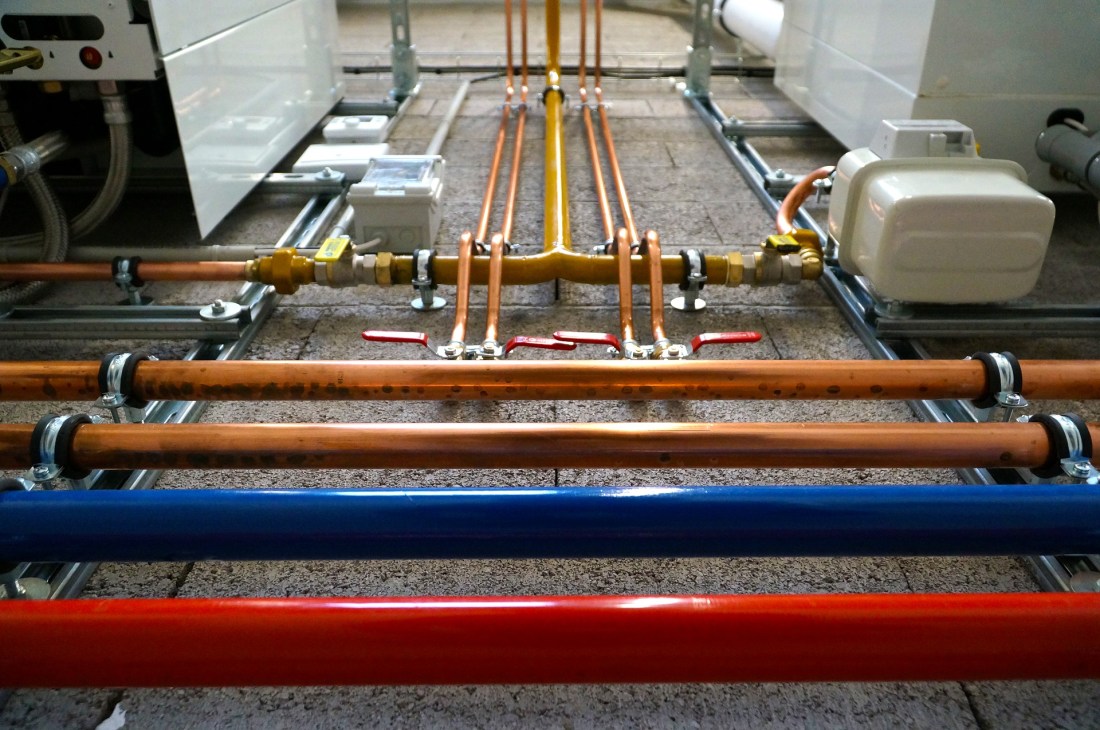
What was funny though, is that my contact person of the housing agency sent a picture of the fixed and newly connected pipe. with a heap of mud around it. “It is done!” The accompanied text said. I was a bit confused and certainly not happy why there should be a heap of mud around the pipe for my washing machine. If there would ever be a heap of mud somewhere in my house, I would certainly not want it to be next to my washing machine.

“That heap of mud needs to go.” I said curtly. “There is not enough room to cover it up, it will be fine.” That is the favorite answer of course besides, “Nothing to be done” (see the title of this series).

I was certainly not going to let all our efforts lead up to me having mud piled around in my house. In the end, I understood it was cement and I made them understand it should at least be flattened out. As a bonus, they did add a tile on top of it. It made me feel very happy to have this extra service, even though I had to ask for it at least 5 times.

2 weeks have passed now without any middle-aged unhappy men, young and useless repairmen or wringing housing agency employees knocking on my door or reaching out to me. I have been using my washing machine without any problems. Life is good again.

Hush, hush, hush

Peace and quiet. Two things people definitely do not come to China for. The whole environment here is just plain noisy. From people to pets, from cars to cicadas there is always something happening and you can hear it.

I live in a ‘traditional’ 6-story building in Shanghai and there is always some pipes making a noise, or the airco outside, or my neighbors getting up at 7 to dance to very loud music.

In Shanghai, it is prohibited to honk for the greater part of the city center, but in Beijing that is definitely not the case. The symphony of all the noises sadly do not come together and it can make for quite an overwhelming experience when a bus, a truck, a car and a scooted are all honking at each other at the same time.

Furthermore, the Chinese are sort of famous for letting others ‘enjoy’ the sounds they make. Whether it is playing mobile games (without earphones), watching a drama (without earphones) or plainly calling (without earphones on the toilet), everyone can very clearly hear what they are doing.

It is the same with human comunication. People rather loudly call each other from the other side of the street, than cross it to talk normally. Kids running off are being accompanied by the increasingly louder screams of their parents that they need to come back. It does not work.

So in this environment, I always find it quite funny when people find me being too loud. I think I have been told a bit more above average to be quiet, or that I am loud. To which I can only say: I am a product of my environment. Apparently I sound more Chinese sometimes than the locals around me.

Nothing to be done pt. 3

So being a good tenant, I took the advice of my housing agency and just started up my washing machine. Not even 30 minutes passed when I heard some familiar tapping on the door and saw the same face in a state that combined anger with frustration and a touch of sadness.

“You are using your washing machine!” It sounded as if I had started a war with my unknown neighbors below.  I started explaining that I was just following advice I had gotten, but he started to mumble and walk around as if he could just take up my washing machine and move it around to solve the problem. In the end, he sort of told me that I was violating the rules and since there was no repairmen coming, he would get a guy of his own. He then stormed out of my house again.

So I reached out to my housing agency and asked them to have it repaired again. And the guy said, “Will try tomorrow.”

But the management was of course getting his own guy, so I again had visitors a few minutes later. I do not think I need to tell you what the management’s repairguy did. He walked to the washing machine, looked out of the window, took some pictures and told me I could not use my washing machine. Getting quite a bit frustrated myself I got both of them to hear the full message my housing agency sent me. Told them I am only a sheeple and following orders so if they tell me I could use the washing machine, I would.

It left an impression. Being direct still is a good way to get people to back off in China. But they would still be coming back again soon.

Nothing to be done pt. 2

“Well,” I said to him “I am only renting this place so I will talk to the housing agency and let them get back to you.”

The guy stared at me blankly and replied gruffly: “Who are you renting this from?” I told him my agency’s name and he gave no sign of recognition at all. “Give me your landlord’s number, I will contact him directly.”

At this point I started to get a bit fed up with him. Mind you, it was not even 7.30 and I still had no leaking problem in my house. I think we went through multiple forms of the conversation above in the next 10 minutes, until I finally convinced him to leave his phone number so I could reach him.

I mentioned that things can move quick in China, and surely I had a repair guy ordered through the housing agency’s app by the next evening. However, when he came I of course had no problem at my side. After checking if the downstairs neighbors were at home, of course not, I called the management guy a few times. Finally he picked up and my repair guy talked to him in the same Shanghainese-tinted Mandarin about the matter.

“Your pipe from the washing machine is too small, it needs to be changed.” He asked if it would fit in my bathroom, which I assured him would be impossible unless I wanted not to take any showers or not go to the toilet anymore. He took a look at my kitchen to see if it would fit there and decided the plumbing was too weak and again there was not enough room. Finally, he looked outside my window in a pensive matter, took a couple of photos which he would send to the agency and left.

This situation as described in the above paragraph then happened at least 3 more times. I had multiple guys visiting me, not nearly as excited as it sounds of course, and all of them made pictures, told me the pipe needed to be changed, asked if it would fit in my bathroom or kitchen and then left without actually doing anything. I almost started to wish I would have become a repairwoman if I could do my work in this way.

And then the weekend came  around. I needed to do my laundry.

Nothing to be done pt. 1

*BOOM BOOM BOOM*

I took a look at my phone. It was 6:50. Also, my alarm did not sound like a cannon. I tried to picture myself sleeping and dreaming that sound, but it was a little bit too real.

*BOOM BOOM BOOM*

“Hello anybwody hwome? Wopen de doowr!”

Note: this is not too make the person sound drunk, rather it was quite a heavy Shanghainese accent and I was not being very diligent in my listening.

Why was this person so confident that people are happy to open their doors at 6:50 for strangers? Now it happens to be that the walls in my building are very thin. Not that I actually know my neighbors (they were lighting up a fire in the hallway a few days ago. It did not make me want to befriend them more), but I was still a bit concerned that this might go on for too long to be comfortable.

So i put on some clothes, slowly got out of bed and opened the door. A 50/60-year old man, of about my height (1.60 cm) looked me suspiciously in the eyes. “Something is leaking.” he said bluntly. Or, to be fair he might have said a bit more, but that was lost on me. I looked back quite dumbfounded, as there was not anything leaking in my house for the past month.

He barged through the door, walked to the balcony where my washing machine was and looked out of the window. “Here” he said, “You need to move this washing machine.” Now I am quite a strong and healthy person, but I am not too confident in my washing machine-moving skills. Nor was I quite sure why this guy, who certainly did not look very professional, would be the right person to tell me so. “I am the management of this building, your washing machine is causing a leak further downstairs.”

The good thing about China is that times are very flexible. You can eat at any hour of the day, go to the bank in the weekend (or more like spend the weekend there) and arrange a housing tour on the same day. Truly, I think this was the first time I found that this timing was working against me.

So naturally I did something quite logical. Of course I should not have.

We take your time

So time is money and it is often said that there is nothing more valuable than time. At the same time, we spend too much of our day on the phone, behind screens and with way too many triggers that ask our attention. Well, I have the perfect solution for you to relive a feeling of utter boredom and frustration.

It is called: waiting. Specifically at many official or large institutions. Think of governmental organisations, banks, hospitals, mobile providers etc. The wonderful thing in China is, you can do this on the weekends, in your own time. Although, I would also like to mention it is great that everything is open 7 days a week here. I am happy that I do not need to work during the weekends regularly, but luckily others are sacrificing themselves for me.

So you wake up on Saturday and think to yourself: “I am just simply going to open a bank account.” Well, the unwritten rule is that if you enter at any time after 9.15, you need to wait at least 1 hour. Why? What is the case with all these official-looking people walking around, but not actually doing anything? Only a single counter open for all these people? Why does it seem like they spend at least 2 hours helping every client? These are great questions to ponder over when you waited so long that your phone is dead.

What often makes me agitated as a Dutch person (we value money) is that for many services you need to pay upfront. When I went to the pet hospital for my cat’s veterinary examination, I needed to hand over quite some money for a relatively mundane service. And of course you ask them after you paid what comes next, to which the answer is: “Just sit there and wait, we will call you soon.” Well, with the amount of time that passes, you can be sure that the staff want you to have enough time to think over your day, life or why you actually wanted a pet.

It works wonders, really.

Winkel je weg

De zomer is net begonnen, dus natuurlijk is de zomermode alweer in de uitverkoop! Hoewel ik ondertussen genoeg horrorverhalen over kleren en de kledingindustrie heb gelezen en gezien, is een ‘sale’ bordje toch vrij onweerstaanbaar. Bovendien breekt me het zweet gelijk uit als ik zie wat voor truien en broeken in de winkels hangen met 35 graden buiten.

Maar kleding is allang niet meer iets dat men fysiek doet. Een tijdje geleden liep ik met een vriendin een winkelcentrum in. Bij het juwelierszaakje werd eerst druk onderhandeld over alle prijzen, die helaas toch erg vast bleken te staan. Terwijl allerlei sieraden gerangschikt werden naar geschiktheid, nam mijn vriendin ook stiekem wat foto’s van de producten. Meekijkend over haar schouder zag ik dat gelijk een vergelijking werd gemaakt met andere oorbellen die online verkrijgbaar waren en er ongeveer hetzelfde uitzagen. Niet genoeg echter, dus er werd alsnog in persoon een slag geslagen.

Nu heb ik zelf een vrij grote afkeer van online kleren kopen. Nadat ik een jaar of 5 geleden in een onbestemd moment iets van 5 kledingstukken bij H&M online bestelde en ze na aankomst allemaal niet bleken te passen, had ik gelijk mijn buik vol van online kleren kopen. Bovendien heb ik de goede gewoonte lang te twijfelen over kledingstukken, liefst meerdere malen per dag (of indien mogelijk per week) binnen te gaan en dan nogmaals 20 minuten diep na te denken alvorens het toch niet te kopen.

Hoewel in China alles online verkrijgbaar is, maakt dit de verleiding niet groter. Uiteraard zijn er ook plekken waar de grote merken hun kleding verkopen, maar het komt nog steeds inefficiënt op mij over om eerst iets te bestellen, dan het te passen en vervolgens mogelijk weer terug te sturen. Daar komt uiteraard bij dat voor de echte bodemprijzen, er een extra, onvermijdelijk verrassingselement bij komt kijken. Want hoe je truitje, rokje of jurkje er echt uitziet, weet je pas als het uit de verpakking komt.

Dus het hangt er uiteindelijk maar net vanaf waar jij winkelplezier aan beleeft. Koop je liever de kleding die je ziet en goed past in de winkel, of bestel je liever een verrassingspakket wat na een thuismodeshow waarschijnlijk grotendeels teruggaat? Of als je op zoek bent naar een bepaalde stijl, dan kun je hier wat inspiratie opdoen!

Good looks never go out of style

It is no surprise that both the Netherlands and China have very different opinions on what constitutes good clothing and nice style. You could almost say they are polar opposites, with the Chinese often adhering to more is more and the Dutch to less is more.

But that is of course not the complete picture. Let me paint a short overview of the female looks that can be seen in both countries on the streets:

Standard attire:

Denim Dutchies – The Dutch are not necessarily very pessimistic, but they do seem very blue. Denim, especially skinny jeans, are our informal national attire. It is amazing how there is a basic outfit that everyone wears, from teenager to women in their forties. Pick a random top (often in a subdued color), throw on a pair of skinny jeans and a pair of ankle boots and you are now dressed the same as 85 % of the Dutch female population.

Colorful Chinese – Not to be outdone, the Chinese often also have a basic outfit that everyone wears. It is basically called everything goes. Pair that t-shirt with bad English on a ripped pair of jeans, match it with lacquered shoes with pompons and a hat with ears. And it is funny that even though everyone is wearing very different combinations, it somehow looks similar because it is such an eccentric combination of clothes.

Relaxed attire:

Tricot tricks – Soft, stretchy and with every print imaginable. Tricot is something probably every Dutch woman has hanging in her house. Often with a funky print to give it that hip edge. Oftentimes tricot is very popular for wrap dresses, chique and comfy at the same time. Or so we like to believe.

Sleepwalking – Your pajamas. Or those house suits. Both are fine pieces of outerwear for your average Chinese. Whether you are going for grocery shopping, picking up your kids or going to the theater. Why would you trade in any of your comfort and not match your top and bottom?

Trendy attire:

Basically basic – Most Dutch are more interested in wearability and quality than following the latest trends. Sure, they might take a daring outing to fashionland once in a while and return with a tiger sweater or breathtakingly ugly sneakers. But hey, at least you can wear those and they are somewhat practical.

Impractically Instagram-ready – Korea and Japan dictate many of the fashion trends in China. This means that a lot is copied and a lot is combined differently than originally, since it is available so quickly. It also means that brands take much more risks when putting clothes in stores. I have seen sweaters accessorized with things that resemble cheerleader pompons. The Chinese understand that fashion and practicality are two different things.

The beginning of a not-yet-new year

2018 is here! Or rather, it is in fact the start of a new year according to all agenda’s, forms and word documents. However, China is a bit of an oddity in that sense.

Of course a large part of Asia and South-East Asia all celebrate Lunar New Year. The date which so happens to coincide with Valentine’s Day this year, which will surely heighten the fun for everyone. This means that New Year’s Eve is utterly uneventful, unfestive and unexciting. I remember that on December 31st there were exactly 3 bangs outside of my house, after which I went to my window to see that there were indeed no fireworks being set of.

Most Chinese also tend to be quite lackadaisical around ‘western’ new year. There is a (shockingly) large amount of people dat just go to sleep at 23 o’clock, not only parents and elderly. There are not really that many parties being held and as mentioned the fireworks are often very limited.

It always seems mystifying to me that you do end the year and start a new one, mainly noticeable because of the different number, but collectively decide to not celebrate. Instead, you keep track of a different calendar, with all these spcial days and names, and collectively choose to celebrate the new year on an entirely different day and for the heck of it also take 1 week for all the fun.

What is of course not lagging behind, is the commerce. This year the zodiac sing in the spotlights is the dog. And thus, although the year has technically not started yet, we see all these dog outfits, mugs, notebooks and calendars waiting to be bought. Furthermore, train tickets for the new year’s travel will also be on sale soon, which will inevitably lead to being unable to buy train tickets to even the most obscure places. Yes, the new year may not have arrived yet, but there is enough to remind us that it is indeed coming.

How much is in this?

Ready-made meals. In the Netherlands I could take pride in the fact I most often cooked myself. Now that I am too lazy, I can still say most food is sort of home-made. Or at least prepared in a kitchen?

This is of course not the whole story. I have recently started reading a book which does give more of an idea of the whole story. Of course most people with a marginal interest in food, would only deem it natural about half of the time. Especially if you see what is dished up on this side of the world.

China is a country with a long culinary history, like many Asian countries. However, the fact that there are really well-prepared, exquisitely flavored and beautifully presented dishes, does not mean you see them daily. In fact, it is quite funny that most restaurants use menus with pictures in them. The food is bound to disappoint in one way or another.

Balance is a delicate thing, and something that a lot of the things you might order in China are devoid of. Especially the Northeast region is famous for its large, heavily flavored dishes. Too salty, too sour, too sweet and too much. Order a drink in any cafe (whose service might vary, as described earlier) and it will be heavy on the sugar. Although I love my hot morning breakfasts, they are definitely not light. Fried, with a few heavy sweeps of soy sauce marinade and spicy peppers.

So the disbalance that I sometimes experience daily here, is definitely one of the reasons for doing a bit more sports. It is kind of paradoxical that on the one hand I eat more varied here, since I could not be bothered to make many of the dishes I eat myself, but not necessarily healthier. Whereas in the Netherlands you can feel a bit more controlled over your sugar intake for instance, that is almost impossible here. I have even heard people complaining that the toothpaste is too sweet. Sweet tooth would be the perfect brand name for that one!